




There is a particular kind of disbelief that sets in the first time you see Loktak Lake from above, or watch a boat appear to float in mid-air on the Umngot River. It is not the disbelief of seeing something impossible — it is the disbelief of realizing something this strange has been sitting quietly in a corner of India the whole time, mostly unphotographed, mostly unvisited, while the rest of the country’s tourist circuit stayed crowded around the same dozen monuments.
Northeast India does not work like the rest of the country. Eight states, dozens of tribes, and a geography that swings from rainforest to high alpine desert within a few hundred kilometres produce landscapes that genuinely do not look like they belong on the same map. The ten places below are the proof — and because half of them sit behind permit checkpoints, army outposts, or roads that close without warning, this guide goes further than the usual bucket list. Below, you’ll find exactly which permits to arrange, how early to leave Lachen, and which trailhead to take if your knees would rather avoid 3,500 steps.
Half this list sits behind a permit. The good news: Nagaland and Arunachal Pradesh now run fully online systems — Nagaland’s ILP and Arunachal’s e-ILP portal both issue tourist permits digitally, often the same day. Sikkim’s North Sikkim permit, covering Gurudongmar, works differently: it is processed through a registered Sikkim Tourism–authorised operator and tied to your vehicle and itinerary, not something you can self-apply for from your phone the night before.
10 Surreal Places in Northeast India
1. Dzükou Valley: Trekking the Lily Bloom on the Nagaland Border
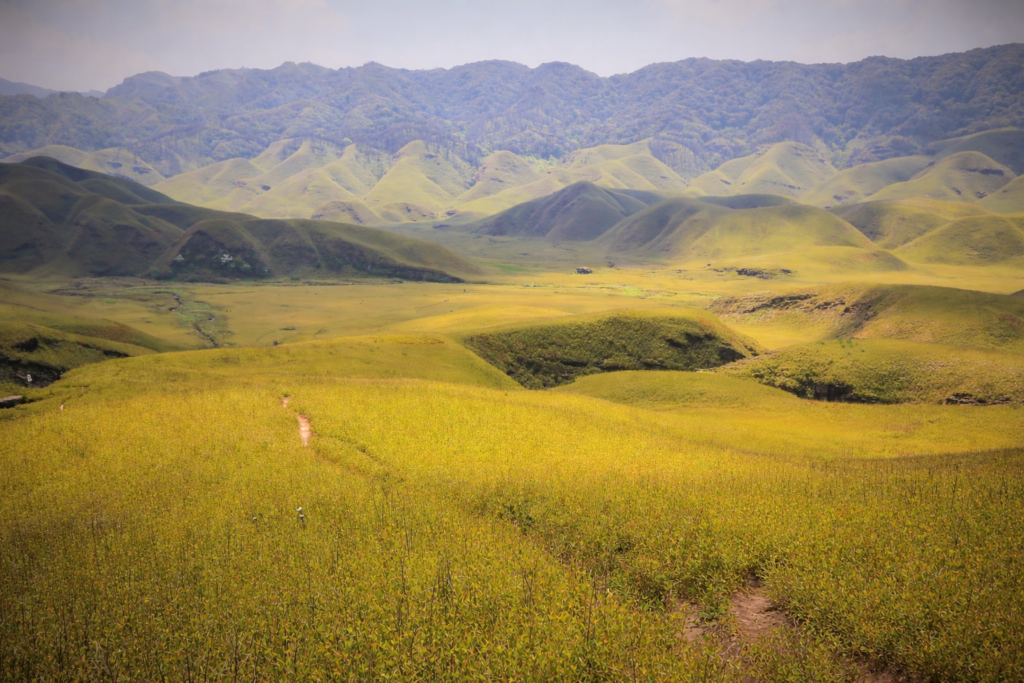
At over 2,400 metres on the Nagaland–Manipur border, Dzükou Valley earns its nickname — the Valley of Flowers of the Northeast — without much argument. Rolling grass hills fold into each other for as far as the eye can see, and for a few weeks every monsoon the entire floor of the valley disappears under a carpet of wild Dzükou lilies.
Two trailheads lead in. Viswema, about 25 km from Kohima, is the gentler, more popular route — a long, gradual climb of three to four hours. Jakhama, slightly closer to Kohima, is shorter but considerably steeper, a stone-stair climb favoured by fitter, seasoned trekkers who don’t mind trading distance for gradient. Many trekkers go up via Viswema and descend via Jakhama, getting the best of both. At the valley rim, the Southern Angami Youth Organisation (SAYO), which maintains the guesthouse and trail, collects the entry and accommodation fee — keep cash on hand, since there’s no card machine anywhere near the trailhead.
Best time: June to September for the lily bloom, with July as the absolute peak.
2. Loktak Lake: The World’s Only Floating Phumdi Village
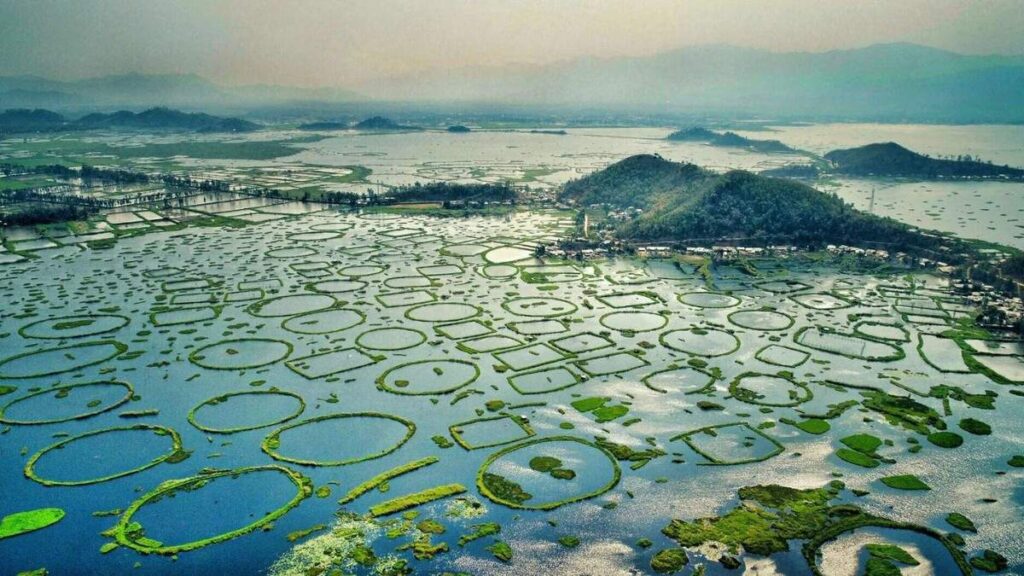
Loktak Lake in Manipur is, depending on who you ask, either the strangest lake in India or the most beautiful. It is the largest freshwater lake in Northeast India, and the only floating lake in the world — its surface dotted with hundreds of circular and rectangular phumdis, thick mats of vegetation and soil that float independently and shift with the wind. Fishing communities have built homes directly on some of these phumdis for generations.
Loktak is also the last refuge of the sangai, the brow-antlered deer found nowhere else on Earth, protected within Keibul Lamjao National Park on the lake’s southern edge. Sail out at sunrise from Sendra Island, and the phumdis catch the light in a way that makes the whole lake look like it’s hovering.
Best time: November to March for clear skies and the best chance of spotting the sangai.
3. Umngot River: Floating on Air in Dawki
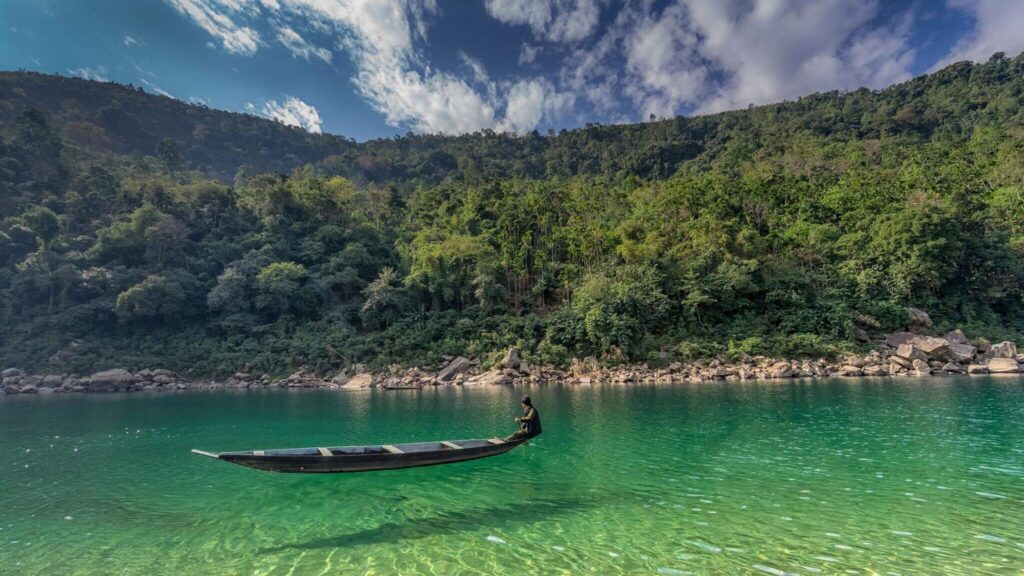
The Umngot, flowing past Dawki near the Bangladesh border, is regularly named one of the clearest rivers in Asia, and the claim holds up the moment you see it. The water is so transparent that boats on its surface appear to be suspended in mid-air, floating a metre above smooth riverbed stones rather than resting on water at all.
Best time: October to April, when the water is at its clearest. Monsoon silt clouds the river considerably.
4. The Double-Decker Living Root Bridges of Nongriat
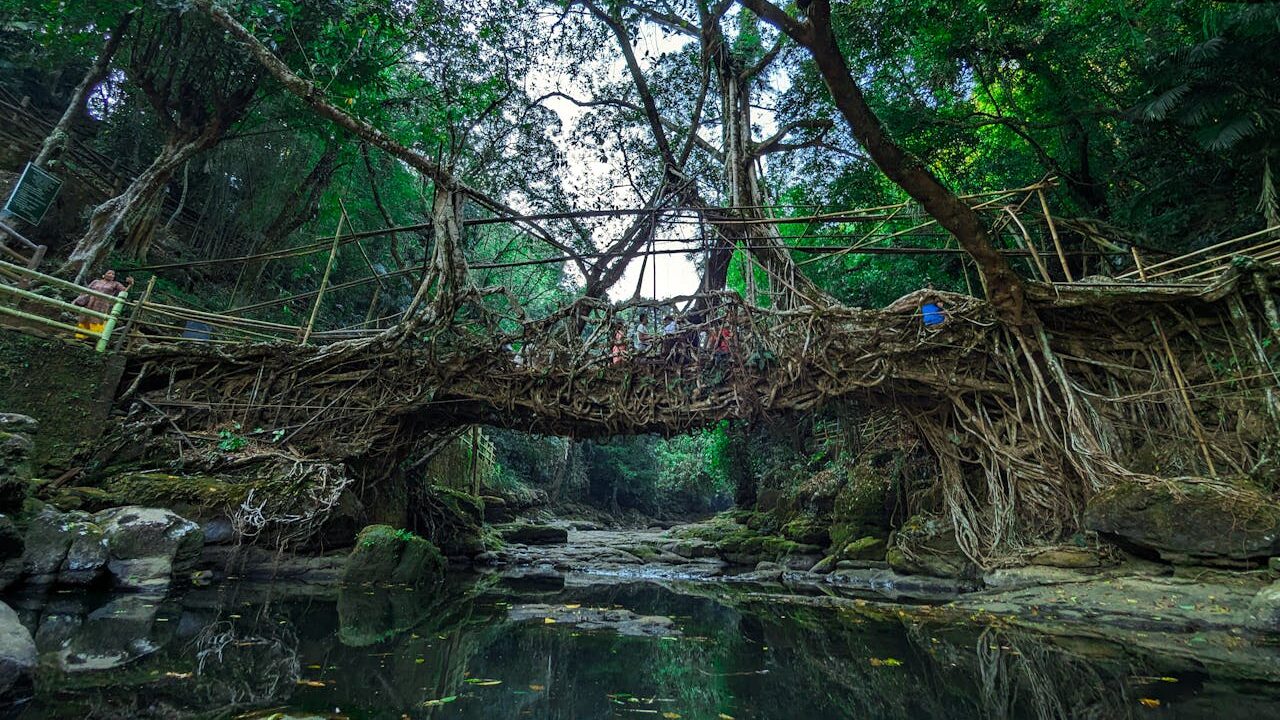
Most bridges in the world are built. Meghalaya’s living root bridges are grown. Over generations, Khasi communities in the dense southern forests have guided the aerial roots of rubber fig trees across rivers and gorges, training them along bamboo scaffolds until they fuse into structures strong enough to carry dozens of people — structures that get stronger, not weaker, with age.
The most famous, near Nongriat village, requires a steep descent of roughly 3,500 steps from Tyrna. Dozens of single and double bridges are scattered across the Khasi Hills, many far less crowded, and Meghalaya has pushed for the bridges to be recognised as a UNESCO World Heritage Site.
Best time: October to May for manageable trekking; the bridges look most dramatic, moss-thick and dripping, during the July–August monsoon.
5. Nohkalikai Falls
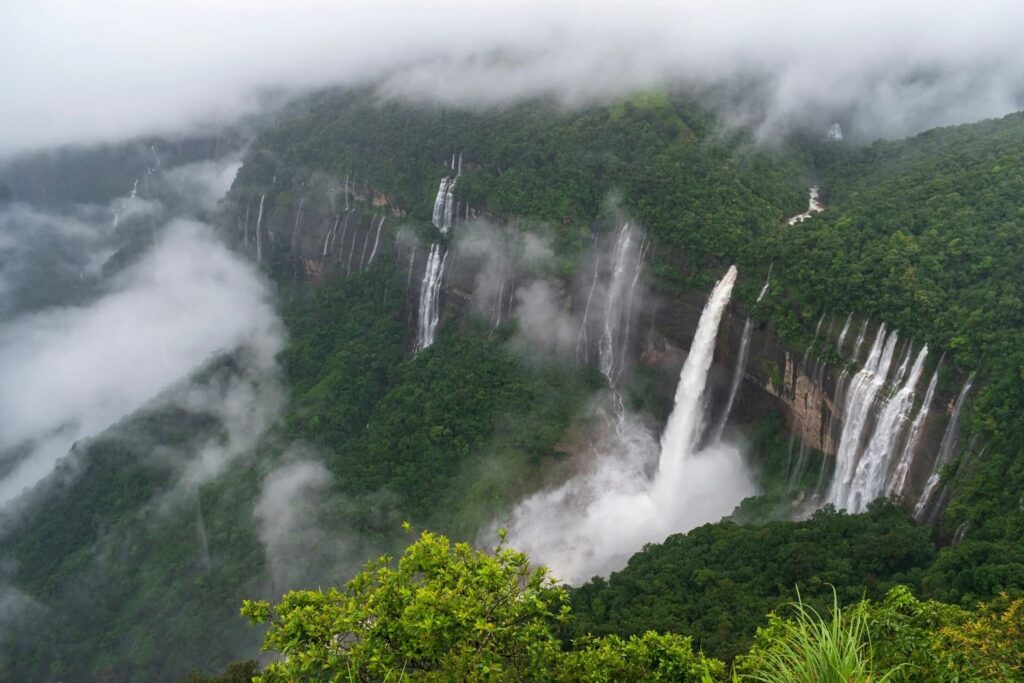
At 340 metres, Nohkalikai is India’s tallest plunge waterfall, dropping in a single uninterrupted column from the edge of the Sohra (Cherrapunji) plateau into a pool that glows an almost unnatural emerald green. A viewing platform at the cliff edge gives the classic photograph; a steep trail down to the pool takes three to four hours return.
Best time: June to October for maximum volume; October to May for clearer skies, though flow drops noticeably.
6. Mawlynnong
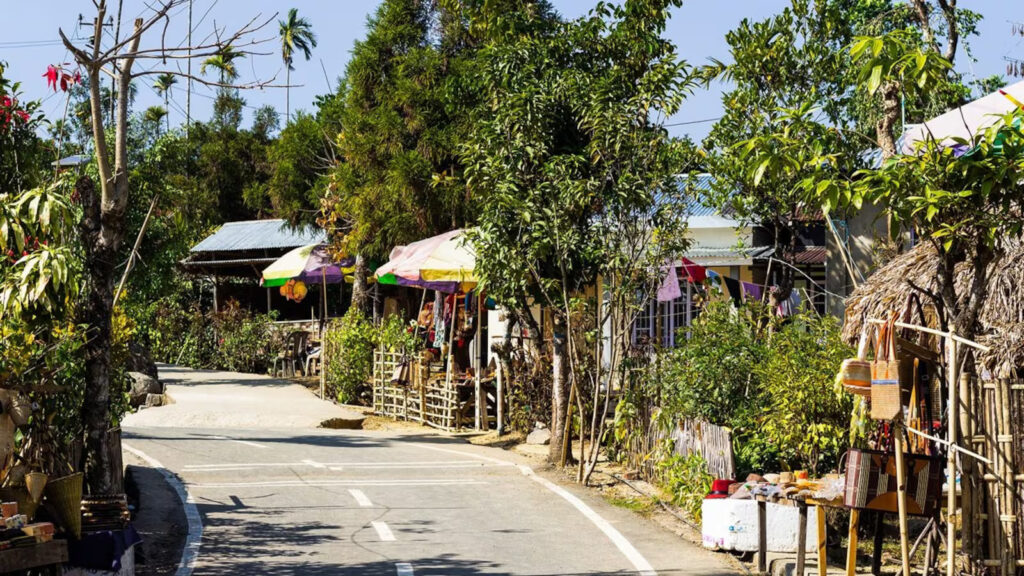
Mawlynnong has been called Asia’s cleanest village often enough that the label has become part of its identity. Spotless lanes, bamboo dustbins outside every home, and a bamboo skywalk strung between trees leading to a treehouse viewpoint over the Bangladesh plains.
Best time: Year-round; October to May offers the clearest skywalk views.
7. Sela Pass: Crossing the 4,000-Metre Gateway to Tawang
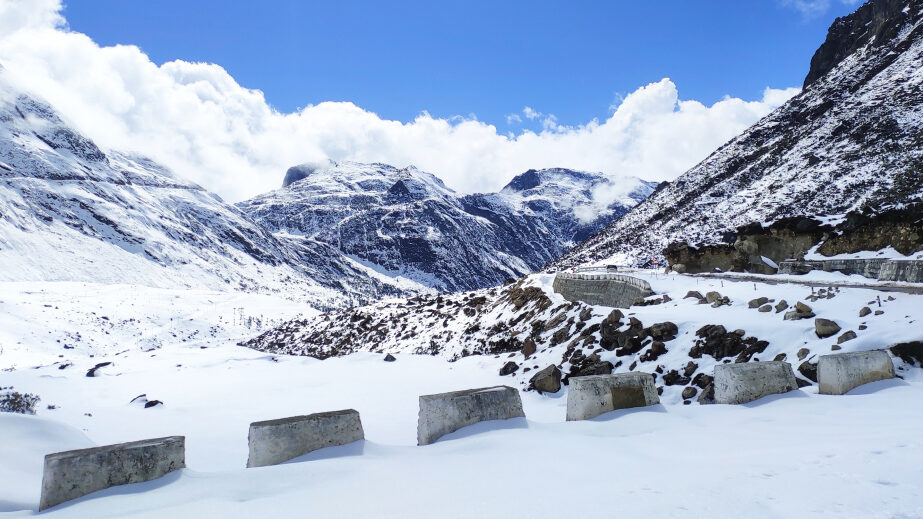
Sela Pass sits at over 4,000 metres on the road between Tenga and Tawang, and it is one of the most theatrical stretches of road in India — turquoise alpine lakes beside the highway, snow peaks on every side, cloud rolling across the road in slow waves.
For decades, heavy winter snow closed this stretch for months at a time. That changed in March 2024, when the Sela Tunnel — a twin-tunnel project built by the Border Roads Organisation roughly 400 metres below the pass — opened to traffic. The tunnel bypasses the highest, most avalanche-prone section of the old road, giving Tawang genuine all-weather connectivity for the first time. The historic pass itself remains open and drivable in good weather for travellers who want the views; the tunnel exists as the reliable fallback when the old road shuts down.
Best time: April to October for the pass itself; the tunnel keeps Tawang reachable through winter regardless.
8. Gurudongmar Lake: High-Altitude Permits and Acclimatisation
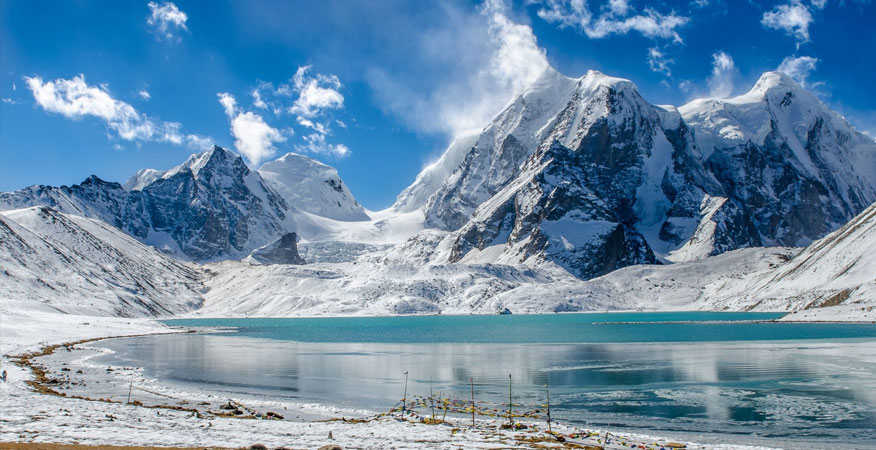
At roughly 5,400 metres, Gurudongmar Lake is one of the highest lakes in the world, and the journey there is as much a part of the experience as the lake itself — a slow climb through North Sikkim’s high-altitude terrain past prayer flags, until the lake appears suddenly, deep blue against bare rock and permanent snow.
This is the one entry on the list where logistics genuinely shape the experience. Travellers overnight at Lachen (2,750m) to acclimatise, then leave by 3:30–4:00 AM — the only reliable window before high-altitude winds turn violent by late morning. The road passes through Thangu, the last inhabited settlement and an army checkpost where personnel routinely monitor travellers for signs of altitude sickness before allowing vehicles to continue toward the lake. The North Sikkim Protected Area Permit required for this route is arranged in advance through a registered Sikkim Tourism–authorised operator in Gangtok — there is no walk-up or online option for ordinary travellers.
Best time: May to October. Roads above Lachen can close without warning in deep winter.
9. Ziro Valley: The Apatani Rice Valley
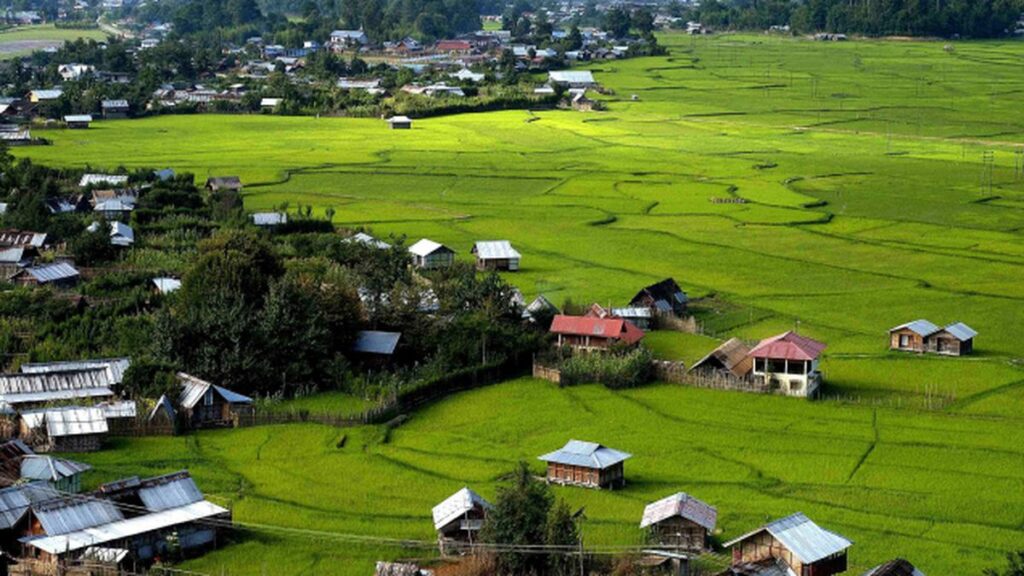
Ziro is the rare destination that earns comparisons to Switzerland and somehow doesn’t oversell it. The valley is home to the Apatani people, whose centuries-old wet-rice cultivation has shaped the land into a patchwork of impossibly green paddy fields ringed by pine forest. Ziro is also home, every September, to the respected independent Ziro Music Festival.
Best time: March to October for the greenest paddy; September for the festival.
10. Unakoti: The Massive Rock Carvings of Tripura
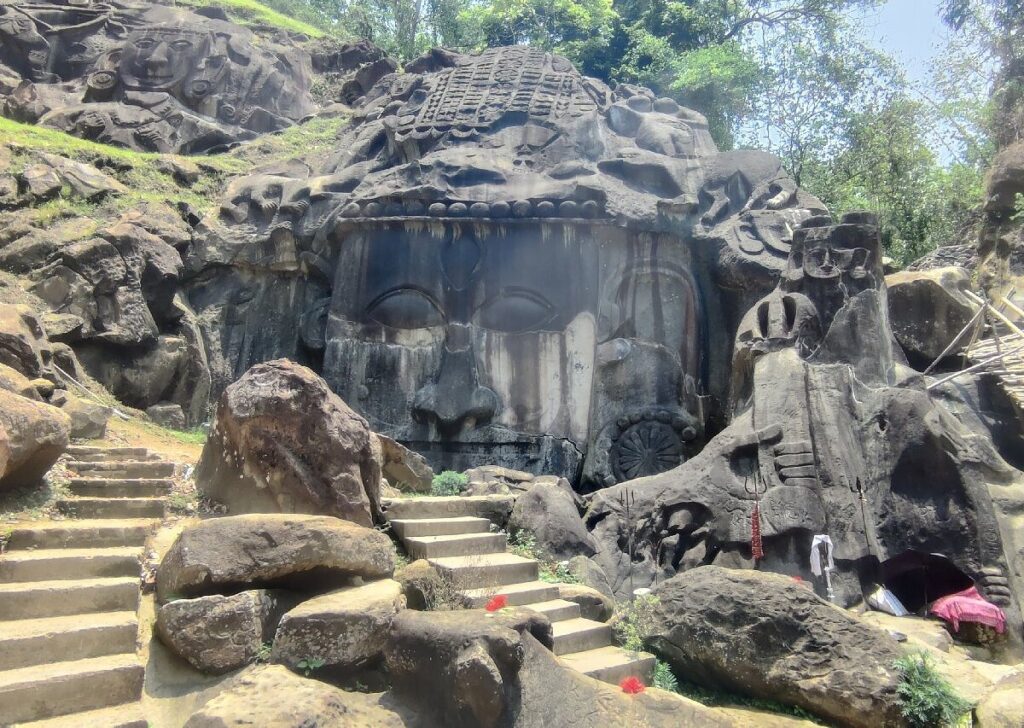
Unakoti, tucked into forest in Tripura’s Kailashahar subdivision, feels less like a tourist site than a discovery. Massive rock-cut sculptures and bas-relief carvings, dominated by an enormous image of Shiva’s head, are scattered across a hillside half-reclaimed by jungle. Archaeologists date the carvings to roughly the 7th to 9th centuries.
Best time: October to March, when forest paths are dry.
At-a-Glance: Permits & Transit Hubs
| Destination | State | Permit Required (Indian Nationals) | Nearest Major Hub |
|---|---|---|---|
| Dzükou Valley | Nagaland | Yes — Nagaland ILP | Dimapur (rail/air); Kohima |
| Loktak Lake | Manipur | Yes — Manipur ILP | Imphal (air) |
| Umngot River (Dawki) | Meghalaya | No | Guwahati (air/rail); Shillong |
| Living Root Bridges | Meghalaya | No | Guwahati; Shillong |
| Nohkalikai Falls | Meghalaya | No | Guwahati; Shillong |
| Mawlynnong | Meghalaya | No | Guwahati; Shillong |
| Sela Pass | Arunachal Pradesh | Yes — Arunachal e-ILP | Tezpur (air); Guwahati |
| Gurudongmar Lake | Sikkim | Yes — North Sikkim Protected Area Permit | Bagdogra (air); New Jalpaiguri (rail) |
| Ziro Valley | Arunachal Pradesh | Yes — Arunachal e-ILP | Naharlagun/Itanagar via Guwahati |
| Unakoti | Tripura | No | Agartala (air) |
Expedition Readiness Checklist
Before you pack for these high-altitude and deep-jungle routes:
- Cash is king. ATMs are essentially absent near Lachen, the Dzükou trailheads, and Unakoti. Withdraw enough rupees in Guwahati, Gangtok, Kohima, or Agartala before you set out.
- Book a Sumo or 4WD ahead. Sela Pass and North Sikkim are not hatchback roads. Local Sumo counters in Kohima, Gangtok, and Tezpur fill up early — arrive by 6 AM if you haven’t pre-booked.
- Pack for microclimates. Sela Pass and Gurudongmar drop well below freezing even outside winter, while Loktak and Unakoti stay hot and humid. Layer accordingly.
- Sort permits days in advance. Arunachal’s e-ILP and Nagaland’s ILP can be done online quickly; Sikkim’s North Sikkim permit needs a registered operator and more lead time.
How to Reach Northeast India
Most journeys begin at one of two gateway cities. Guwahati, in Assam, is the region’s primary aviation hub, connecting to all major Indian cities. From Guwahati, roads and rail fan out toward Meghalaya, Nagaland, and the hill states. Imphal is the better entry point for Loktak Lake, while Tezpur and Naharlagun/Itanagar serve western Arunachal Pradesh. Sikkim is reached via Bagdogra Airport in West Bengal or Pakyong Airport near Gangtok, followed by a road journey north. Tripura’s Agartala has direct flights from Kolkata, Delhi, and Guwahati.
For the full breakdown of which destinations need what, and how far ahead to apply, see our complete permit guide.
Best Time to Visit
October to April is the broadest safe window — skies clear, roads open, and most of this list (Umngot River, Mawlynnong, Loktak Lake, Sela Pass, Unakoti) is at or near its best. December to February brings the sharpest mountain views, though Gurudongmar and Sela Pass carry real risk of snow disruption above the tunnel line. June to September, the monsoon, is when Dzükou’s lilies bloom, and Nohkalikai reaches peak volume — worth the trade-off in road conditions if those two are priorities. For a full month-by-month breakdown across all eight states, our guide to the best time to visit Northeast India goes further than a single list can.
Northeast India rarely makes it onto a typical India itinerary, and that is precisely why these ten places still feel the way they do — unfiltered, unhurried, and genuinely unlike anywhere else you’ve been.
