




The name Unakoti means ‘one less than a crore’ — one less than ten million. And the legend that explains the name is one of the most evocative in Tripura‘s cultural tradition. According to the story, Shiva was traveling to Kashi with a party of one crore gods and goddesses. He instructed them all to be ready to depart before sunrise, but when dawn came, only Shiva himself had woken. The others slept on, and Shiva, angered, cursed them to remain at this place forever — one crore minus one, transformed into stone. The result is Unakoti: a hillside forest site in North Tripura covered with rock carvings and stone sculptures of Shiva, Vishnu, Ganesha, and other deities, cut into the living rock face between the 8th and 10th centuries CE, weathered by a thousand years of monsoon and forest growth but still of extraordinary artistic and spiritual power.
Unakoti is one of the most important archaeological and religious sites in Northeast India — and one of the most dramatically sited. The carvings are not in a museum or a protected enclosure. They emerge from a forested hillside, surrounded by the sound of running water and jungle birds, the stone faces of the deities peering through the trees. The Unakoti heritage site covers approximately 16 hectares, and the walk through the forest from one carving group to the next is as much a forest experience as a cultural one.
Quick Facts About Unakoti
| State | Tripura |
| District | Unakoti (also written Unokoti) |
| Distance from Agartala | 178 km; approximately 5–6 hours by road |
| Distance from Kailashahar | 27 km (nearest major town) |
| Period of Carvings | 8th–10th century CE (Pala/Gupta-influenced) |
| No ILP Required | Tripura is fully open to Indian nationals |
| Protected Status | Archaeological Survey of India protected site |
| Best Time | October to March; Ashokastami fair (March–April) |
| Famous For | Rock-cut Shiva head, Ganga descent sculpture, ancient reliefs, forested sacred setting |
| Nearest Airport | Kailashahar Airport — 27 km (limited services); Agartala — 178 km |
The Legend of Unakoti — One Crore Minus One
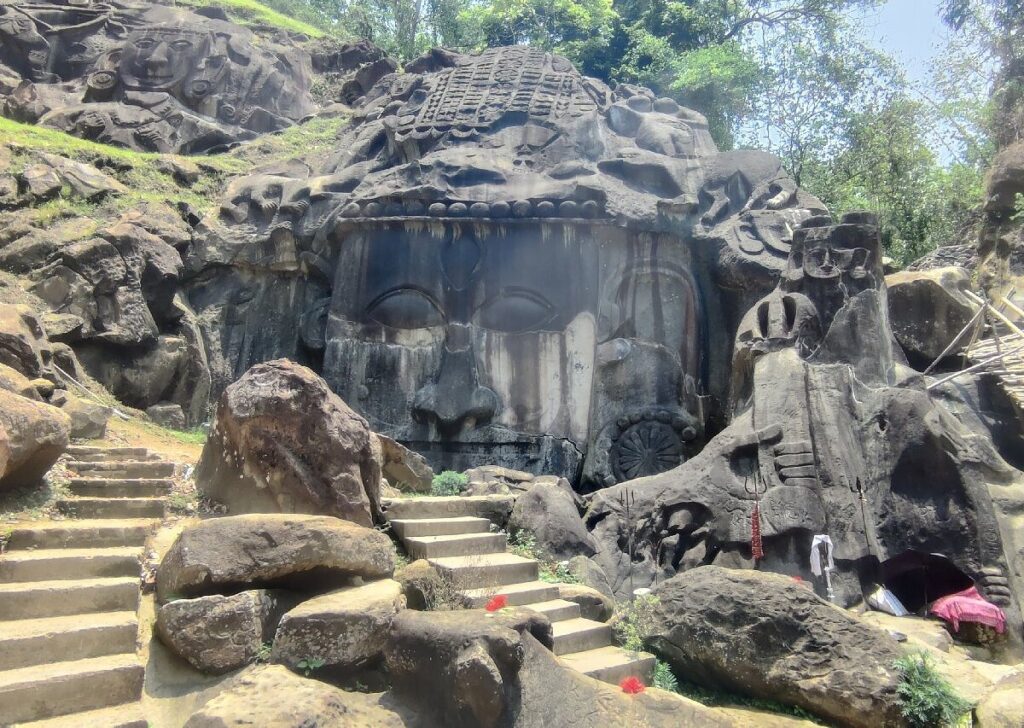
The legend deserves to be told in full, because it fundamentally shapes the experience of visiting the site. According to the most complete version of the story, the sculptor Kallu Kumar — a devotee of Shiva — wished to accompany Shiva on his journey to Kashi (Varanasi). Shiva agreed to take Kallu Kumar on the condition that he could create one crore images of Shiva and the gods overnight before their departure at dawn.
Kallu Kumar worked through the night with extraordinary dedication but could only complete nine million, nine hundred and ninety-nine thousand, nine hundred and ninety-nine images — one short of the crore. When dawn came, Shiva found the target unmet and left without Kallu Kumar, leaving him and his creations at the site forever. Another version holds that the gods themselves arrived at Unakoti to travel with Shiva but failed to wake at the appointed hour and were cursed to remain.
The legend is not merely folklore — it is a theological explanation for the extraordinary concentration of divine imagery at a single site, and it gives Unakoti a quality of arrested motion, of a divine journey that began but did not end, that makes the carved faces in the rock feel somehow more present than in a conventional temple.
| Visiting Unakoti with the legend in mind transforms every carved face. Each deity in the rock is not merely a 10th century sculpture — it is one of the one crore who fell asleep and never reached Kashi. The slight expression of repose on the Shiva images — eyes not quite closed, as if still in the moment before sleep — becomes, with the legend, genuinely moving. |
The Carvings — A Detailed Guide
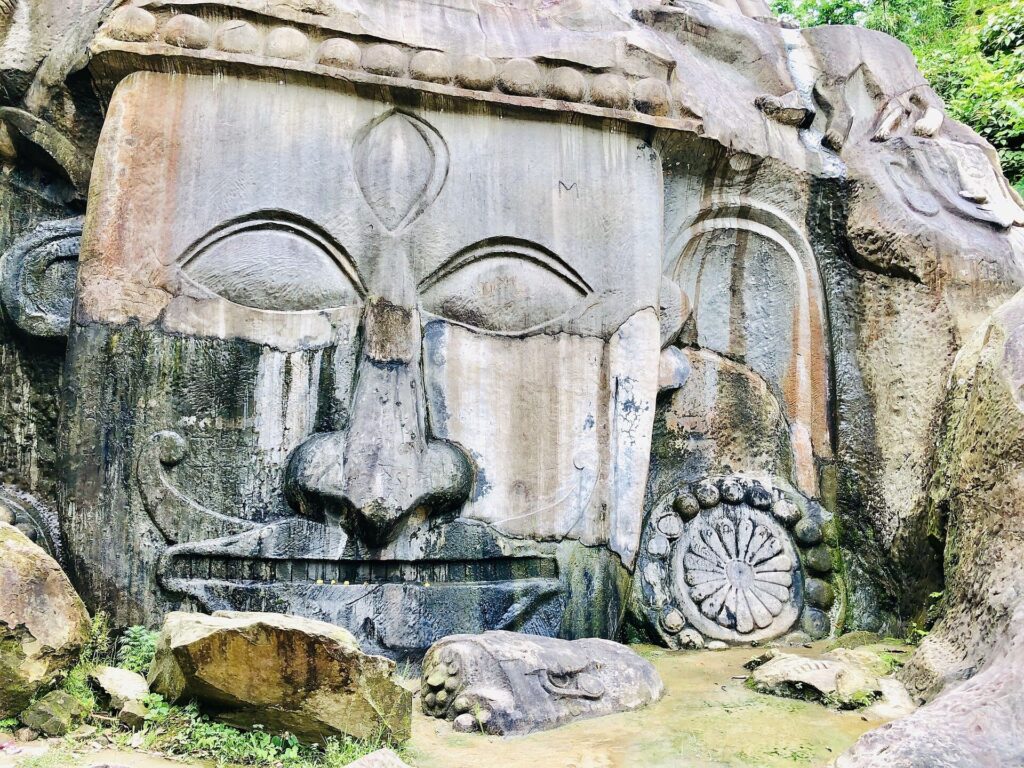
The Great Shiva Head (Unakotisvara Kali Shankar)
The most famous and most monumental carving at Unakoti is the Unakotisvara Kali Shankar — a massive rock-cut relief of Shiva’s head, approximately 30 feet (9 metres) tall, flanked by two smaller female figures. The face — calm, eyes half-closed, the matted hair (jata) spreading upward to form the composition’s vertical axis — is the centrepiece of the entire site. The carving is executed with artistic confidence that places it among the finest examples of medieval Indian rock sculpture.
- Approximately 30 feet (9 metres) tall — the largest carving at the site
- The central figure of Shiva is flanked by smaller figures of Parvati and another female deity
- The third eye is depicted between the brows — the characteristic Shaivite iconographic marker
- Carved directly into the rock face; the forest and running water behind add to the atmosphere
- Best photographed in the morning when eastern light falls directly on the face
The Ganga Descent (Gangavataran)
One of the most dynamic sculptures at Unakoti depicts the descent of the Ganga from heaven — the moment when the celestial river comes to earth through Shiva’s matted hair (jata) to prevent its force from destroying the earth. The sculptural treatment of flowing water and divine movement at Unakoti is remarkably sophisticated for its period, and this panel demonstrates the highest technical achievement of whoever carved these rocks.
- One of the finest sculptural representations of the Gangavataran (Descent of the Ganga) in Northeast India
- The movement of water and the divine figures are conveyed with exceptional technical skill
- The carving occupies a natural cliff section that enhances the sense of flowing water
The Vishnu Panels
Several large Vishnu reliefs are carved at Unakoti alongside the dominant Shaivite imagery — a reflection of the syncretic Vaishnava-Shaiva religious culture of medieval Bengal and Tripura. The Vishnu figures are depicted in multiple forms — the four-armed standing Vishnu (Chaturbhuj), the reclining Vishnu on the cosmic ocean (Anantashayana), and several narrative panels depicting episodes from Vishnu’s mythological biography.
The Nandi Bull
The carved figure of Nandi — Shiva’s vehicle and guardian — at Unakoti is one of the largest and finest rock-cut Nandi figures in India. Facing the direction of the great Shiva head, the Nandi sculpture demonstrates the iconographic completeness of the Unakoti programme — this is not a random collection of carvings but a coherent sacred landscape designed according to the logic of Shaivite theology.
Smaller Carvings & The Walk Through the Site
Beyond the headline sculptures, the Unakoti site contains hundreds of smaller carvings, panel reliefs, and votive images cut into the rock faces throughout the forested hillside. A complete walk through the site — following the stone-paved path from the main entrance up through the forest to the upper carvings and back — takes 1.5 to 2 hours at a leisurely pace. The path crosses a small stream several times and passes through sections of dense mixed forest between the carving groups.
- Stone path through forested hillside; gentle ascent; manageable for all fitness levels
- The stream running through the site is considered sacred; the water is clear and cold
- Multiple carving groups at different levels of the hillside — allow time to find and appreciate each
- Interpretive boards at the major carvings (some require updating but are generally informative)
Ashokastami — The Annual Pilgrimage Fair
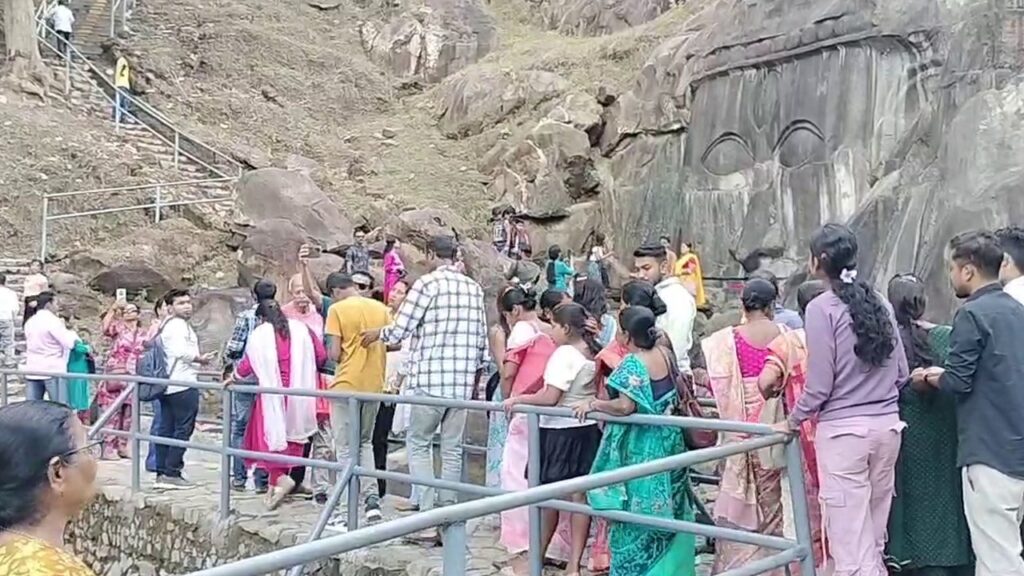
The Ashokastami festival, held at Unakoti during the eighth day of the bright fortnight of the Chaitra month (March–April), is one of the most important pilgrimage fairs in Tripura. Tens of thousands of devotees converge on Unakoti for ritual bathing in the sacred stream and circumambulation of the main Shiva carving. The combination of the pilgrim crowds, the forest setting, and the ancient carvings creates one of the most atmospherically intense religious gatherings in Northeast India.
- Held annually in March–April (exact date follows the Hindu calendar)
- The sacred stream bathing ritual is the central act of devotion
- Temporary stalls with regional food, craft, and religious items surround the site
- The site is at its most spiritually charged during Ashokastami — but also its most crowded
- Outside the fair period, Unakoti receives relatively few visitors — the most peaceful visits are on weekdays from October to February
The Forest Setting
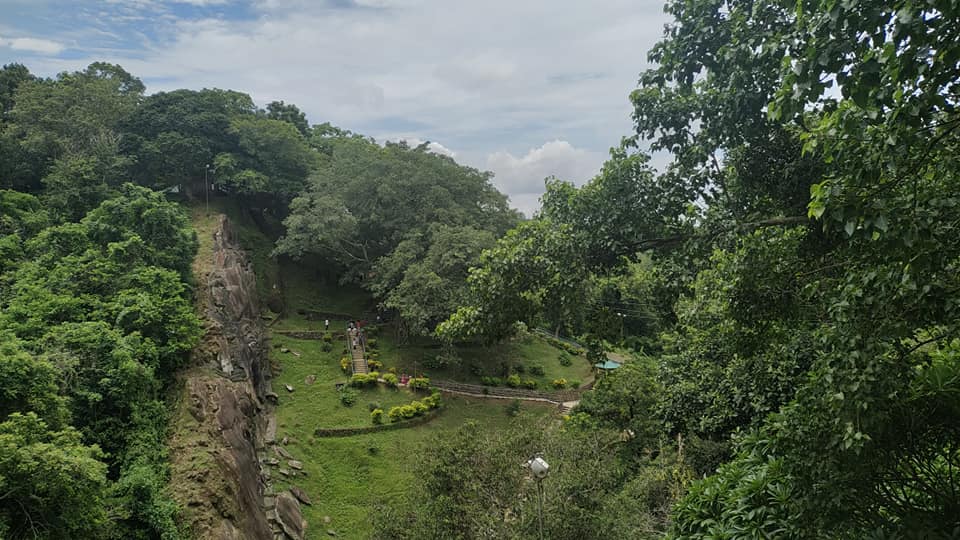
Unakoti’s forest — the Unakoti Reserve Forest — is an integral part of the experience. The mixed semi-evergreen and deciduous forest that clothes the hillside where the carvings are located has grown back over the stones in ways that are simultaneously atmospheric and challenging for conservation. Tree roots work into cracks in the carved rock faces; moss and lichen cover the surfaces; monsoon water channels across them. The Archaeological Survey of India faces a continuous conservation challenge in managing the balance between the living forest and the ancient art it contains.
- The forest adds atmosphere but also poses conservation challenges
- Birdwatching is excellent along the site path — jungle babblers, bulbuls, woodpeckers
- The stream and pools near the main carving are excellent for kingfishers
- The forest path at dawn, before the site opens to visitors, is one of the finest wildlife walks in North Tripura
Where to Stay Near Unakoti
- Kailashahar town (27 km) — The nearest town with reliable accommodation; several guesthouses and a Tripura Tourism property; most visitors base here
- Tripura Tourism guesthouse (near site) — Simple accommodation near the Unakoti site itself; book through Tripura Tourism; the best option for dawn visits
- Day trip from Agartala — Possible but long (178 km, 5–6 hours each way); staying in Kailashahar strongly recommended for a full Unakoti experience
- Dharmanagar (35 km from Unakoti) — The largest town in North Tripura; better hotel facilities; 1 hour from Unakoti
How to Reach Unakoti
- From Agartala: 178 km north on NH44 to Kailashahar, then 27 km to Unakoti; approximately 5–6 hours total. The road passes through the Tripura heartland and is generally good.
- From Kailashahar: 27 km to Unakoti; approximately 45 minutes by road. Local taxis available.
- By train: Kailashahar is on the Agartala–Sabroom rail line via Lumding; trains from Agartala take approximately 4–5 hours.
- By air: Kailashahar Airport (Karimganj area) has limited services; Agartala remains the main air hub.
Travel Essentials for Unakoti
- No ILP required for Tripura
- Carry cash — limited ATM access near the site; use Kailashahar or Dharmanagar
- Wear sturdy footwear — the forest path involves uneven stone and can be slippery in monsoon
- Carry water — the site walk takes 1.5–2 hours; the stream water is sacred but not recommended for drinking
- Photography: a wide-angle lens for the great Shiva head; a standard lens for the detailed panel carvings
- Respect the site’s sanctity — this is an active pilgrimage site as well as an archaeological monument
Best Time to Visit Unakoti
- October to February: Best overall; clear skies; comfortable forest temperature; most peaceful visit
- March–April (Ashokastami): Most spiritually intense; largest crowds; the living pilgrimage tradition at its fullest
- June to September: Monsoon; forest lush and atmospheric; the stream in flood is dramatic; paths slippery; conservation concern periods
