




The name Tezpur comes from the Assamese words for blood — tez (blood) and pur (city), referring to a battle from Hindu mythology in which the demon king Bana fought the god Krishna on this very ground, and the fighting was so fierce that the earth itself was stained red. The epic narrative gives its dramatic identity: a city of romance, of conflict, of passion, set on a bend of the Brahmaputra where the river is wide and the distant Himalayan foothills are visible to the north.
Modern Tezpur, the headquarters of Sonitpur district at 76 metres above sea level, is one of Assam’s most pleasant and historically layered small cities. It contains some of the most significant early medieval stone carving in Northeast India at Da Parbatia, an extraordinary mythological viewpoint at Agnigarh Hill, a beautiful riverside park, and the tea gardens and wildlife that make the Sonitpur district one of Assam’s most rewarding regions. It is also the most important gateway town for the overland route to Tawang in Arunachal Pradesh — the majority of Tawang-bound travelers pass through Tezpur. Those who take a day to explore the city itself before continuing discover that the pause is very much worth the time.
Quick Facts About Tezpur
| State | Assam |
| District | Sonitpur |
| Altitude | 76 metres |
| Language | Assamese, Hindi, English |
| Religion | Hinduism; Islam; Christianity |
| Nearest Airport | Tezpur Airport (Salonibari) — domestic connections to Guwahati and Kolkata |
| Nearest Rail | Tezpur is not on the main line; Rangapara — 35 km; Dekargaon — 5 km |
| Distance from Guwahati | 183 km; approximately 4 hours on NH15 |
| Distance to Tawang | 317 km; approximately 9–10 hours via Bhalukpong |
| Permit Required | No permit for Tezpur; ILP required before entering Arunachal Pradesh at Bhalukpong (60 km from Tezpur) |
| Best Time | October to April |
The Mythology & History
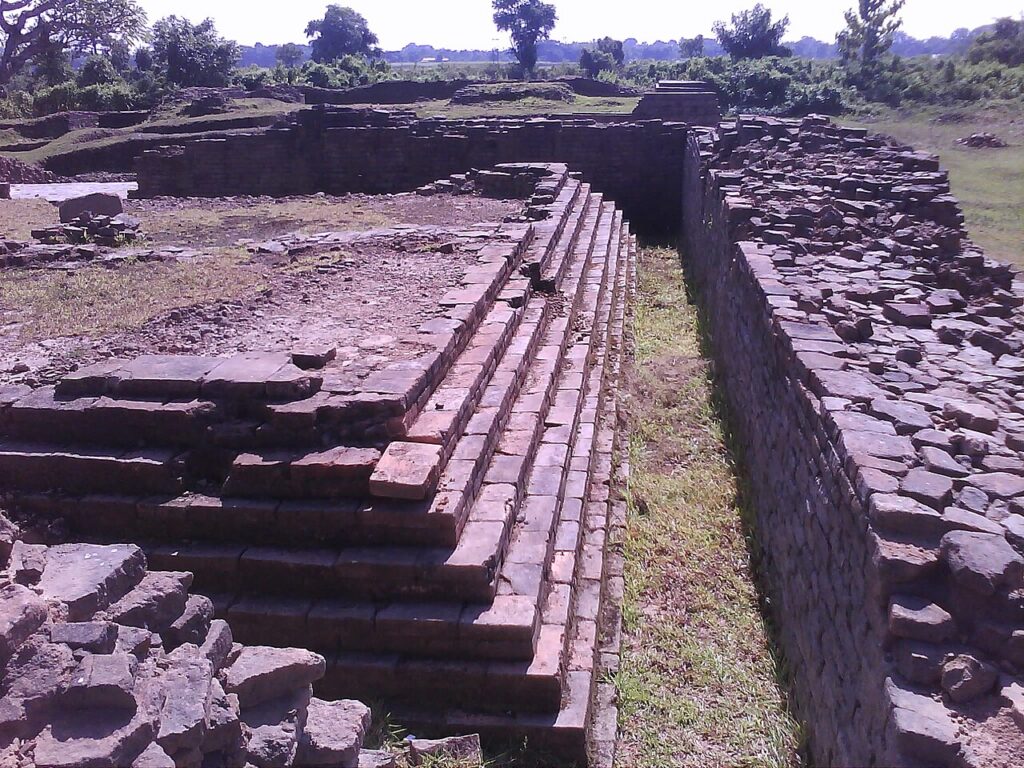
The Legend of Usha and Aniruddha
Tezpur’s romantic identity comes from one of the most celebrated love stories in Hindu mythology. Usha, daughter of the demon king Bana who ruled this area, fell in love with Aniruddha — grandson of Krishna — after seeing him in a dream. When Aniruddha was discovered in Usha’s palace, Bana imprisoned him, leading to the great battle between Krishna and Bana in which the earth ran with blood (hence Tezpur). The story ends with reconciliation and marriage — love triumphant over conflict — and the myth permeates Tezpur’s cultural identity to this day.
The Agnigarh Hill, where Bana supposedly imprisoned Aniruddha surrounded by a ring of fire (agni), is one of the city’s most visited sites. The Cole Park, built along the riverbank, contains statues depicting the Usha-Aniruddha love story. Even the city’s tea culture — warm, aromatic, consumed beside the wide river — feels like a continuation of this tradition of romantic contemplation.
Archaeological Significance
Tezpur’s ancient significance extends beyond mythology into verifiable archaeology. The city was an important centre of the Gupta-era and post-Gupta period in Assam, producing some of the finest stone carving in the region. The Da Parbatia archaeological site contains 6th–7th century CE stone carvings of national importance that represent a bridge between mainland Indian and specifically Assamese sculptural traditions.
Top Attractions in Tezpur
1. Da Parbatia — Ancient Stone Carvings
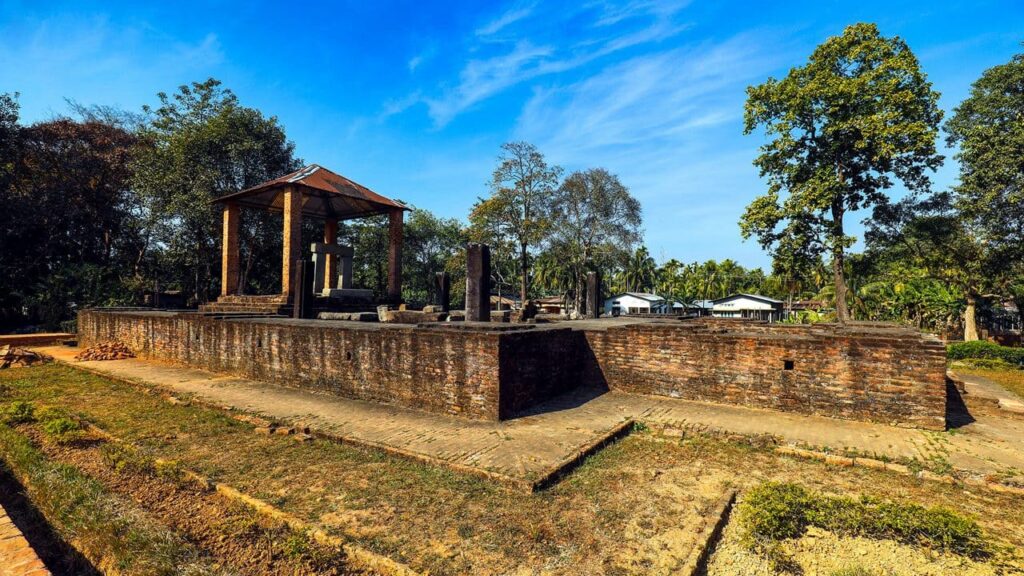
Da Parbatia, 4 km from the town, is the most important archaeological site in the Sonitpur district and one of the most significant early medieval sculptural sites in Northeast India. The surviving elements — a doorframe with exquisitely carved river goddesses (Ganga and Yamuna) and attendant figures, dating from the 6th–7th century CE — represent some of the finest stone carving in Gupta-influenced Assamese art. The site is small, easily visited, and contains work of national archaeological importance that deserves more attention than it receives.
- 6th–7th century CE stone doorframe with river goddess carvings — Gupta artistic influence
- The Ganga and Yamuna figures on the doorjambs are among the finest early medieval sculptures in Northeast India
- Site maintained by the Archaeological Survey of India
- The surrounding landscape of paddy fields and distant hills gives the ruins a deeply evocative setting
- Allow 45 minutes — combine with Bamuni Hills in the same half-day excursion
2. Agnigarh Hill
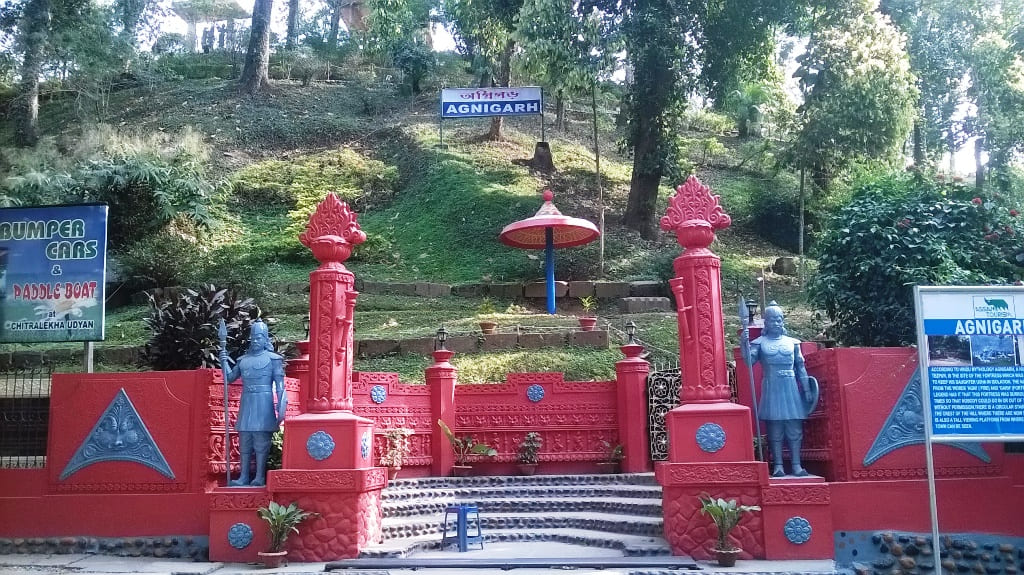
Agnigarh Hill, rising steeply from the bank of the Brahmaputra in the city centre, is associated with the mythological imprisonment of Aniruddha — Bana supposedly surrounded the hilltop with a ring of fire (agnigarh) to prevent his daughter Usha’s lover from escaping. Today, a spiral path leads to the summit where a viewing platform offers one of the finest Brahmaputra panoramas in Assam — the wide river curving through the landscape with the Himalayan foothills visible to the north.
- Steep spiral path to the hilltop — 20 minutes to summit
- Panoramic Brahmaputra views from the top — some of the finest in Assam
- Mythological significance adds cultural depth to the physical beauty
- Best visited at sunset — the river light in the late afternoon is exceptional
- The garden on the hillside is well-maintained and pleasant for a slow walk
3. Cole Park & Riverside Gardens
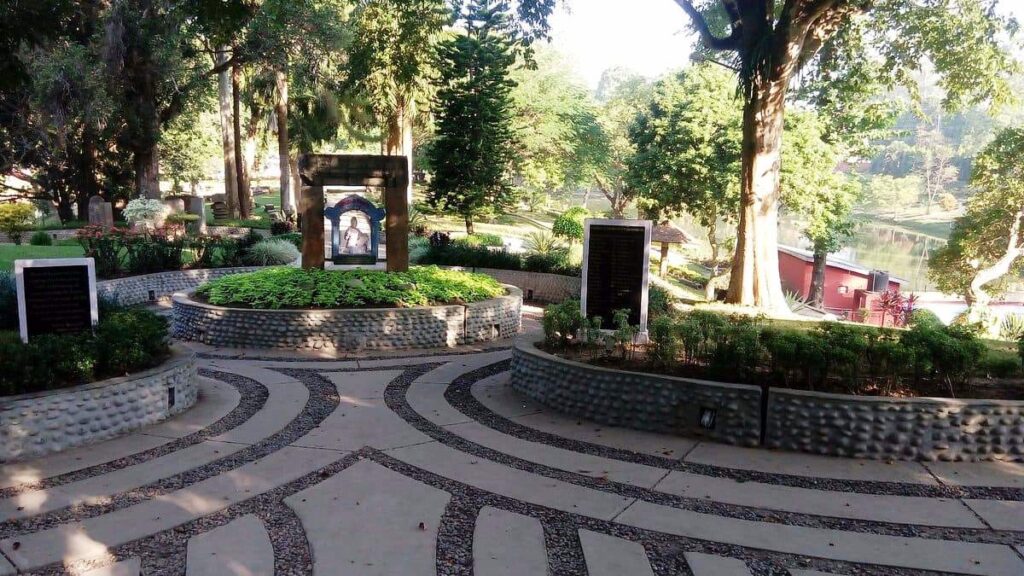
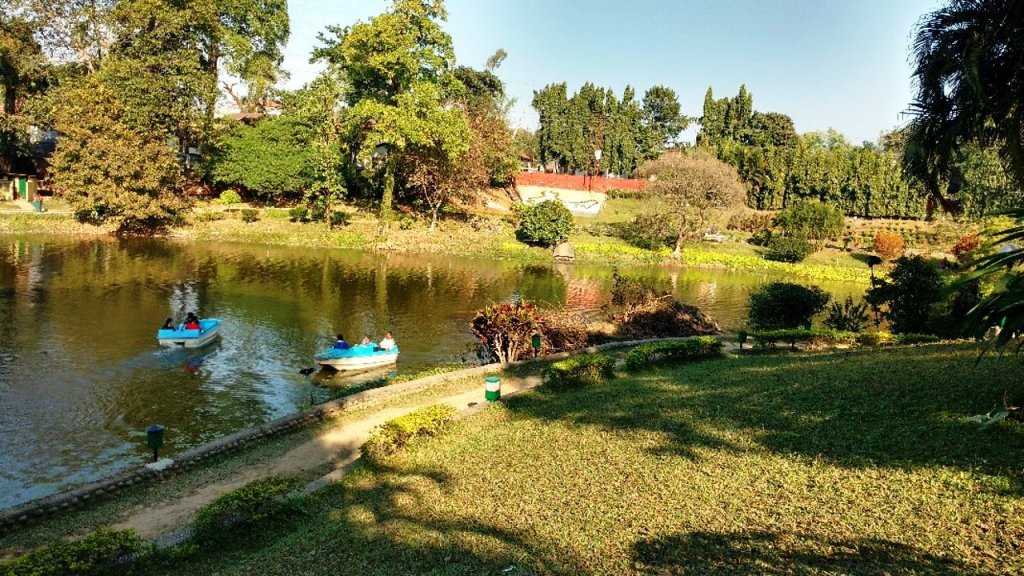
Cole Park, on the Brahmaputra bank, is Tezpur’s most popular public space — a well-maintained garden with sculpted representations of the Usha-Aniruddha legend, lakeside walking paths, and views over the river. The park is particularly animated in the early morning when locals walk, exercise, and gather by the water. The Brahmaputra at Tezpur has a different character from Guwahati — narrower, with the Arunachal hills visible to the north, and a quieter contemplative quality that rewards a slow morning.
- Sculpted mythological figures illustrating the Usha-Aniruddha story
- Lake and river-edge walking paths
- Best early morning (6–8 AM) for the local life and the river light
4. Bamuni Hills
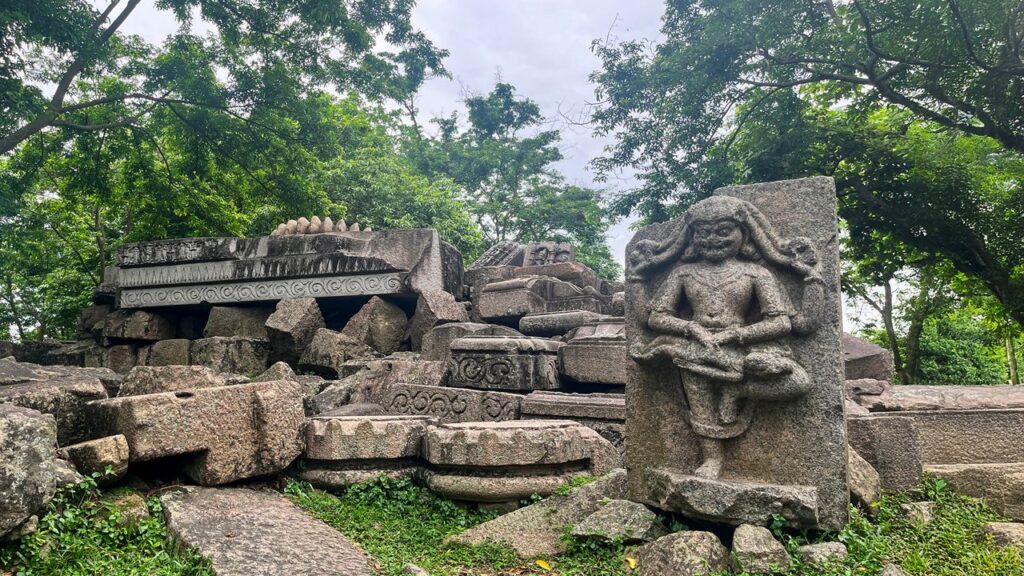
The Bamuni Hills, 5 km from Tezpur, contain a cluster of ruined temples from the 9th–12th centuries CE — broken stone columns, carved panels, and scattered sculptural fragments that speak to a period of intense religious and artistic activity in the Tezpur region. The ruins are scattered across a hillside and garden setting maintained by the Archaeological Survey of India. Less dramatically preserved than Da Parbatia but rewarding for archaeology enthusiasts.
- 9th–12th century CE temple ruins on a hillside garden setting
- Carved temple fragments and columns in various states of preservation
- The Mahabhairab Temple at the foot of the hill is still an active worship site
5. Nameri National Park & Eco Camp
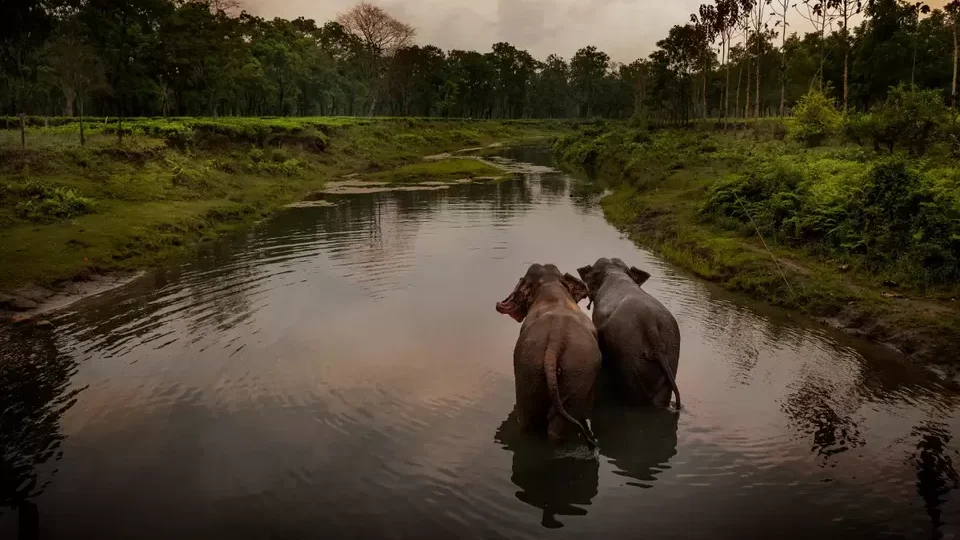
Nameri National Park, 35 km north of Tezpur in the Himalayan foothills, is one of Assam’s least visited but most beautiful protected areas — 200 square kilometres of semi-evergreen forest through which the Jia Bhoroli River runs crystal-clear from the Arunachal hills. Nameri is a Project Tiger reserve with a growing tiger population, and its setting at the base of the hills makes it one of the most scenically distinctive national parks in Northeast India.
- Tiger, Elephant, and Clouded Leopard — present; sightings occur but are less frequent than at Kaziranga
- White-winged Duck — one of the world’s rarest ducks; Nameri is a stronghold; December–March
- River rafting on the Jia Bhoroli — one of the finest and most accessible river experiences in Assam; crystal-clear water, forest canopy, and regular kingfisher sightings
- Eco-Camp accommodation — the Nameri Eco Camp is run by the Aaranyak (a wildlife conservation NGO); simple but beautifully positioned at the river’s edge; advance booking required
| Nameri is the best day trip or overnight from Tezpur and one of the most underrated wildlife destinations in Assam. The combination of crystal-clear river, Himalayan foothill forest, and relative solitude makes it a deeply refreshing contrast to the busier national parks. |
6. Bhairabkunda — Sacred River Confluence
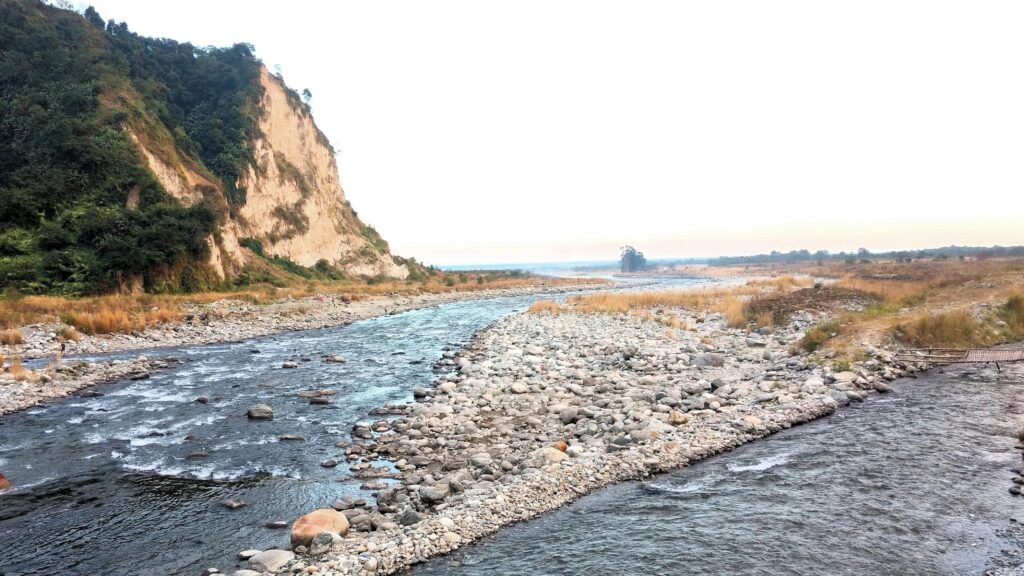
Bhairabkunda, approximately 60 km from Tezpur near the Arunachal Pradesh border, is a sacred confluence of three rivers — the Bharali, Kameng, and Jia Bhoroli — at the edge of the Himalayan foothills. The site is a major Hindu pilgrimage point and the landscape — three rivers meeting at the forest edge, with the Arunachal hills rising behind — is exceptionally beautiful. Often combined with the Tawang road journey.
7. Gateway to Tawang (Arunachal Pradesh)
Tezpur’s most significant role for many travelers is as the last major Assamese city before entering Arunachal Pradesh on the Tawang highway. The road from Tezpur to Bhalukpong (the Arunachal border entry point) is 60 km. Most travelers to Tawang overnight in Tezpur, process their ILP at Bhalukpong, and begin the mountain drive the following morning.
- ILP checkpoint at Bhalukpong — 60 km from Tezpur on NH15
- Apply for Arunachal Pradesh ILP online at arunachalilp.in before arrival in Tezpur
- Most Tawang-bound travelers depart Tezpur at 6–7 AM to reach Dirang by evening (via Bomdila)
Tea Garden Culture

The Sonitpur district around Tezpur is prime Assam tea country — large estates producing some of the world’s finest CTC and orthodox teas in the flat plains between the Brahmaputra and the Himalayan foothills. Several tea estates near Tezpur welcome visitors for tours and tastings.
- Estate visits — Arrange through your hotel or the Tezpur Tourism office; most welcome visitors for a morning tour
- What to expect — The plucking fields (best visited April–May and September–November when flushes are active), the processing factory, and a tasting session in the estate bungalow
- What to buy — First flush Assam orthodox tea (April–May) is exceptional and rarely available in Indian retail; buy directly from the estate
Top Things to Do in Tezpur
- Da Parbatia + Bamuni Hills archaeology morning — 2–3 hours; combine both sites in a half-day cultural excursion
- Agnigarh sunset — Arrive 1 hour before sunset; the Brahmaputra light is finest in the last hour of day
- Cole Park dawn walk — Morning river atmosphere; Brahmaputra mist; local life at its most authentic
- Nameri day trip — Full day; river rafting + forest walk + bird and wildlife watching
- Tea estate visit — Morning; arrange in advance; the tasting session is particularly rewarding
- Bhairabkund excursion — Combine with the Bhalukpong entry point for Tawang-bound travelers
Where to Eat in Tezpur
- Tezpur Club Restaurant — One of the city’s best; reliable Assamese and Indian food
- Paradise Restaurant — Long-established local favourite; fish preparations particularly good
- Tea estate bungalow lunches — Some estates offer meals; arrange in advance; the experience of lunch on a working tea estate is memorable
- Street food near Cole Park — Local snacks, pitha, and Assamese tea in the evening; the most atmospheric eating in Tezpur
Where to Stay in Tezpur
- Hotel Luit — The most reliable mid-range option; central location; Brahmaputra views from upper floors; ₹2,000–₹4,000
- Nameri Eco Camp — 35 km from Tezpur; the finest accommodation in the district if you value nature over convenience; book well in advance
- Circuit House Tezpur — Government accommodation; reliable and central; book through district administration
- Budget guesthouses — Several options near the bus stand and bazaar areas; ₹600–₹1,800
How to Reach Tezpur
From Guwahati
- 183 km on NH15 (Guwahati–Tezpur Road); approximately 4 hours by car
- Regular state transport buses and private services from Guwahati ISBT to Tezpur
By Air
- Tezpur Airport (Salonibari) — domestic connections to Guwahati, Kolkata; limited but useful
By Train
- Dekargaon station (5 km from Tezpur) and Rangapara (35 km) are the nearest stations on the main line
- Most trains serving Tezpur are best boarded at Rangapara or Furkating
For Tawang-bound travelers
- Tezpur → Bhalukpong (ILP checkpoint): 60 km; 1.5 hours
- Bhalukpong → Bomdila: 142 km; 5 hours
- Bomdila → Tawang: 157 km; 6 hours
Travel Essentials
- No permits required for Tezpur or Assam
- If continuing to Arunachal Pradesh: obtain ILP online at arunachalilp.in before departure from Tezpur
- ATMs widely available in the city centre
- Mobile: all major networks work well in Tezpur
- Weather: Tezpur is warm and humid year-round; carry light clothing but a warm layer for cool evenings October–February
Best Time to Visit
- October to February: Best weather; clear skies; Nameri wildlife most active; pleasant temperatures
- March to May: Warm; pre-monsoon; tea estates in first flush; Rongali Bihu (April)
- June to September: Monsoon; Brahmaputra floods; some attractions disrupted; not recommended for first visits
Sample 2-Day Tezpur Itinerary
- Day 1 — City & Heritage: Morning at Cole Park and Agnigarh Hill; Da Parbatia + Bamuni Hills archaeology (afternoon); sunset from Agnigarh; Brahmaputra evening walk
- Day 2 — Nameri & Onward: Early morning drive to Nameri (35 km); river rafting and forest walk; return to Tezpur; afternoon departure for Bhalukpong/Tawang (if Arunachal-bound) or Guwahati
