




Most hill stations in India were built by the British as escapes from the plains. Jampui Hills was not. The highest range in Tripura — reaching 931 metres above sea level in the North Tripura district — was settled by the Reang people (also called Bru), one of Tripura’s oldest tribal communities, centuries before colonial roads reached these hills. The orange orchards that cover the slopes today are not a colonial plantation legacy but a community agricultural tradition that the Reang developed in the post-independence era as their primary livelihood — turning the Jampui Hills into the most productive orange-growing region in Tripura.
The combination of the orange orchards (in full bloom in November and in fruit from November to February), the Reang tribal culture with its distinctive music and weaving traditions, the views from the Jampui ridge across Bangladesh to the west and Mizoram to the east, and the hill station climate that provides genuine cool air — a significant relief from the tropical heat of the Tripura plains — makes Jampui Hills one of the most rewarding and least visited destinations in the Northeast. The Orange Festival, held in November–December, is Tripura’s most picturesque cultural event and the single best reason to plan a visit to Jampui.
Quick Facts About Jampui Hills
| State | Tripura |
| District | North Tripura |
| Altitude | 931 metres (3,054 feet) at highest point |
| Distance from Agartala | 202 km; approximately 6 hours by road |
| Distance from Dharmanagar | 70 km (nearest major town in North Tripura) |
| No ILP Required | Tripura is fully open to Indian nationals |
| Best Time | November to February (orange season); February–March for clear views |
| Famous For | Orange orchards; Orange Festival (November); Reang tribe; panoramic views; cool climate |
| People | Reang (Bru) tribe; also Bengali and Mizo communities |
| Orange Festival | November–December; annual celebration of the orange harvest |
The Reang (Bru) People — Guardians of the Orange Hills
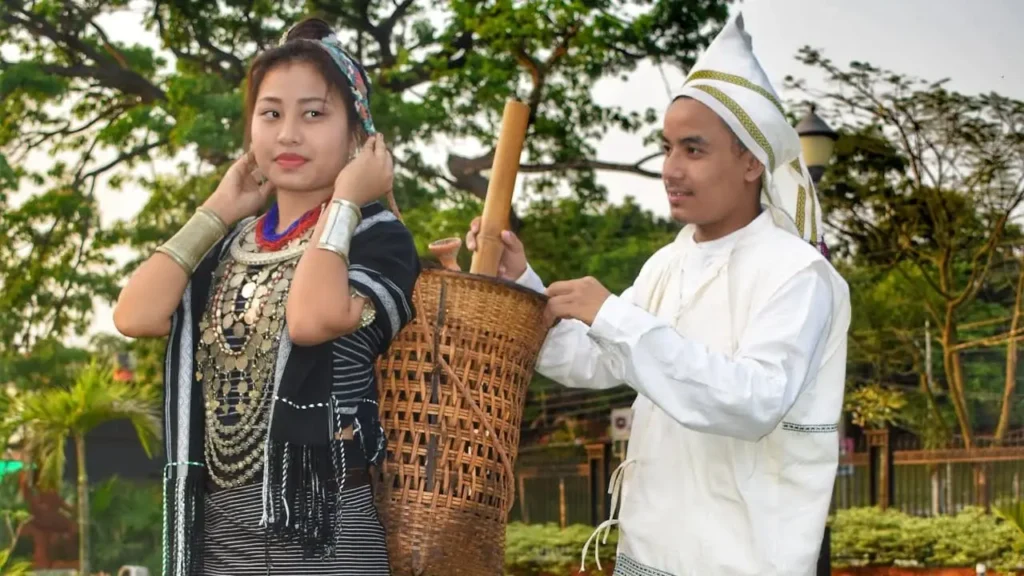
The Reang, also known as Bru, are one of Tripura’s oldest indigenous communities — a Tibeto-Burman people whose presence in the hills predates the Manikya kingdom. They are recognised as a Particularly Vulnerable Tribal Group (PVTG) — an official designation indicating communities whose populations are declining, whose traditional livelihoods are under pressure, or who have particularly complex vulnerabilities.
The Reang in context: The Reang people have experienced considerable displacement and difficulty in recent decades — particularly those from Mizoram, where an earlier conflict resulted in many Reang families taking refuge in Tripura’s north district. The Jampui Hills Reang community, however, has remained relatively stable and is the most culturally intact of the Reang populations in the region.
Hojagiri dance: The Reang community’s most celebrated cultural expression is the Hojagiri — a unique performance tradition in which women of the community balance pots on their heads, hold lit earthen lamps in their hands, and perform an intricate dance of extraordinary grace and balance. The Hojagiri is performed at community celebrations, festivals, and the Orange Festival, and has been recognised by UNESCO as an intangible cultural heritage tradition. Watching a skilled Hojagiri performance is one of the most memorable cultural experiences available in Tripura.
Weaving: Reang women weave on traditional loin-strap looms, producing textiles of distinctive geometric pattern in a palette of deep reds, oranges, and blacks. Their weaving is among the finest in Tripura and is available directly from weavers in the Jampui Hills villages.
Music: Reang music uses distinctive instruments including the Sarinda (a bowed instrument) and various bamboo flutes. Their oral musical tradition — transmitted through community gatherings rather than written notation — is a living archive of Reang cultural memory.
| The Hojagiri dance is the cultural centrepiece of any Jampui Hills visit. If you are visiting during the Orange Festival (November–December) or at other community celebrations, attend a Hojagiri performance with genuine attention — the technical achievement (balancing a full water pot on the head while executing foot-pattern dances with lit lamps in hand) is extraordinary and the cultural significance is profound. |
The Orange Orchards — Tripura’s Fruit Hills
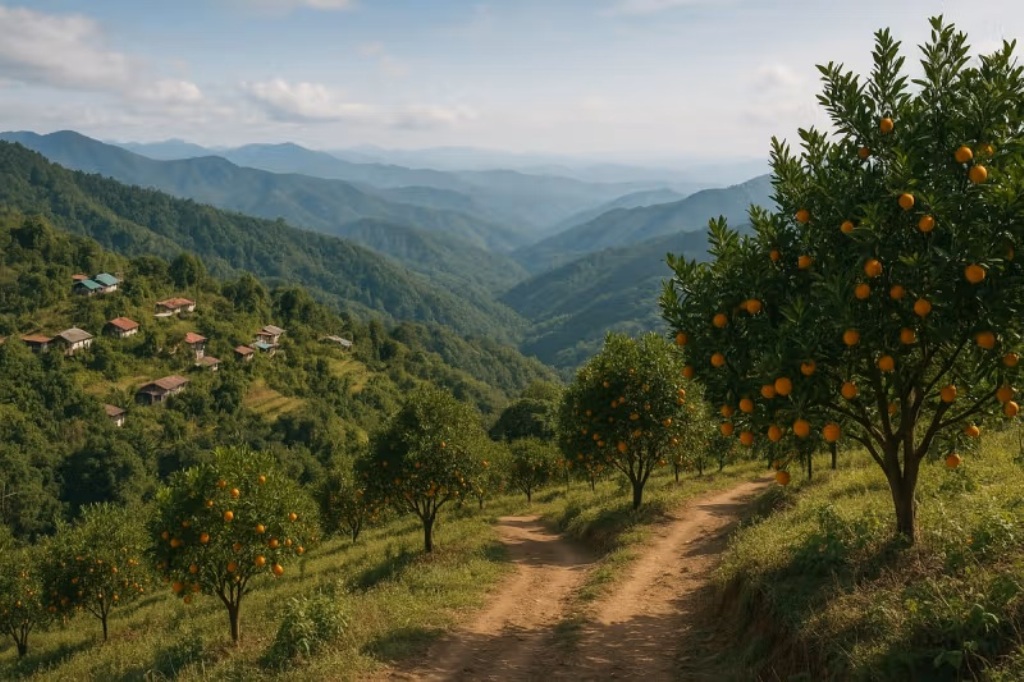
The orange orchards of Jampui Hills are the reason most visitors come, and they do not disappoint. The Khasi Mandarin orange — a variety that thrives in the cool, misty conditions of the Jampui ridge — covers the hillsides in dense rows, the trees heavy with fruit from November through February. The combination of the orange fruit against the green canopy, the mist drifting through the orchards in the early morning, and the ridge views extending across the borders are one of the most distinctive natural-agricultural landscapes in Northeast India.
November: The first oranges ripen; the orchards are at their most heavily fruited; the Orange Festival begins. The colour contrast of orange fruit and deep green foliage against the misty hills is at its finest.
December to January: Peak orange season; the full harvest is underway; the air in the orchards carries the distinctive citrus fragrance of fresh-picked mandarin. Most Reang families are actively harvesting, and visitors who ask respectfully are often welcomed to participate.
February: Late season; some oranges still on the trees; the mist and cool air continue; the ridge views are at their clearest.
Top Attractions in Jampui Hills
1. Orange Festival
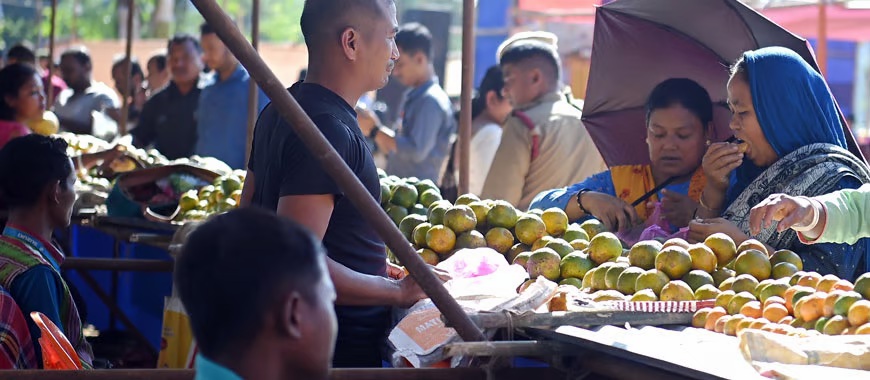
The Orange Festival, held in November–December when the Khasi Mandarin reaches peak harvest, is Tripura Tourism’s most photogenic annual event and one of the Northeast’s finest festival experiences. The festival is held in the Vanghmun area of Jampui Hills and combines the visual spectacle of the orange orchards with cultural performances by the Reang community — Hojagiri dance, traditional music, and community feasting.
- Held annually November to December; exact dates follow the harvest cycle — check Tripura Tourism for the current year
- Hojagiri dance performances by Reang women: the cultural highlight of the festival
- Traditional Reang music and craft exhibitions
- The orange orchards at their most heavily fruited provide the backdrop
- Fresh orange juice and locally produced orange-based food and drinks available
- Book accommodation (very limited) well in advance — Jampui fills completely during the festival
2. Vanghmun — The Main Village
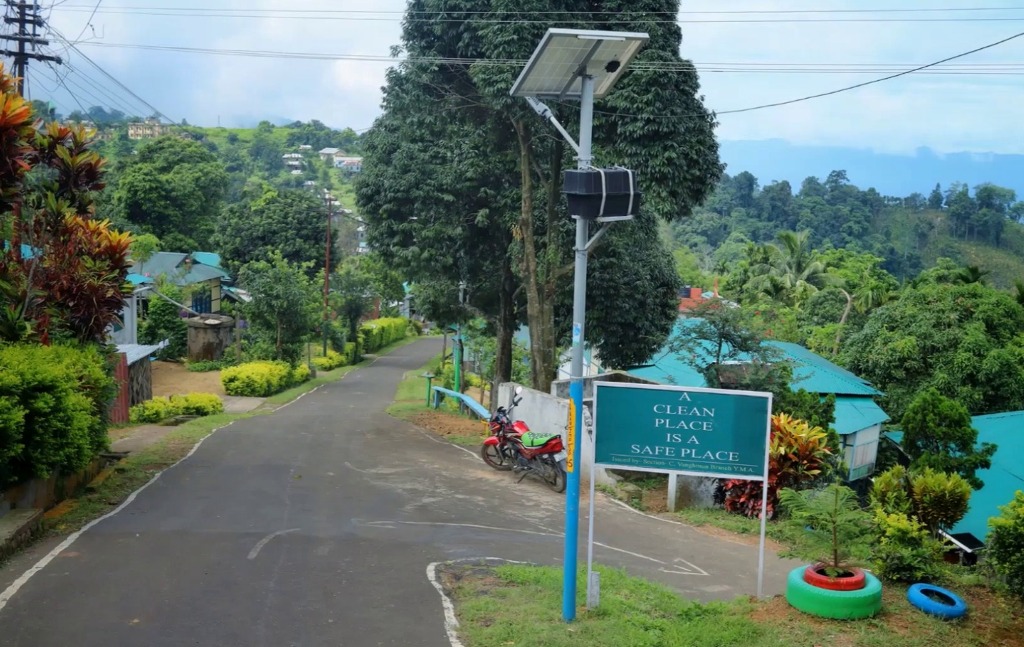
Vanghmun is the principal village of Jampui Hills — the largest settlement, the location of most guesthouses, and the centre of the Orange Festival. The village sits on the ridge at approximately 900 metres, with the orange orchards spreading down the hillsides in every direction. A walk through Vanghmun’s lanes in the morning — past the orchards, the Reang homes, the village church — is a pleasantly gentle introduction to the hill culture.
- Ridge-top village at approximately 900 metres
- Orange orchards immediately adjacent to the village lanes
- Village church is the community’s social centre — Sunday services are particularly warm
- The weekly market (if timing allows) brings villagers from across the hills
3. Sunrise Viewpoints — Views Across Three Borders
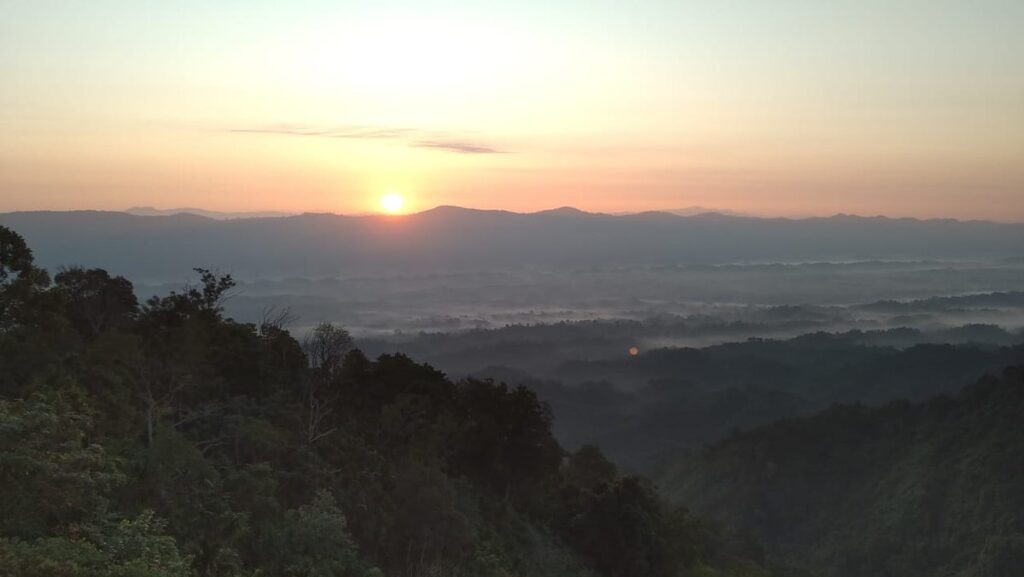
The Jampui ridge’s eastern and western faces offer views of extraordinary geographical range — west across the plains of Bangladesh stretching to the horizon, and east toward the Mizo Hills of Mizoram, with the plains of Assam visible in the far northeast on the clearest days. The sense of being at a geographic pivot point — Tripura is almost entirely surrounded by Bangladesh with only thin connections to the rest of India — is strongest from these ridge viewpoints.
- West-facing viewpoints: dawn views over Bangladesh plains; fog in the valleys below; the sun rising over the Jampui ridge
- East-facing viewpoints: views toward Mizoram; the forested hills of the India-Myanmar-Bangladesh triple border area
- February–March: the clearest visibility conditions; the least haze; the most distant views
- Several viewpoints are accessible on foot from Vanghmun in 20–40 minutes
4. Reang Village Cultural Walks
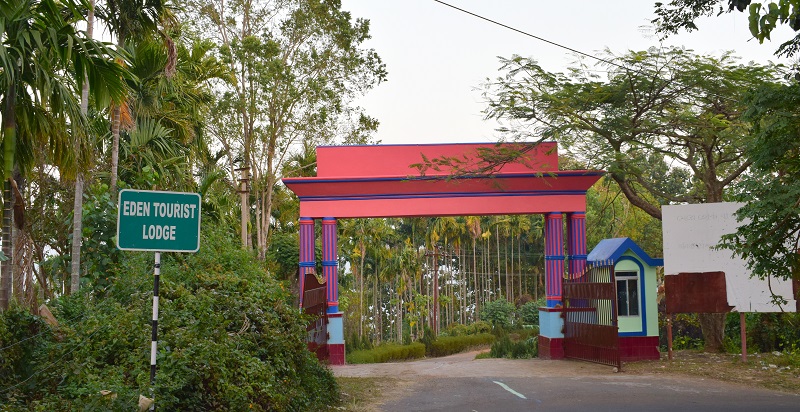
Walking through the Reang villages of the Jampui Hills — with a local guide arranged through the village tourism committee or your guesthouse — is the most culturally immersive experience available in the hills. The visits cover the traditional bamboo homes, the weaving demonstrations, the orchards that are the community’s primary livelihood, and (if timing is right) preparations for or performances of the Hojagiri dance.
- Local guide essential — arranges introductions and provides linguistic and cultural context
- Weaving demonstrations: Reang women weaving on loin-strap looms; direct purchase from weavers
- Orchard walks during harvest season: participate in picking with host family permission
- Evening community gatherings: the most spontaneous and authentic cultural encounters
5. Forest Walks & Birdwatching
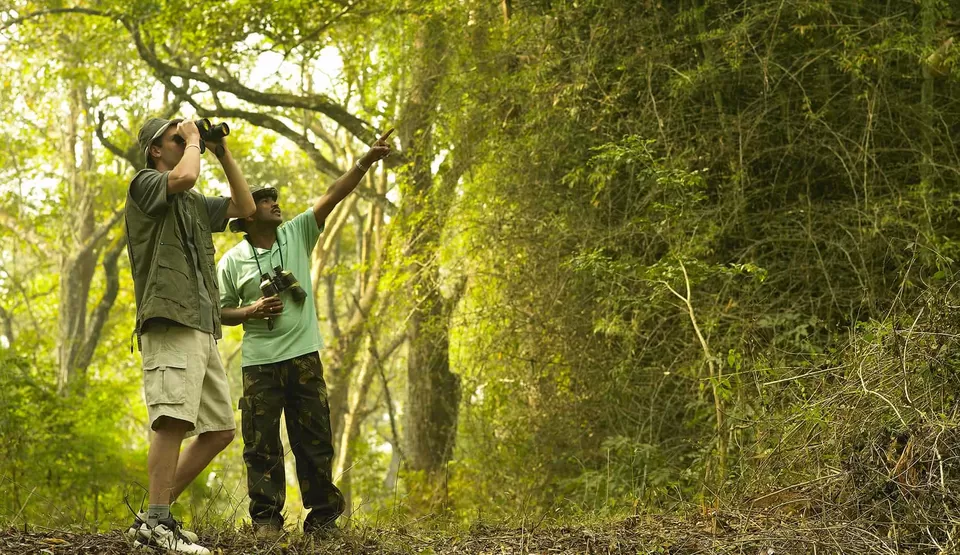
The forest on the Jampui Hills slopes below the orchard zone supports a range of Northeast Indian forest bird species — including several species of laughingthrush, sunbird, and the occasional Great Hornbill passing between forest patches. Dawn walks before the orchards begin to show morning activity are the most productive.
- Green-tailed Sunbird, Mrs Gould’s Sunbird — in the flowering plants at orchard edges
- Scaly-breasted Wren Babbler, various laughingthrush — in the forested section below the orchards
- Hornbill species passing overhead in the early morning
- The mist in the forest at dawn creates extraordinary photographic conditions
Top Things to Do in Jampui Hills
- Orange Festival attendance (November–December) — The centrepiece; Hojagiri dance, orange orchards at peak, community celebration
- Reang village walk with local guide — Cultural depth; weaving, orchards, oral tradition
- Ridge sunrise viewpoint — Dawn; views across Bangladesh and toward Mizoram from Tripura’s highest ridge
- Orange orchard walk — November–February; the fragrance and colour of a working mandarin orchard in harvest
- Hojagiri dance performance — Any time community celebrations occur; ask your guesthouse host for current events
- Birdwatching at forest edge — Dawn; the forest-orchard interface is particularly productive
Where to Eat & Stay in Jampui Hills
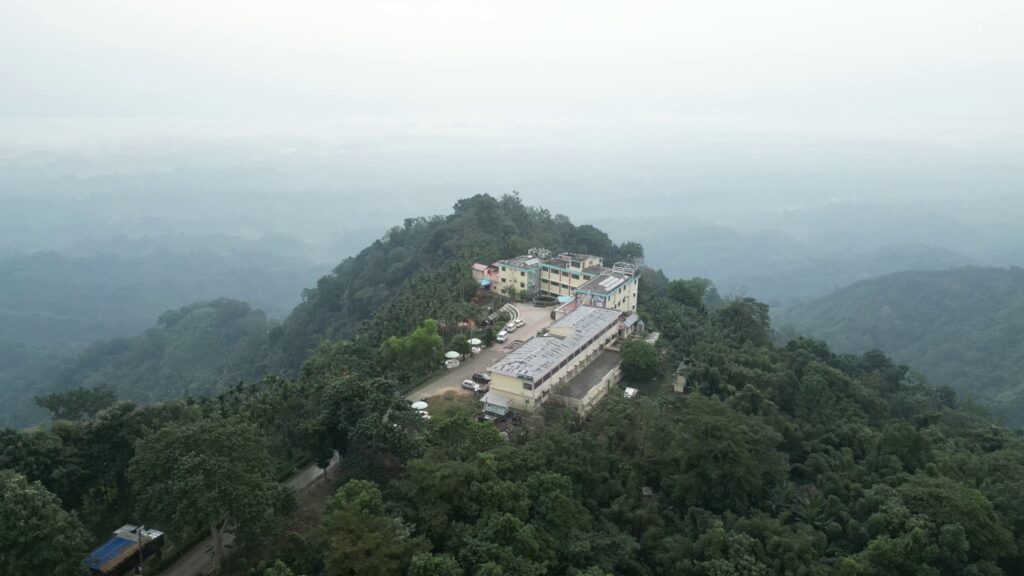
Jampui Hills has very limited accommodation — this is a remote hill destination and the lack of infrastructure is part of its appeal. Book well in advance, particularly for the Orange Festival period.
- Community homestays — The primary accommodation option; Reang families accommodate visitors in their homes; meals are home-cooked Reang food; the most culturally immersive experience; ₹500–₹1,000 per person including meals
- Tripura Tourism guesthouse (Vanghmun) — Simple government accommodation; book through Tripura Tourism Agartala office; limited rooms — book early
- Basic guesthouses in Vanghmun — A few private options; basic facilities; ₹600–₹1,500
- Food — Home-cooked Reang meals (rice, pork or chicken, bamboo shoot preparations, local vegetables) are the primary food experience; fresh oranges from November onwards are freely available; there are no restaurants in the conventional sense
| The homestay experience in Jampui Hills is one of the finest in Northeast India. Waking in a Reang home with the mist drifting through the orange orchards below, a cup of hot tea in hand, the hills of Bangladesh and Mizoram emerging from the morning light — this is what community tourism at its best looks like. The hospitality is genuine, the setting is extraordinary, and every rupee spent supports the Reang community directly. |
How to Reach Jampui Hills
- From Agartala: 202 km north on NH44 to Dharmanagar (163 km), then 70 km to Vanghmun on State Highway. Total time: approximately 6 hours. The road from Dharmanagar to Jampui climbs through forested terrain and is of good quality.
- From Dharmanagar: 70 km to Vanghmun; approximately 2.5 hours on the hill road. Dharmanagar is the nearest large town with fuel, ATMs, and reliable accommodation as a pre-Jampui overnight base.
- By shared vehicle: Shared taxis from Dharmanagar to Jampui Hills available; enquire at the Dharmanagar taxi stand.
- By train: Dharmanagar is on the Agartala–Sabroom rail line; trains from Agartala take 4–5 hours. Overnight from Agartala to Dharmanagar, then early morning drive to Jampui is the recommended approach.
- Important: Fill fuel at Dharmanagar before proceeding to Jampui Hills; no petrol stations in the hills.
Practical Two-Day Jampui Hills Itinerary
- Day 1 — Travel & Arrival: Depart Agartala early morning; drive to Dharmanagar (163 km; 4.5 hours); lunch in Dharmanagar; drive to Jampui/Vanghmun (70 km; 2.5 hours); arrive late afternoon; settle into homestay; evening village walk and sunset viewpoint
- Day 2 — The Full Jampui Experience: Pre-dawn sunrise viewpoint (Bangladesh plain views); morning orchard walk; Reang village cultural walk (weaving, oral tradition); Hojagiri dance performance (if arranged); afternoon viewpoints; return to Dharmanagar for overnight or drive to Agartala
Travel Essentials for Jampui Hills
- No ILP required for Tripura
- Carry sufficient cash from Agartala or Dharmanagar — no ATMs in Jampui Hills
- Warm clothing essential: at 931m, nights are genuinely cold from November to February; mornings below 10°C
- Waterproof layer: hill mist and morning rain are common year-round
- Book homestay or guesthouse accommodation well in advance — very limited capacity
- Fill the fuel in Dharmanagar before ascending
- Mobile signal: Airtel and BSNL available in Vanghmun; patchy in the hills
Best Time to Visit Jampui Hills
- November to December: Orange Festival and peak harvest season — the most visually spectacular and culturally vibrant time; book accommodation 2–3 months in advance
- January to February: Orange season continues; clear views; the best balance of fruit, culture, and visibility
- March to April: Post-orange season; clear skies; spring forest; pleasant temperatures; quieter
- June to September: Monsoon; heavy rain; roads can become difficult; mist is constantly present; the forest is lush, but the viewpoints are obscured; not recommended for first visits
