




Tripura, one of Northeast India’s most underrated states, is a compact but richly layered destination where royal Bengal heritage meets indigenous tribal culture and extraordinary biodiversity. Surrounded on three sides by Bangladesh, Tripura has developed a unique cultural identity shaped by over a thousand years of Manikya dynasty rule, the traditions of 19 indigenous tribal communities, and a vibrant Bengali artistic tradition.
From the grand Ujjayanta Palace in Agartala to the fairy-tale Neermahal water palace rising from Rudrasagar Lake, the ancient rock carvings of Unakoti, and the wildlife of Sepahijala Sanctuary, Tripura rewards the curious traveler with history, culture, and nature in equal measure.
In this Tripura travel guide, we cover the state’s culture, top destinations, experiences, travel tips, and everything you need to plan your journey.
Culture of Tripura: Tribes, Traditions, Festivals, and Cuisine
Tripura’s culture is a fascinating fusion of Bengali and tribal traditions, shaped by centuries of Manikya royal patronage, indigenous tribal communities, and significant Bengali migration in the 20th century.
Tribal Heritage of Tripura
Tripura is home to 19 officially recognised indigenous tribal groups, each with their own language, weaving tradition, and cultural practices.
Major Tribes
- Tripuri (Borok) — The largest tribal group; custodians of Garia and Ker festival traditions
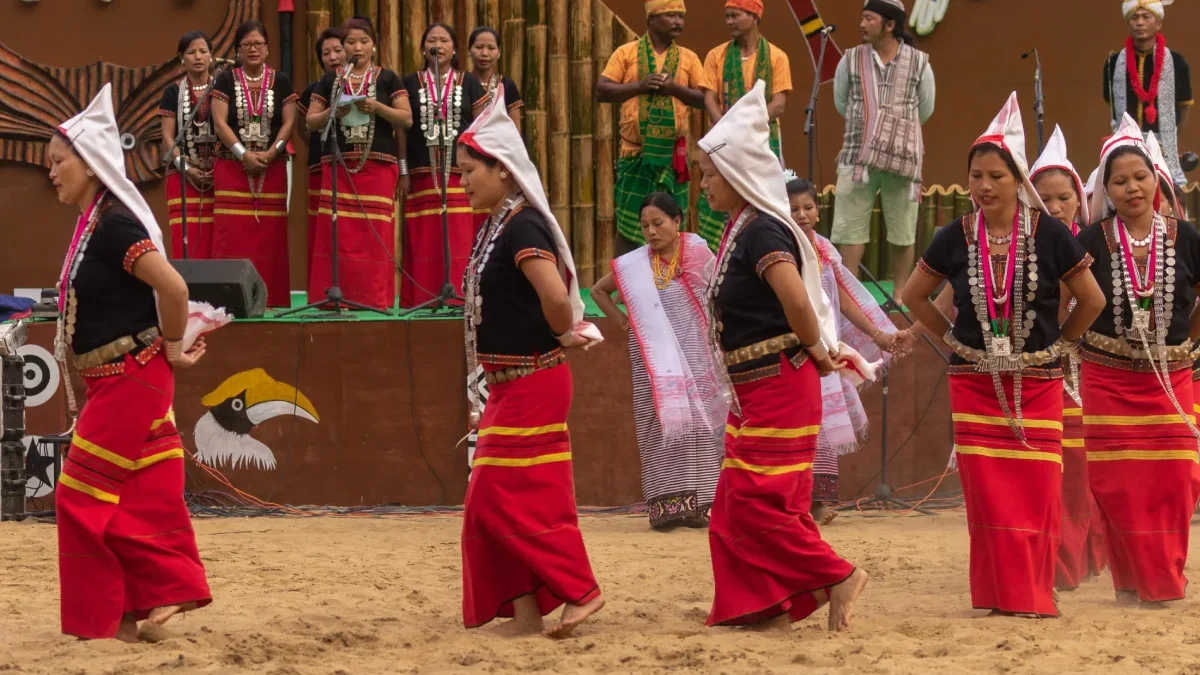
- Reang (Bru) — Known for the Hojagiri dance, one of India’s most distinctive folk dances
- Chakma — Buddhist community known for skilled weaving
- Jamatia — Agricultural tribe with strong communal traditions
- Mog — Buddhist community with Burmese cultural connections
Each tribe maintains distinct weaving traditions — Tripuri risa (shawl), rignai (wrap skirt), and rikutu are among the finest handwoven textiles in Northeast India.
Festivals of Tripura
Kharchi Puja
- The biggest festival of the Tripuri community, celebrating the 14 deities of the Tripura royal family
- Held in July in Agartala; draws thousands of devotees
- Week-long celebration with rituals, processions, and cultural performances
Garia Puja
- Thanksgiving festival of the Tripuri tribe, celebrating the deity of prosperity
- Marked by Garia dance, music, and community feasting
Other Important Festivals
- Hojagiri — Festival of the Reang tribe featuring the extraordinary Hojagiri balancing dance
- Ker Puja — Unique Tripuri festival with strict restrictions on public activity for three days
- Durga Puja — The biggest Bengali festival, celebrated with exceptional artistry in Agartala
Religion and Lifestyle in Tripura
- Hinduism is the dominant religion, with significant Buddhist and Christian minority communities
- The Manikya royal family’s patronage of Hinduism has left a rich temple heritage across the state
- Bengali language and culture co-exist with tribal traditions in a largely harmonious fashion
- Handloom weaving is central to tribal women’s identity and economy
Tripura Cuisine
- Gudok — A mash of dried fish and local vegetables; one of Tripura’s most distinctive dishes
- Wahan Mosdeng — Spicy pork preparation with chili and local herbs
- Muya Bai — Bamboo shoot curry, a staple across tribal communities
- Chakhwi — A traditional stew of meat, bamboo shoots, and vegetables
- Berma — Fermented dried fish used as a seasoning; deeply characteristic of Tripuri cooking
- Mui Borok — Traditional multi-dish Tripuri meal served on banana leaf
Top Tourist Destinations in Tripura
1. Agartala — The Royal Capital
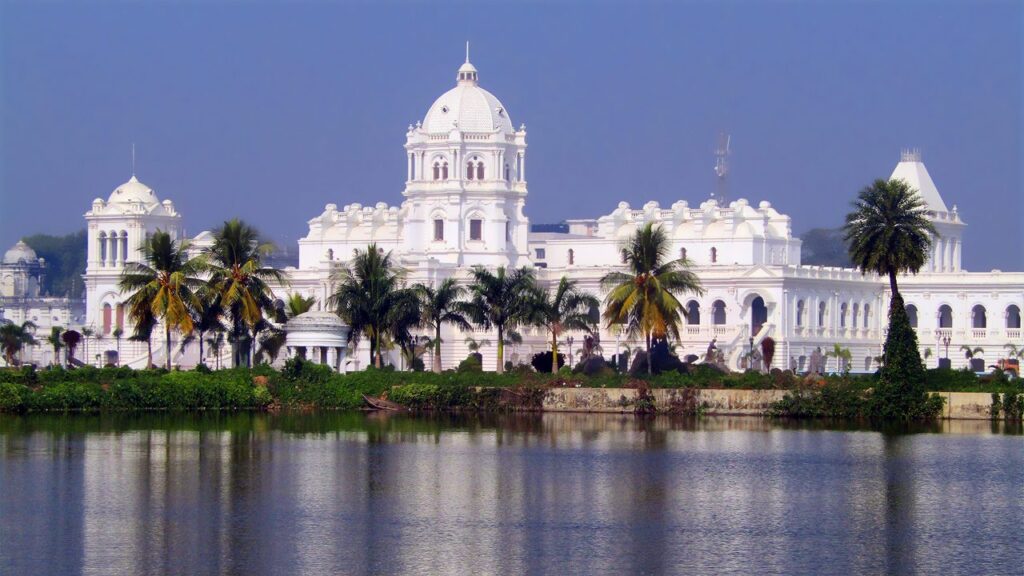
Agartala, Tripura’s capital, is a leafy, unhurried city with some of Northeast India’s finest colonial and royal architecture. At its heart stands the magnificent Ujjayanta Palace, the former royal residence of the Manikya dynasty, now one of the region’s most impressive state museums.
Key Highlights
- Ujjayanta Palace — Indo-Saracenic palace built in 1901; now housing the Tripura State Museum
- Tripura Sundari Temple (Matabari) — One of India’s 51 Shakti peethas, located 55 km from Agartala
- Jagannath Temple — A significant temple complex in the heart of the city
- Heritage Park — Open-air museum of Tripura’s tribal and cultural heritage
Best Experiences
- Palace and museum exploration
- Evening light show at the Heritage Park
- Shopping for handloom textiles at local markets
2. Neermahal — The Water Palace
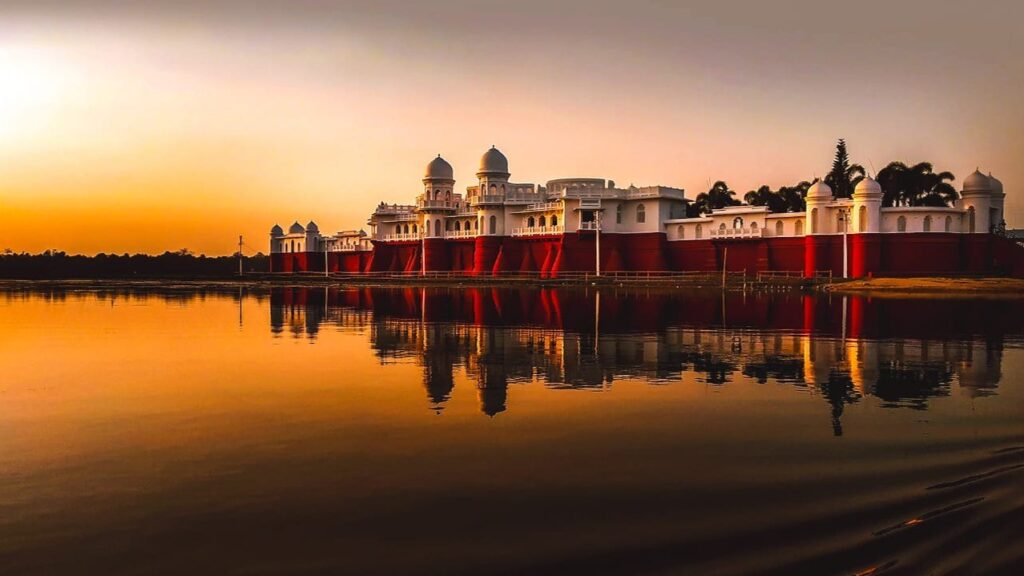
Neermahal, the summer palace of the Manikya royal family, rises dramatically from the waters of Rudrasagar Lake — the only lake palace in Northeast India. Built in 1930 as a hybrid of Hindu and Mughal architectural styles, Neermahal is most magical in the late afternoon light when its reflection doubles its splendour.
Key Highlights
- Lake palace combining Hindu and Mughal architecture
- Boat rides from Melaghar village to the palace
- Annual Neermahal water festival with boat races and cultural performances
- Bird-rich lake environment — ideal for birdwatching
Best Experiences
- Sunrise or sunset boat ride to the palace
- Overnight stay in the nearby lake-view accommodation
- Festival visit in August–September
3. Unakoti — The Ancient Rock Carvings
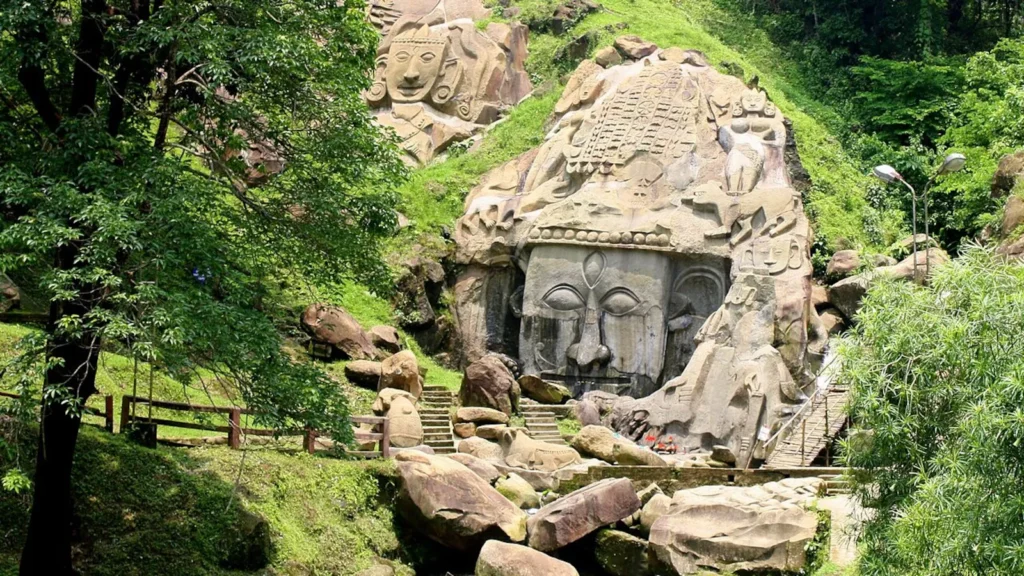
Unakoti, in northern Tripura, is one of India’s most extraordinary and least-visited archaeological sites. The forest hillside is covered with massive bas-relief carvings of Hindu deities — primarily Shiva — dating from the 8th to 12th centuries. Unakoti means ‘one less than a crore’ (ten million) and refers to the number of deities carved here.
Key Highlights
- Giant rock-cut Shiva head — The largest carving, measuring over 10 metres
- Hundreds of carved deities covering the forest hillside
- Natural springs and waterfalls adding to the sacred atmosphere
- Raghunandan Hill — Adjacent hill with more carved figures
Best Experiences
- Morning visit before crowds arrive
- Heritage and archaeological photography
- Combined visit with the Chabimura rock carvings on the Gomati River
4. Sepahijala Wildlife Sanctuary — Primate Haven
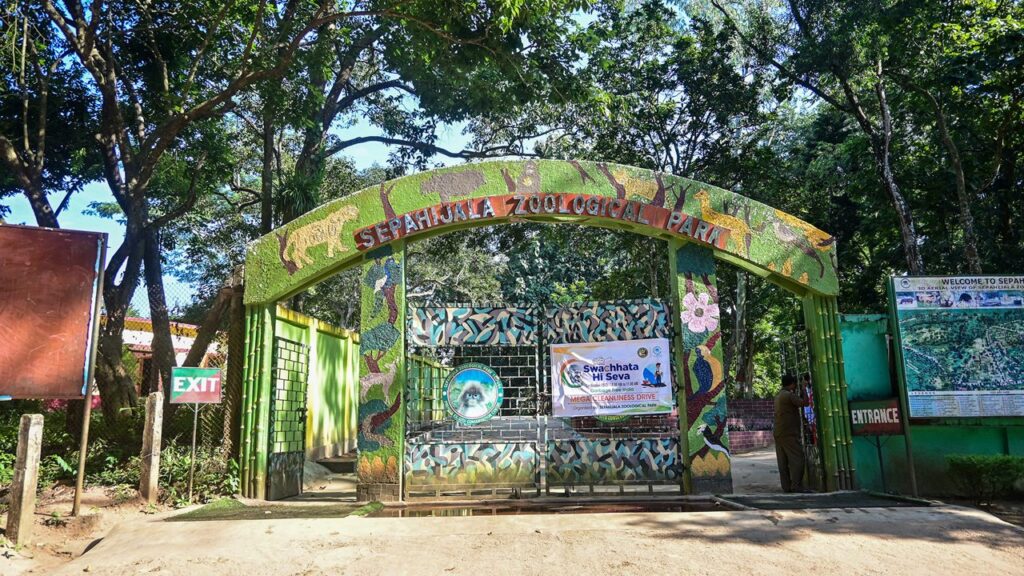
Sepahijala Wildlife Sanctuary, just 25 km from Agartala, is one of Northeast India’s most accessible wildlife sanctuaries and one of India’s most important reserves for clouded leopards and spectacled monkeys. A botanical garden, zoo, and natural lake add to the appeal.
Key Highlights
- Clouded Leopard — Tripura’s state animal; one of the sanctuary’s flagship species
- Spectacled Monkey — Rare primate found in significant numbers
- Sipahijala Lake — Scenic wetland attracting migratory birds
- Botanical garden with 150+ plant species
Best Experiences
- Early morning wildlife trails
- Birdwatching at the lake (best in winter)
- Nature photography in the dense forest
5. Jampui Hills — The Abode of Orange Orchards
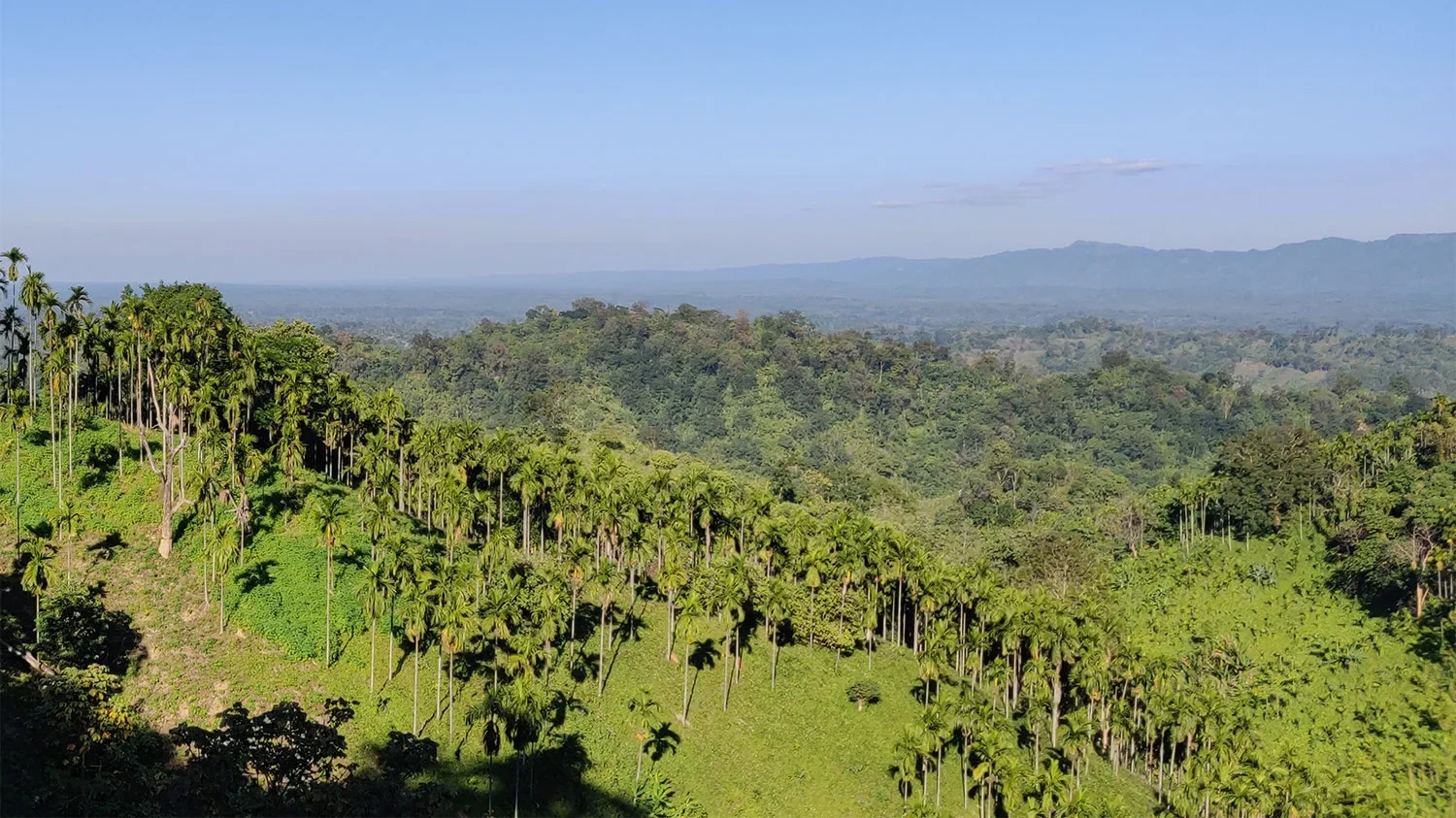
Jampui Hills, in the northernmost part of Tripura near the Bangladesh border, is the state’s most scenic highland area. Known for its orange orchards that bloom in November, cooler temperatures, and the cultural traditions of the Lushai community, Jampui offers a quieter, more contemplative travel experience.
Key Highlights
- Orange Festival — Held in November during the harvest; a major local celebration
- Panoramic views over Bangladesh from ridge viewpoints
- Lushai tribal culture and traditional village life
- Cool climate offering respite from the lowland heat
Other Must-Visit Places in Tripura
- Chabimura — Dramatic river gorge with ancient rock carvings
- Trishna Wildlife Sanctuary — Important elephant corridor and bison habitat
- Pilak — Archaeological site with Buddhist and Hindu sculptures
- Kamalasagar Lake — Scenic lake on the Bangladesh border with a hilltop temple
Top Experiences in Tripura
Cultural Tourism in Tripura
- Royal heritage walks in Agartala — Palace, temples, and heritage architecture
- Tribal village visits in the Tripura Tribal Areas Autonomous District Council regions
- Hojagiri dance performance — Reang tribe’s extraordinary balancing dance
- Handloom weaving workshops — Risa shawls, rignai, and traditional textiles
Adventure Tourism
- Jungle treks in Sepahijala and Trishna sanctuaries
- Boating on Rudrasagar, Kamalasagar, and Dumboor lakes
- Rock-climbing and nature trails in Jampui Hills
- Cycling tours of Agartala and surrounding villages
Nature & Rural Experiences
- Birdwatching at Sepahijala and Rudrasagar — over 150 species
- Village walks in Jampui Hills during orange harvest season
- Boat rides on the Gomati River past the Chabimura carvings
- Archaeological exploration at Unakoti and Pilak
Best Time to Visit Tripura
- October to March — Best weather; pleasant temperatures; all sites accessible
- November — Orange Festival in Jampui Hills
- July — Kharchi Puja; most vibrant cultural period in Agartala
- April to June — Hot and humid; less ideal but manageable
- June to September — Monsoon; heavy rainfall can affect travel in hilly areas
Key Tourist Information for Tripura
Permits
No Inner Line Permit (ILP) is required for Indian nationals. Foreign nationals also do not require a special permit for most of Tripura. Standard ID and visa documentation applies.
Travel Essentials
- Agartala is the easiest city in Northeast India to reach from Bangladesh — a major cross-border entry point
- Hire local guides for Unakoti, Chabimura, and wildlife sanctuaries
- Good road connectivity throughout the state
- Carry cash outside Agartala — ATMs limited in rural areas
How to Reach Tripura
By Air
- Maharaja Bir Bikram Airport, Agartala — Well connected to Kolkata, Delhi, Guwahati, and other Indian cities
By Train
- Agartala Railway Station — Connected to Kolkata, Guwahati, and other major cities
- New Kanchan Bagh station is the main hub
By Road
- NH8 connects Tripura to Assam and the rest of the Northeast
- Bangladesh border crossings at Akhaura (for those coming from Dhaka)
Accommodation in Tripura
Travelers can choose from:
- Heritage Palace Hotels in Agartala — For a taste of royal Tripura
- Lake-view guesthouses near Neermahal and Rudrasagar
- Tribal homestays in Jampui Hills and rural districts
- Budget hotels and guesthouses in Agartala
Why Visit Tripura
Tripura is Northeast India’s hidden gem — a state that consistently surprises visitors who expect little and find much. The water palace of Neermahal, the ancient carvings of Unakoti, the royal grandeur of Ujjayanta, and the warmth of Tripuri and Bengali hospitality combine to make this one of the region’s most rewarding and underexplored destinations.
