




At the foot of the Eastern Himalayas, where the Siang River bursts out of its gorge and begins its transformation into the mighty Brahmaputra, lies Pasighat — the oldest town in Arunachal Pradesh and the cultural capital of the Adi people. Founded by the British in 1911 as a frontier outpost, Pasighat has grown into a vibrant, accessible, and increasingly adventure-focused destination that serves as the perfect introduction to Arunachal Pradesh for first-time visitors.
Unlike the high-altitude remoteness of Tawang or the inaccessibility of Mechuka, Pasighat sits at just 153 metres above sea level, enjoys a tropical climate, and is connected by road and air to the rest of Assam and India. It is the easiest entry point to Arunachal and, for many travelers, one of the most rewarding — combining the rich cultural traditions of the Adi people, exceptional river adventure, wildlife sanctuary access, and some of the most beautiful Himalayan foothills scenery in the region.
Quick Facts About Pasighat
| State | Arunachal Pradesh |
| District | East Siang |
| Altitude | 153 metres |
| Founded | 1911 (oldest town in Arunachal Pradesh) |
| Language | Adi, Hindi, English |
| Religion | Donyi-Polo (sun and moon worship); Christianity; Hinduism |
| Airport | Pasighat Airport — connections to Guwahati, Kolkata, Itanagar |
| Nearest Rail | Murkongselek (Assam) — 14 km across the Siang River |
| Permit Required | ILP for Indian nationals; PAP for foreign nationals |
| Best Time | October to April |
The People of Pasighat: The Adi Tribe
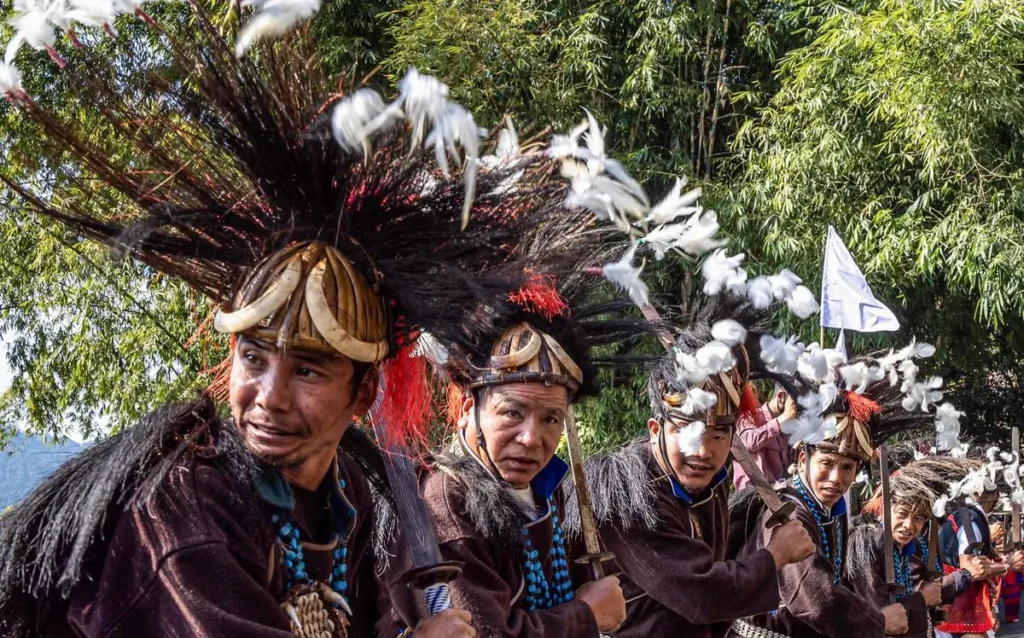
The Adi (meaning ‘hill people’) are the largest tribal group in Arunachal Pradesh, numbering over 200,000 people across the Siang, Lohit, and Dibang valley districts. The Adi are known throughout Northeast India for their physical strength, their expertise as river navigators and hunters, their intricate cane and bamboo weaving traditions, and their unique indigenous religion — Donyi-Polo (worship of the Sun ‘Donyi’ and Moon ‘Polo’).
Donyi-Polo: The indigenous faith of the Adi is a nature-based religion of extraordinary sophistication, centring on reverence for the sun and moon as the ultimate source of life and order. Donyi-Polo has been formally codified since the 1970s as a response to conversion pressures, and today it is one of the most self-aware and articulate indigenous religious movements in India.
Architecture: Traditional Adi houses are built on stilts (morung-style), constructed entirely from bamboo and timber without nails. The elevated design protects against floods and wildlife, and the craftsmanship is remarkable.
Weaving: Adi women are master weavers. The traditional Adi textile — featuring geometric patterns in red, black, and white — is made on back-strap looms and used for clothing, bags, and ceremonial objects. Authentic Adi weave is one of the finest handicraft purchases available in Arunachal Pradesh.
Music & Dance: The Ponung (a group dance performed by women during festivals) and the Dobur Uie (harvest festival dance) are among the most vibrant traditional performances in the region.
Top Attractions in Pasighat
1. The Siang River
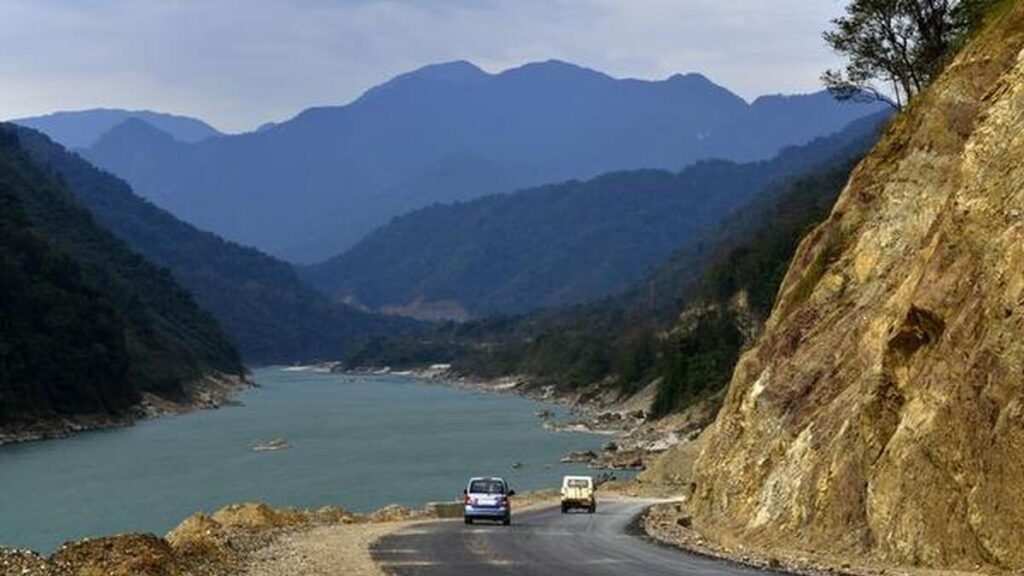
The Siang River — which becomes the Brahmaputra once it crosses into Assam — is the defining geographic and cultural feature of the town. Emerging from the Tsangpo gorge in Tibet as one of the world’s most powerful rivers, the Siang races through the Arunachal hills before slowing at Pasighat. The river viewpoints near the town offer extraordinary vistas of swirling blue-green water against a backdrop of forested hills.
- Pasighat Ghat — The main river viewpoint; popular at sunrise and sunset
- Raft and kayak launch points for adventure sports
- Seasonal flooding (June–October) creates dramatic river theatre
- Traditional Adi fishing methods using conical traps visible from the bank
2. Daying Ering Wildlife Sanctuary
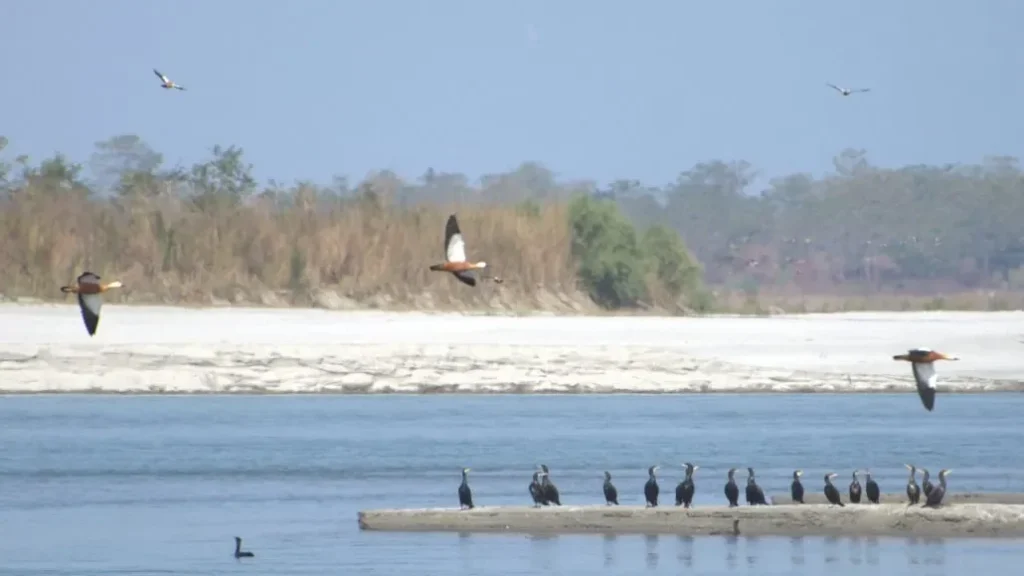
Daying Ering Wildlife Sanctuary, 13 km from Pasighat, is a river island sanctuary on the Siang floodplain — one of India’s most unique wildlife habitats. The sanctuary supports elephants, fishing cats, and an extraordinary diversity of riverine birds, but is best known for its outstanding Gangetic dolphin and floodplain wildlife.
- Gangetic River Dolphin sightings from the riverbank
- Elephants crossing between mainland and river islands
- Floodplain birdwatching — Bengal Florican, Lesser Adjutant, and migrating waterfowl
- Accessible by boat from Pasighat
3. Kekar Monying (Lovers’ Point)
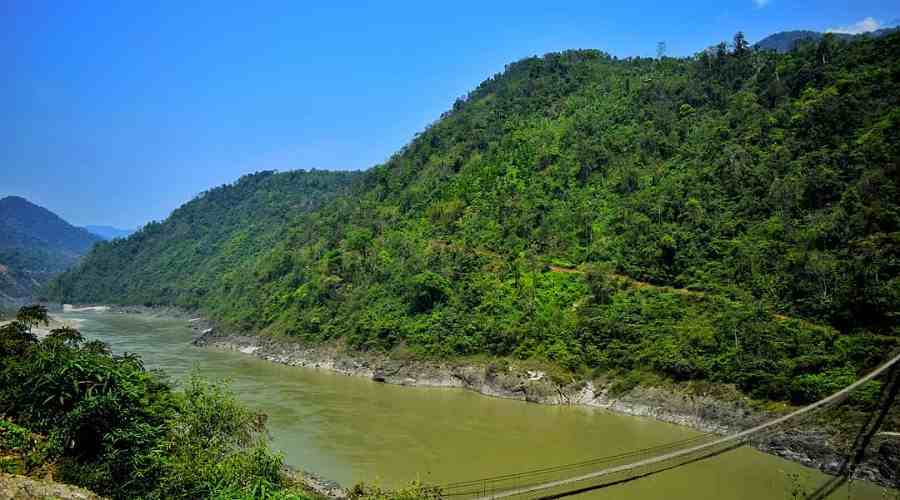
Kekar Monying, a scenic viewpoint on a hillside above Pasighat, offers panoramic views over the Siang River valley, the town, and the Himalayan foothills stretching north toward Tibet. It is the most popular sunset viewpoint in Pasighat and a short drive from the town centre.
4. Siang River Rafting
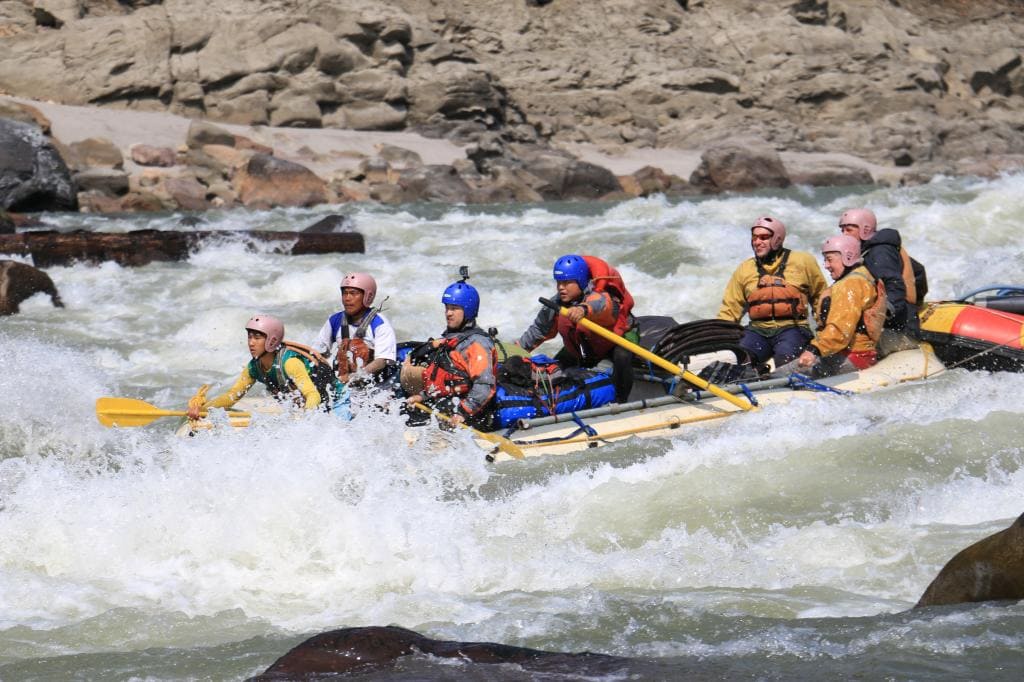
The Siang River below Pasighat is one of the finest river rafting destinations in Northeast India. The grade III–IV rapids between Yingkiong and Pasighat offer an exhilarating multi-day rafting experience through some of the most dramatic gorge scenery in the Eastern Himalayas. Day trips on calmer sections near Pasighat are also available for beginners.
- Multi-day expedition rafting: Yingkiong to Pasighat (3–4 days, Grade III-IV)
- Day rafting near Pasighat: Gentler rapids suitable for families and beginners
- Best season: October to April (river levels safe and manageable)
- Arrange through registered adventure operators in Pasighat
5. Adi Cultural Centre & Crafts
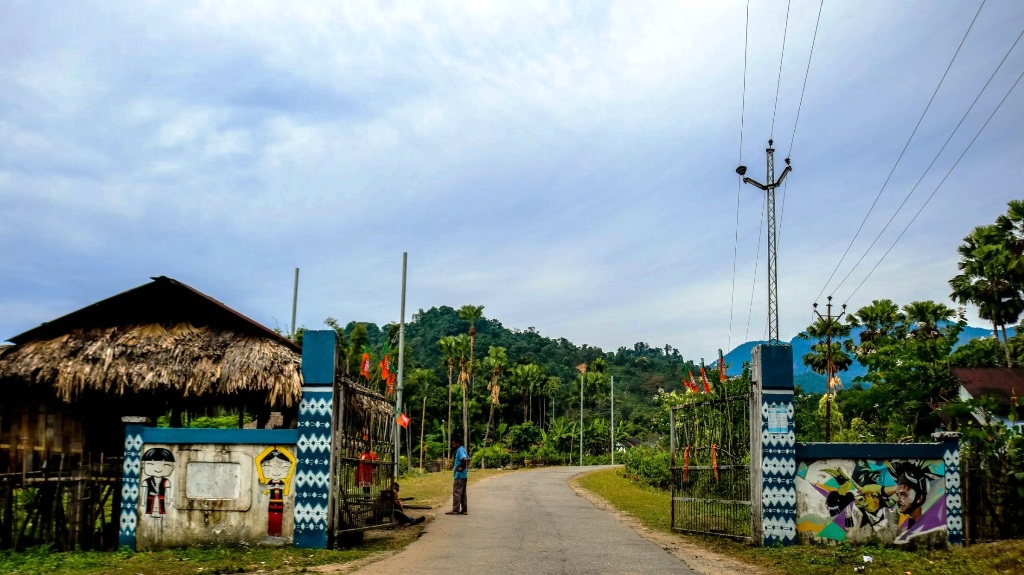
The area has several craft centres where Adi weaving can be observed and traditional textiles purchased directly from artisans. The weekly market in Pasighat brings together Adi sellers from villages across the district, offering everything from fresh produce to handwoven textiles and bamboo craft.
6. Borguli and Surrounding Villages
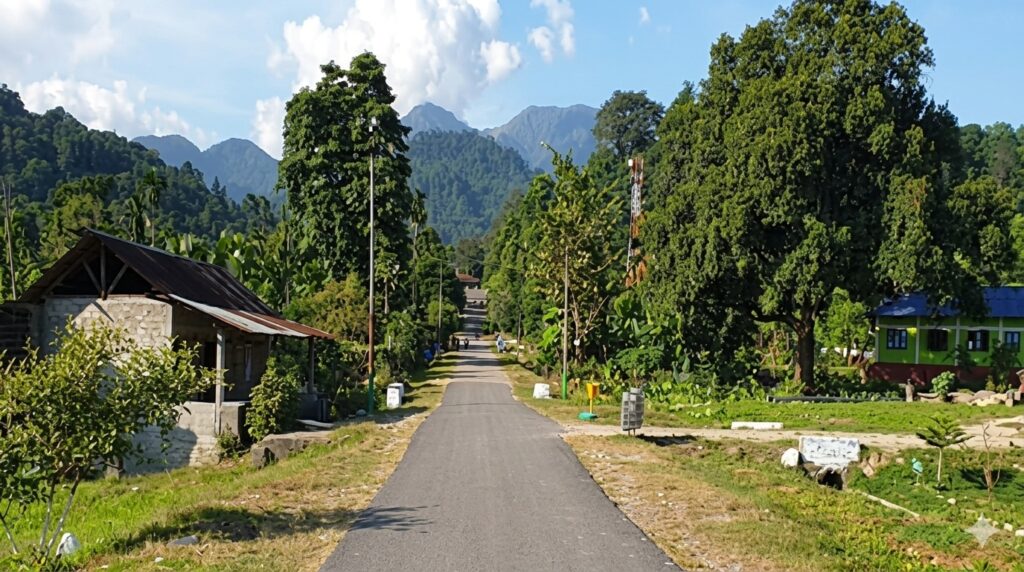
Several traditional Adi villages within 20–30 km of Pasighat — including Borguli, Kambang, and Mebo — offer village walks, cultural interaction, and examples of traditional stilt-house architecture. Village visits arranged through local guides or the district tourism office ensure culturally sensitive interactions.
Festivals of Pasighat & the Adi People
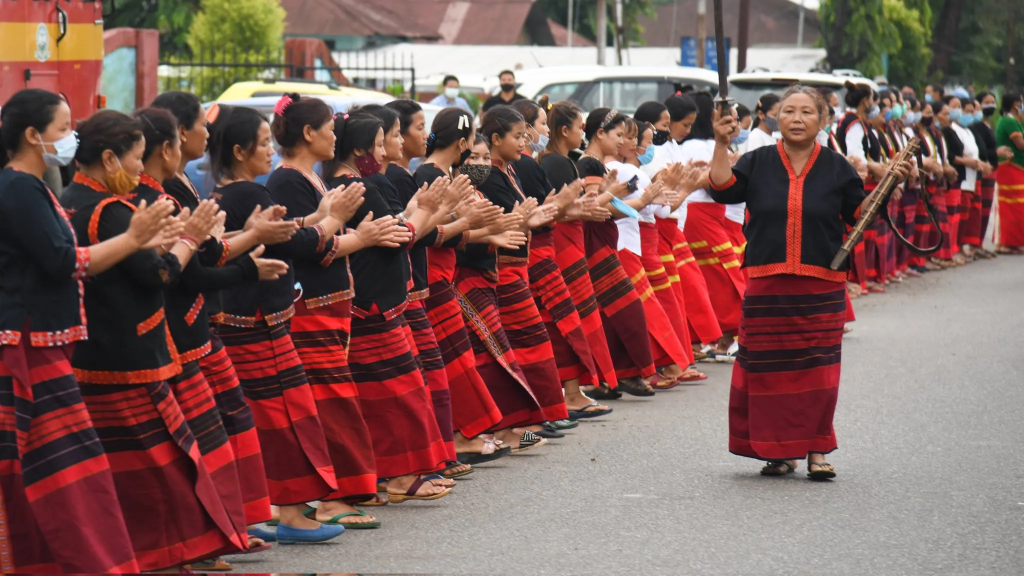
- Ponung Festival (January–February): The most important Adi festival; features the ponung group dance performed by women in traditional dress; a celebration of harvest and community gratitude
- Dobur Uie (October): Harvest thanksgiving festival with community dancing, music, and the ritual sharing of rice beer (apong)
- Ali-Ai-Ligang (February): Spring sowing festival shared with other Arunachal tribes; feasting, music, and agricultural rituals
- Solung (August–September): Five-day harvest festival; one of the most elaborate Adi ceremonial occasions with animal sacrifice, community feasting, and traditional games
Top Things to Do in Pasighat
- River rafting or kayaking — Book a half-day or multi-day rafting trip on the Siang; one of the finest river experiences in Northeast India
- Village heritage walks — Explore traditional Adi villages with a local guide; observe stilt-house architecture and agricultural practices
- Wildlife sanctuary boat trip — Morning boat excursion into Daying Ering Sanctuary for dolphin and birdwatching
- Sunrise at Kekar Monying — Walk or drive up for the morning light over the Siang valley
- Weaving workshop — Watch Adi women work on traditional back-strap looms and purchase authentic textiles
- Local market exploration — The weekly market is a genuine community gathering with foods, crafts, and social interaction, unlike any tourist market
Where to Eat in Pasighat
- Pehak — Fermented rice wrapped in leaves and cooked; a uniquely Adi food experience
- Apong (rice beer) — Multiple varieties; the mildest versions are accessible to first-time visitors
- Smoked pork with bamboo shoot — A staple of Adi cuisine; simple and delicious
- Fish preparations — River fish from the Siang prepared in various ways; fresh and excellent
- Adi Thali — A curated traditional meal available at a growing number of cultural restaurants and homestays in Pasighat
Where to Stay in Pasighat
- Adi homestays — Available in and around surrounding villages; the most authentic option with home-cooked meals and cultural access
- Circuit House — Well-maintained government accommodation; bookable through the Deputy Commissioner’s office
- Budget hotels in town — Several options along the main road ranging from ₹700–₹2,500 per night
- River-view guesthouses — A few properties near the river offer spectacular morning views
Use our directory to find list of homestays in Pasighat
How to Reach Pasighat
- By Air: Pasighat Airport has regular connections to Guwahati, Kolkata, and Itanagar — making it one of the most accessible destinations in Arunachal Pradesh. Flight time from Guwahati is approximately 35 minutes.
- By Road from Guwahati: NH15 to Dibrugarh (Assam) then NH37 to Murkongselek; cross the Siang by ferry or bridge to Pasighat. Total approximately 400 km, 10–12 hours.
- By Train: Murkongselek (Assam) is the nearest railhead, 14 km from Pasighat across the river. The Arunachal Express from Guwahati stops at Murkongselek; journey time approximately 10–12 hours.
Travel Essentials for Pasighat
- ILP required — apply online at Arunachal Pradesh ILP; same-day processing available
- Pasighat is one of the warmest and most accessible towns in Arunachal; light cotton clothing suitable for most of the year
- ATMs available in the town — relatively reliable compared to other Arunachal destinations
- Mobile signal: All major carriers work in Pasighat; connectivity is good
- Insect repellent essential — tropical altitude means mosquitoes year-round
- Best combined with Upper Siang district exploration (Yingkiong, Along) for a fuller East Arunachal itinerary
Also Read: How to Apply For Travel Permits for Traveling to Northeast India
Best Time to Visit Pasighat
- October to February: Ideal; cool temperatures; river levels safe for rafting; migratory birds at Daying Ering
- March to April: Warm and pleasant; festivals; good for all activities
- May to June: Hot and humid; pre-monsoon showers begin
- July to September: Heavy monsoon; river flooding; rafting suspended; some attractions inaccessible
| Pasighat is an ideal starting point for a broader East Arunachal circuit — combine it with Along (West Siang) and Mechuka for a 7–10 day itinerary that covers the Siang River valley from its foothills to its high Himalayan headwaters. |
