




There is a reason Shillong has been compared to Scotland. The pine-covered rolling hills, the cool mist that rolls in from the valleys, the colonial-era architecture, the love of music that runs so deep it has shaped an entire subculture — all of it conspires to create a city that feels unlike anywhere else in India. At 1,496 metres above sea level, the capital of Meghalaya is one of Northeast India’s most cosmopolitan and culturally vibrant destinations.
Shillong is the city where India’s love affair with Western music — rock and blues in particular — took its deepest root. Since the 1960s, when Khasi musicians began absorbing rock and roll through American Christian missionaries and vinyl records, Shillong has produced a disproportionate number of India’s finest guitarists, bassists, and vocalists. The city has live music venues, guitar shops on every lane, and a cultural confidence that makes it genuinely exciting to walk around in the evenings.
Beyond the music, it is the perfect base for exploring Meghalaya — within an hour’s drive in almost any direction lie waterfalls, living root bridges, sacred groves, and the most extraordinary cave systems in South Asia. This guide covers everything you need to know to make the most of the city and its surroundings.
Quick Facts About Shillong
| State | Meghalaya |
| Role | State Capital |
| Altitude | 1,496 metres (4,908 feet) |
| Language | Khasi, English, Hindi |
| Religion | Christianity (Presbyterian, Baptist); traditional Niam Khasi |
| Nearest Airport | Umroi Airport — 30 km; Guwahati Airport — 100 km |
| Nearest Rail | Guwahati — 100 km (2–3 hours by road) |
| Permit Required | No ILP or special permit needed for Indian or foreign nationals |
| Best Time | October to May; November for Cherry Blossom & Nongkrem festivals |
| Distance from Guwahati | 100 km; 2–3 hours by road |
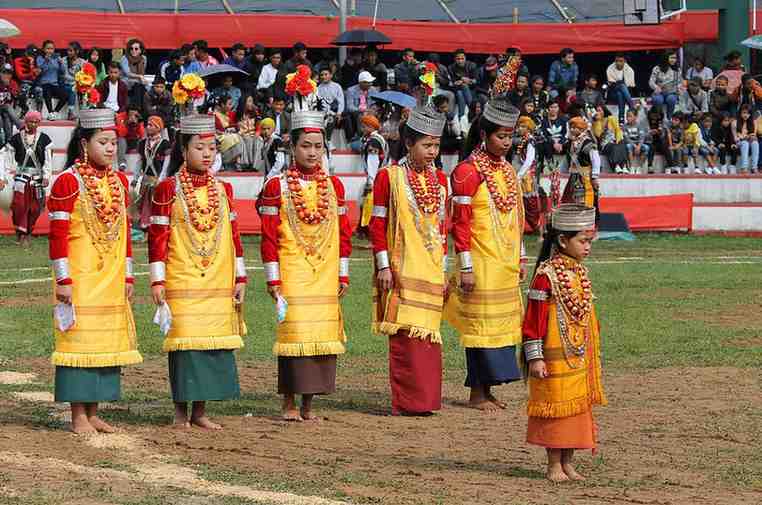
The People of Shillong: The Khasi Community
Shillong is the cultural heartland of the Khasi people — one of the world’s most prominent matrilineal societies. In Khasi tradition, property, family names, and inheritance pass through the mother’s lineage. The youngest daughter (Ka Khadduh) inherits the ancestral home and takes on the responsibility of caring for elderly parents, while sons leave the family home upon marriage. This system, far from marginalising men, creates a social structure where women hold significant economic and social authority.
Niam Khasi: The traditional indigenous religion of the Khasi people centres on the worship of God (U Blei Nongthaw) and the veneration of ancestors. Sacred groves (Law Kyntang) maintained by Khasi villages are a direct expression of this spiritual relationship with nature — these are among the oldest community-conserved forests in the world.
Dorbar Shnong: The community governance council of the Khasi people, operating at the village and neighbourhood level. Every major urban neighbourhood in the city has an active Dorbar — making it one of the most locally governed cities in India.
Language: Khasi is an Austroasiatic language — uniquely, it is more closely related to languages spoken in Southeast Asia (Mon-Khmer family) than to any Indian language. English is widely spoken and is the medium of instruction in most schools.
Music culture: Shillong produces an extraordinary number of musicians per capita. The city’s love of rock, blues, and jazz has created a live music scene that rivals cities ten times its size. The annual Shillong Chamber Choir — a world-class ensemble that has won international competitions — represents the classical end of this musical tradition.
| Cultural note: Shillong has a strong Sunday culture — many shops and establishments close or operate reduced hours. Plan accordingly and use Sunday mornings for the Ward’s Lake and Shillong Peak visits when the city is quiet and particularly beautiful. |
Top Attractions in Shillong
1. Ward’s Lake
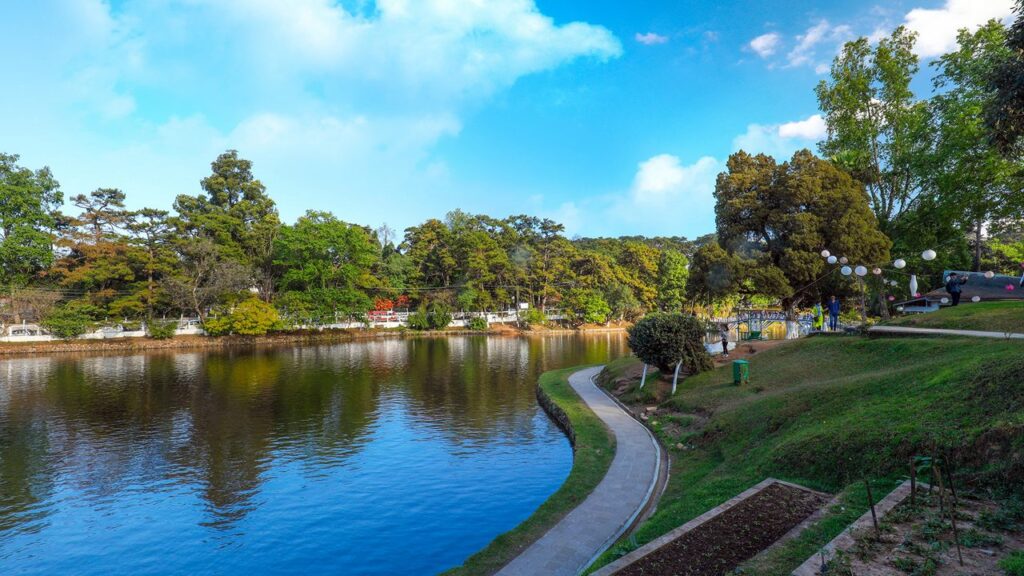
Ward’s Lake, a serene artificial lake in the heart of the city, was created during the British colonial era and remains the city’s most beloved public space. Surrounded by manicured gardens, weeping willows, and colonial-era structures, the lake is the social centre of Shillong — particularly in the early mornings when families walk its path and boaters glide across the still water before the mist lifts.
- Boating on the lake — pedal boats and rowboats available from early morning
- The surrounding gardens are impeccably maintained — particularly beautiful in spring when flowers bloom
- The Shillong Club, founded 1887, overlooks the lake — one of India’s best-preserved colonial clubs
- Early morning visits offer the best light and the quietest experience
2. Elephant Falls (Ka Kshaid Lai Pateng Khohsiew)
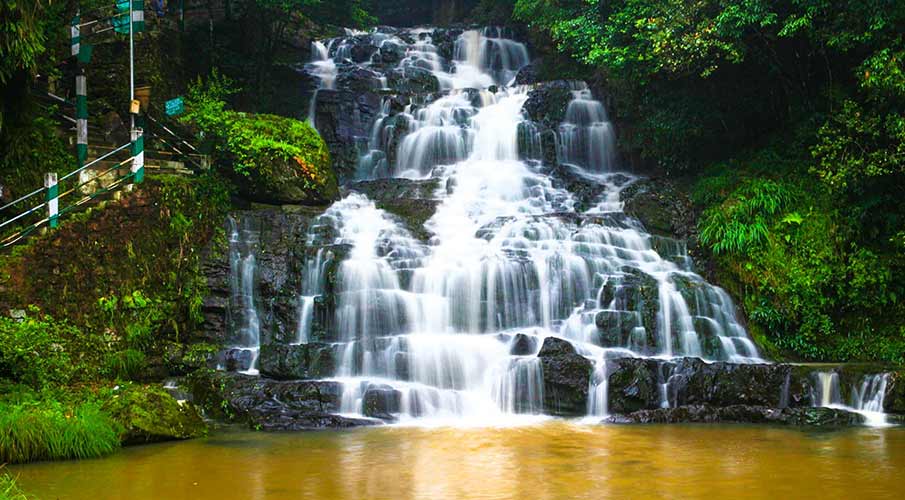
Elephant Falls — named by the British after a rock formation that resembled an elephant (destroyed in an earthquake) — is a three-tiered waterfall about 12 km from the city centre, cascading through lush forest in a narrow gorge. Each tier has its own character: the first is wide and dramatic, the second more intimate, and the third — reached by a steep descending staircase — is the most powerful and atmospheric.
- Three distinct tiers accessible via a well-maintained staircase
- Best after rainfall when all three tiers are at full volume
- The surrounding forest is cool and misty — a welcome contrast to the city
- Arrive early morning to avoid crowds; the light is best before 10 AM
| The name ‘Elephant Falls’ is a British colonial naming — the Khasi name, Ka Kshaid Lai Pateng Khohsiew, means ‘Three Step Waterfall’, which is far more accurate. The falls are locally known by the Khasi name and using it shows respect for the community. |
3. Shillong Peak
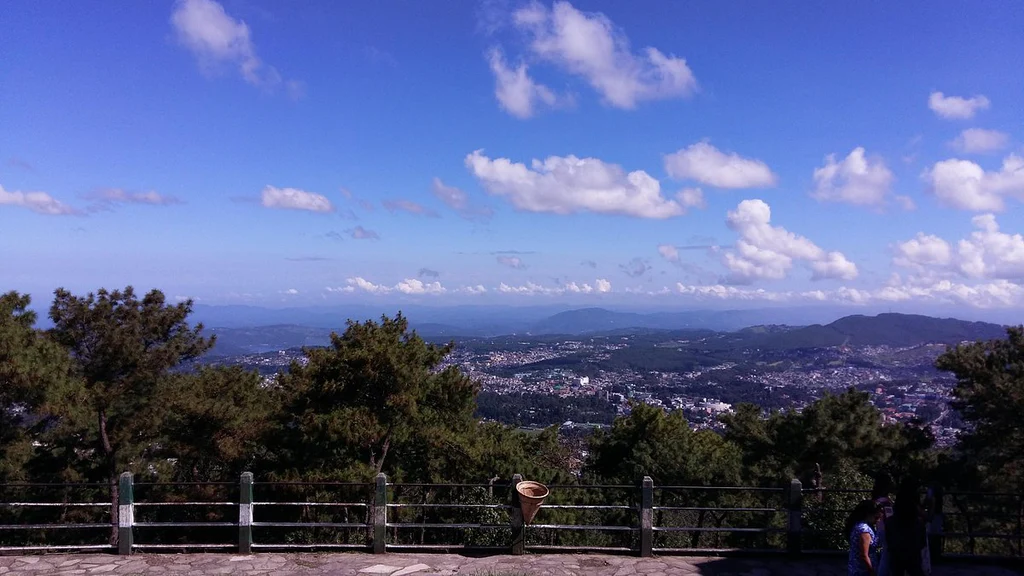
Shillong Peak, at 1,965 metres, is the highest point in Meghalaya and a short drive from the city centre. The summit — controlled by the Indian Air Force and accessible only on permitted days — offers 360-degree views over the city, the surrounding hills, and on very clear days, the plains of Assam stretching south toward Bangladesh. The drive up through pine and rhododendron forest is itself worth the journey.
- Views over Shillong city, Umiam Lake, and the Assam plains on clear days
- IAF-controlled — check opening days before planning (typically open to civilians on specific days)
- The forest on the approach road is excellent for birdwatching
- Best visibility October to February; mornings before clouds build
4. Police Bazar & Laitumkhrah Market
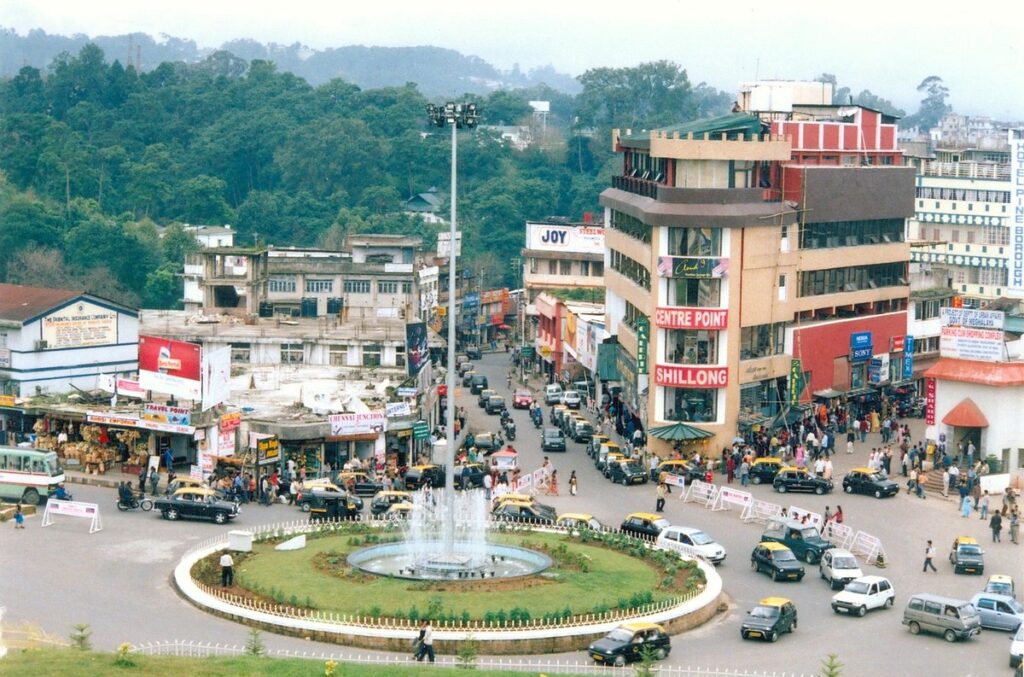
Police Bazar is the commercial heart of Shillong — a dense, energetic market area where you will find everything from fresh local produce to Khasi shawls, electronic goods, and the city’s famous pork stalls. The adjacent Laitumkhrah neighbourhood has evolved into Shillong’s food and nightlife district, with the best cafes, live music bars, and restaurants concentrated along its main street.
- Fresh local produce market — unique Meghalaya vegetables, smoked meats, dried fish
- Khasi handloom and handicraft shops — excellent for textiles, cane baskets, and silverwork
- Guitar shops and music stores — a testament to Shillong’s musical identity
- Street food stalls — jadoh (rice and pork), putharo (rice cake), and local snacks
5. Don Bosco Centre for Indigenous Cultures (DBCIC)
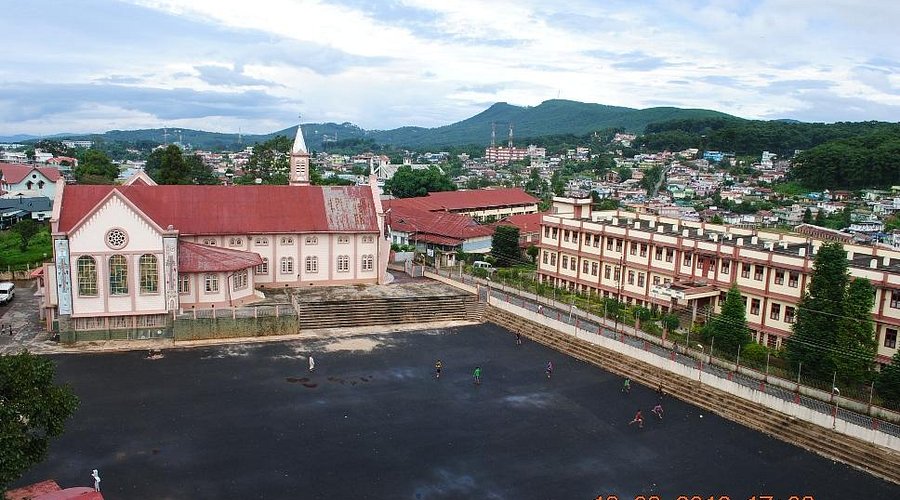
The Don Bosco Centre for Indigenous Cultures is one of the finest ethnographic museums in India — a seven-floor institution documenting the cultures, histories, and material traditions of all the major tribal communities of Northeast India. The museum’s rooftop skywalk offers panoramic views over the city. For any visitor wanting to understand the cultural context of their Northeast India journey, this is essential.
- Seven floors covering all Northeast India tribal communities
- Outstanding collection of traditional dress, instruments, tools, and artefacts
- Rooftop skywalk with panoramic city views
- Research library and archive accessible to researchers
6. Umiam Lake (Barapani)
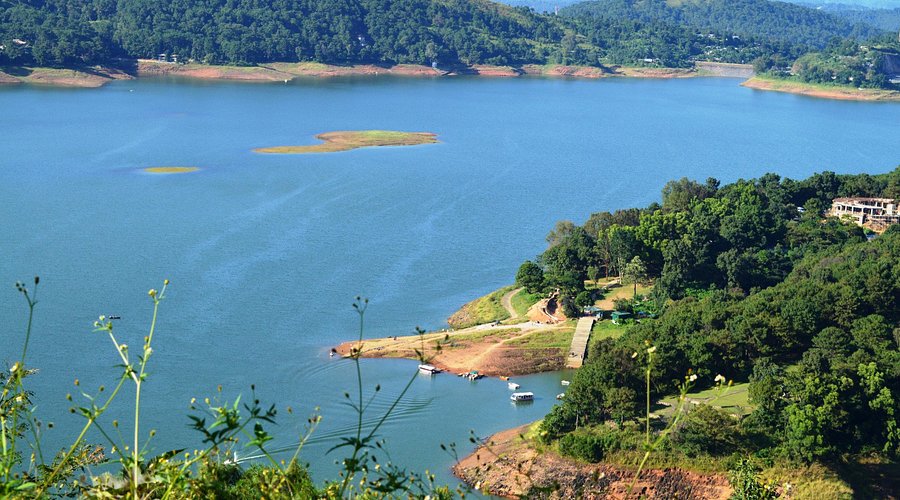
Umiam Lake, 17 km north of Shillong on the Guwahati highway, is a large reservoir created by damming the Umiam River. The lake’s blue-green waters set against pine-forested hills create a landscape of Scottish Highland quality, which is presumably what gave Shillong its comparison in the first place. Water sports, boating, and lakeside picnics are the main activities.
- Water sports — pedal boats, kayaking, and speed boating available
- Lakeside viewpoints along NH6 — especially beautiful at sunset
- Several resorts and restaurants along the lakefront
- 17 km from Shillong — ideal for a half-day trip
7. Laitlum Canyons — Grand Canyon of Meghalaya
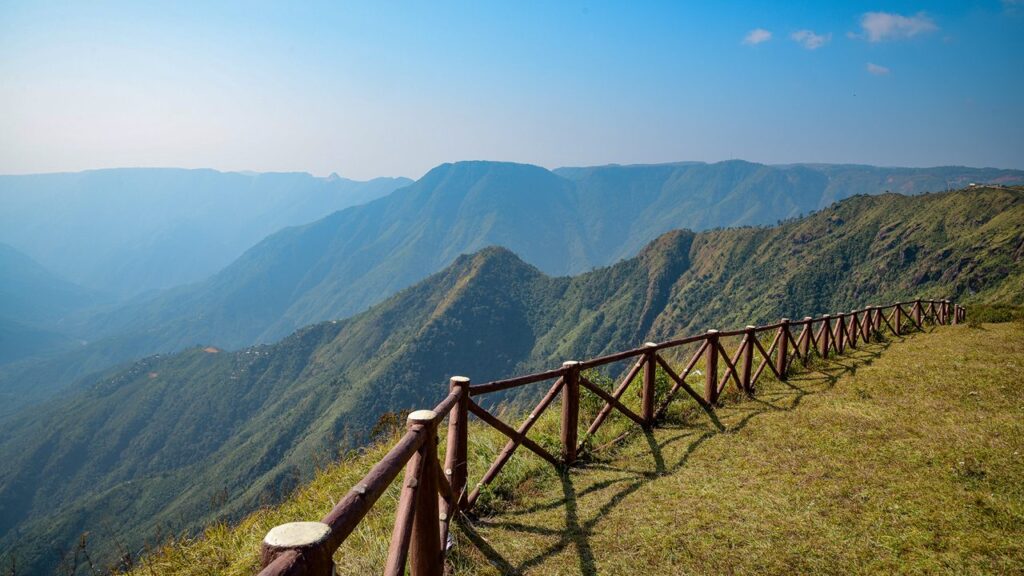
Laitlum Canyons is one of Meghalaya’s most dramatic natural viewpoints — a vast stretch of rolling hills and deep gorges where the land seems to fall away into endless green valleys. Located about an hour’s drive from Shillong, it offers raw, open landscapes, cool mountain air, and a sense of peaceful isolation that feels far removed from urban life.
- Panoramic cliff viewpoints — sweeping views of the East Khasi Hills, especially stunning at sunrise and sunset
- Stepped hiking trail to Rasong village — a scenic descent into the valley for those seeking light adventure
- Photography spots — mist-covered ridges, layered hills, and dramatic cloud formations
- Picnic-friendly open meadows — quiet grassy stretches ideal for relaxing and soaking in the landscape
Shillong’s Live Music Scene

No guide to Shillong is complete without acknowledging its extraordinary musical culture. This is not a tourist attraction — it is the genuine daily life of the city.
- Cloud 9 / Café Shillong / Dylan’s Cafe — The most consistently active live music venues; rock, blues, and jazz most nights
- Tuesdays at various venues — Traditionally the most active night for live music in Shillong
- Shillong Chamber Choir — International award-winning classical choir; occasional public performances
- Cherry Blossom Festival (November) — Combines live music performances with Shillong’s unique cherry blossom season — one of the most photogenic weeks of the year
| Shillong is genuinely India’s rock capital — not as a marketing tagline, but as a lived cultural reality. If you have any interest in live music, plan at least one evening in Laitumkhrah and let the night take you wherever the sound leads. |
Top Things to Do in Shillong
- Morning walk at Ward’s Lake — Before the city wakes; misty, serene, and quintessentially Shillong
- Live music evening in Laitumkhrah — Start at Café Shillong or Dylan’s; walk between venues as the mood takes you
- Don Bosco Museum — Half a day; the best cultural context for any Northeast India journey
- Elephant Falls + Shillong Peak circuit — Full morning; combine with a café lunch in Police Bazar
- Day trip to Cherrapunji — The most popular day trip; waterfalls, root bridge trek, cave visit
- Khasi market morning — Police Bazar on a weekday morning; fresh produce, smoked meats, live fish
- Umiam Lake sunset — Drive out on the Guwahati highway; 30-minute visit rewards with excellent light
Where to Eat in Shillong
Local Khasi Dishes
- Jadoh — One-pot rice and pork dish cooked with blood, ginger, and spices; the definitive Khasi meal. Best at local market stalls.
- Dohneiiong — Pork with black sesame — rich, aromatic, and deeply satisfying
- Dohkhleh — Pork salad with onion, chili, and ginger; Shillong’s most popular street snack
- Tungrymbai — Fermented soybean stew; an acquired taste that rewards persistence
- Putharo — Steamed rice cake; light and ideal for breakfast with local tea
Recommended Restaurants & Cafes
- Trattoria — Shillong’s most celebrated restaurant; excellent Khasi food in a comfortable setting
- City Hut Dhaba — Local favourite for authentic Khasi plates at very affordable prices
- Cloud 9 Restaurant — Rooftop views and decent food alongside live music
- Café Shillong — Heritage setting, good coffee, and music on most evenings
- Lamee Restaurant — Popular for Chinese-influenced local dishes; long-standing institution
Where to Stay in Shillong
- Heritage hotels — Shillong has several beautifully restored colonial-era properties; Ri Kynjai and Hotel Polo Towers are the most celebrated
- Boutique guesthouses — Several charming options in the Laitumkhrah and Police Bazar areas; ₹2,000–₹5,000 per night
- Budget guesthouses — Widely available in the city centre; ₹800–₹2,000 per night
- Homestays — Available through Meghalaya Tourism; staying with a Khasi family in a residential neighbourhood offers the most authentic experience
| Book accommodation well in advance for the Cherry Blossom Festival (November) and the Christmas–New Year period — Shillong fills up completely and prices spike significantly during these weeks. |
How to Reach Shillong
From Guwahati (Most Common Route)
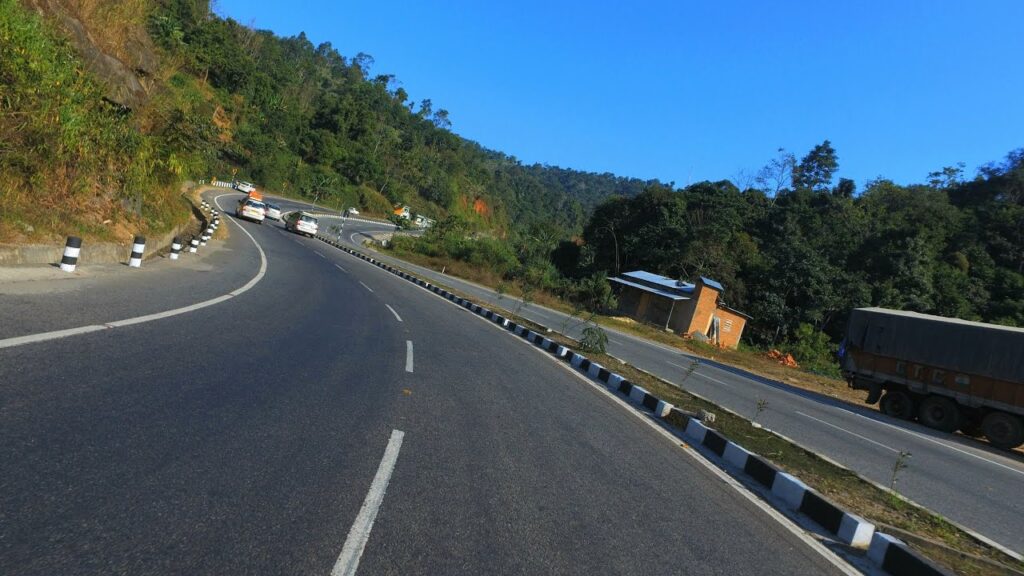
- Guwahati to Shillong: 100 km on NH6; 2.5–3 hours by shared taxi or private vehicle
- Shared taxis from Guwahati’s Khanapara taxi stand run throughout the day
- AC bus services also operate on this route; 3–3.5 hours
By Air
- Shillong Airport (Umroi) — 30 km from the city; limited connections (mainly Kolkata)
- Guwahati Airport (LGBI) — far better connected to all Indian cities; recommended for most travelers
By Train
- No direct rail link to Shillong; Guwahati is the nearest major railhead
- From Guwahati railway station, take a taxi or bus onward to Shillong
Travel Essentials for Shillong
- No permit required for Indian or foreign nationals
- Carry light woolens year-round — Shillong can be cool even in summer, and cold from November to February
- ATMs widely available throughout the city
- Mobile connectivity: All major networks work well in Shillong
- Sundays: Many shops and businesses closed or open reduced hours
- Taxis: Shared taxis (Maruti vans) are the primary local transport; negotiate fare before boarding
Best Time to Visit Shillong
- October to February: Best weather; clear skies; cool and comfortable; excellent visibility for day trips
- November: Cherry Blossom season; Nongkrem festival; one of the best weeks of the year
- March to May: Spring; rhododendrons on the hills; pleasant before the monsoon arrives
- June to September: Monsoon; heavy rainfall; nearby waterfalls at their most spectacular; carry full waterproofs
Sample 3-Day Shillong Itinerary
- Day 1 — City Exploration: Morning at Ward’s Lake; Don Bosco Museum (half day); Police Bazar market lunch; Elephant Falls afternoon; live music evening in Laitumkhrah
- Day 2 — Day Trip to Cherrapunji: Early departure; Nohkalikai Falls; Seven Sisters Falls viewpoint; Mawsmai Cave; double-decker root bridge trek at Nongriat (or Mawlynnong if less strenuous preferred)
- Day 3 — Hills & Lake: Shillong Peak morning; Umiam Lake lunch and water sports; Laitumkhrah evening market and dinner
