




There is no single best time to visit Northeast India — and any guide that tells you otherwise is giving you the wrong answer. That is not a hedge. It is the most useful thing you can know before you start planning.
Northeast India spans five distinct climate zones, from the subtropical Brahmaputra valley to alpine high passes in Arunachal Pradesh and Sikkim. Eight states. Dozens of tribes. Wildlife reserves, river islands, rain forests, and Himalayan treks — all governed by wildly different weather windows. The month that puts you in the jeep at Kaziranga during peak rhino season is the exact wrong month to be walking Dzükou Valley for the lilies. The week that turns Cherrapunji into one of the most dramatic landscapes on earth — roaring waterfalls, gorges swallowed by cloud — is the week Kaziranga is closed and underwater.
This guide answers the question properly: by season, by month, by state, and by what you actually want to do.
The Three Seasons That Govern Everything
The Dry Season: October to April
This is the broadest safe window and where most itineraries belong. But it is not a single uniform block — it has its own internal rhythm.
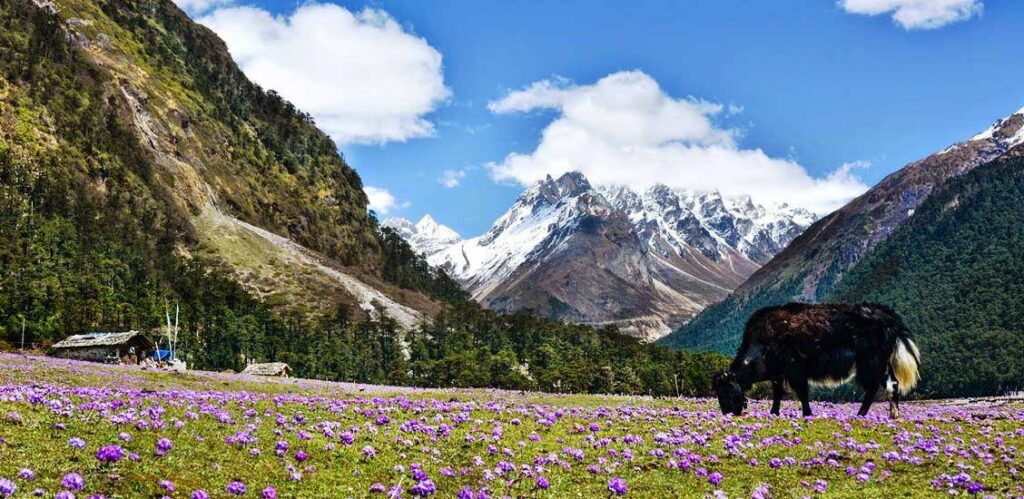
October and November bring what many locals call the post-monsoon magic: landscapes intensely green from the rains, air scrubbed crystal clear, temperatures dropping into the comfortable range. Kaziranga reopens in early October. Kangchenjunga appears suddenly above the Sikkim horizon. The festival season swings into gear with Durga Puja, Ras Leela on Majuli Island, and Hornbill Festival preparations building in Nagaland’s Kohima.
December through February is the cold peak — the best wildlife season, the clearest photography conditions, the densest festival calendar. Temperatures at altitude (Tawang in Arunachal, Gurudongmar in Sikkim) drop hard. Pack accordingly. But in the plains — Guwahati, Agartala, the Brahmaputra valley — December and January are simply beautiful: cool, sunny, unhurried.
March through early May is spring, and it is genuinely underrated. Rhododendrons bloom across Sikkim and Arunachal’s foothills. Mizoram celebrates Chapchar Kut, its greatest festival, in the first week of March. The Shirui Lily begins its season in Manipur’s Ukhrul hills in May. Pre-monsoon warmth makes the hill states feel alive in a different way than winter.
The Monsoon: June to September
The reflexive advice is to avoid it. The better advice is to understand it.
Yes, Kaziranga floods and closes. Yes, North Sikkim roads shut. Yes, Arunachal’s mountain roads can leave travelers stranded for days when landslides hit. These are real risks, and this guide will not minimise them.
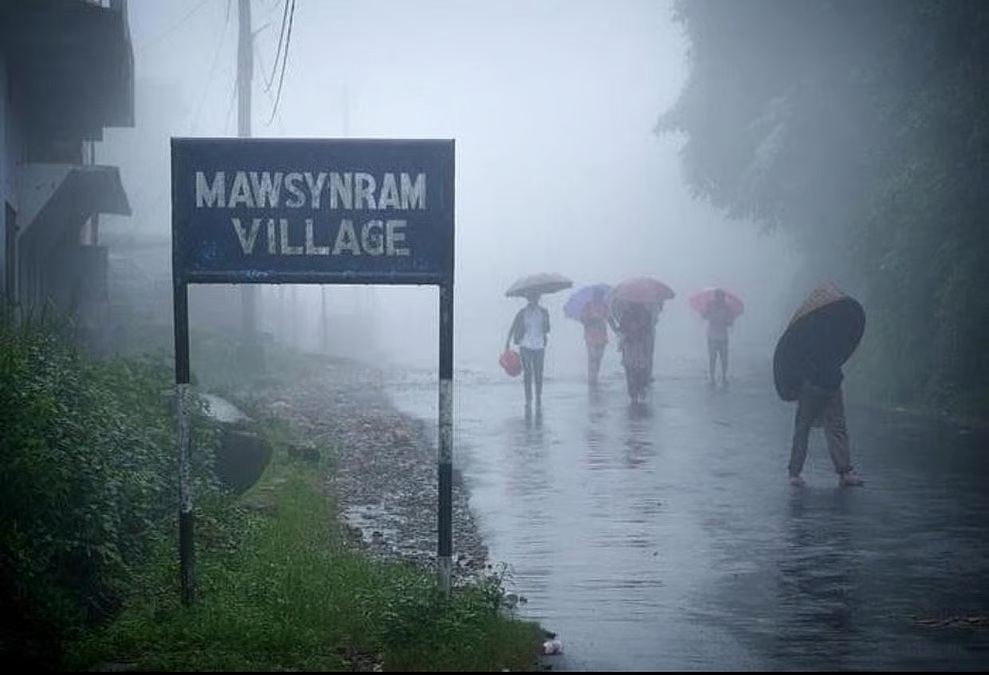
But Meghalaya in monsoon is extraordinary. Cherrapunji and Mawsynram — the wettest places on earth — receive their maximum rainfall in July and August, and the result is a landscape of thundering falls, mist-filled valleys, and living root bridges draped in wet moss. For a specific kind of traveler, this is the best time to go. Dzükou Valley on the Nagaland-Manipur border is only worth visiting in July, when the lily bloom peaks. Tripura’s Kharchi Puja in July is one of the region’s most vivid tribal-Hindu festivals.
The monsoon is not an avoid — it is a reroute.
Winter Peak: December to February
For travelers who want the broadest access, clearest conditions, and most festival density: this is the window. Hornbill Festival in Nagaland runs December 1–10 and is the Northeast India’s single greatest cultural event. Christmas in Nagaland, Mizoram, and Manipur — India’s Christian heartland — is genuine, communal, and unlike anything else in the country. Kaziranga’s rhino and tiger sightings peak in January. Sikkim’s Kangchenjunga is sharp and constant above clear winter skies.
The caveat: altitude. High passes in Arunachal and Sikkim may close without warning in December and January. If Tawang or Gurudongmar is on your list, build flexibility into your plans.
Month-by-Month: Best Time to Visit Northeast India
January — Cool and ideal in the plains. Kaziranga is at its peak for wildlife, with tall grass cut back and animals visible at the water. Assam’s Magh Bihu on January 15th celebrates the harvest with bonfires and feasting. Sikkim marks Losar (Buddhist New Year) on a lunar date that falls in January or February — one of the most atmospheric festivals in Northeast India. Warning: Tawang and Gurudongmar may be snowbound.
February — Spring’s first signals in the foothills. Nagaland’s Sekrenyi festival — a 10-day Angami purification ceremony — is one of the most culturally significant tribal events in India and still largely off the tourist radar. Manipur’s Yaoshang (the Manipuri interpretation of Holi) adds color and energy. Sikkim’s trekking season begins to open at lower altitudes.
March — The month most travelers overlook and should not. Mizoram celebrates Chapchar Kut — an ancient bamboo-harvest festival of dance, traditional costume, and communal joy — in the first week of March. It is the state’s greatest event and one of the most visually spectacular festivals in Northeast India. Meghalaya’s Shillong surprises visitors with cherry blossoms. Nagaland’s Dzükou Valley begins its rhododendron season. Book early: March is peak domestic travel season and accommodation fills quickly.
April — Assam takes center stage. Rongali Bihu on April 14–15 is the Assamese New Year and the state’s greatest festival — music, Bihu dance, and unbridled collective energy. Kaziranga’s last safari weeks are available before it closes for monsoon. In Nagaland’s Mon district, the Konyak tribe celebrates Aoling — their new year festival, one of the last windows to witness the community’s extraordinary living headhunting legacy in a festival context.
May — The transition month. Hot in the Assam plains, but the hill states remain pleasant. Dzükou Valley’s lily season begins in late May. Arunachal’s Tawang road is clear and the surrounding highlands are intensely green. Sikkim’s rhododendrons push to higher altitudes. The most sacred Buddhist festival, Saga Dawa, is celebrated across Sikkim in May or June depending on the lunar calendar. Begin packing waterproofs — the monsoon can arrive early in Meghalaya.
June — Monsoon arrives. Cherrapunji begins its transformation. Kaziranga closes. North Sikkim roads become unreliable. This month requires a specific plan: Meghalaya for waterfall season, or Dzükou Valley (best in July). Not the month to improvise.
July — Peak monsoon, and the single best month for Dzükou Valley’s lily bloom. If the valley is your goal, this is when you go. Cherrapunji’s waterfalls are at absolute maximum — the volume and drama here in July defies description. Tripura’s Kharchi Puja at the Chaturdash Devata Temple is a major tribal-Hindu festival. Avoid Arunachal’s high roads. Carry contingency days.
August — Monsoon easing in some states by month’s end. Meghalaya remains excellent — living root bridges in Nongriat are beautiful in their wet-season state, moss-thick and surrounded by rushing water. Tripura’s Neermahal Jal Utsav (the Water Festival on Rudrasagar Lake) takes place on the August full moon and is one of the most underrated festivals in the entire region: a water palace lit at night, boat races, and the monsoon sky overhead.
September — The exhale before autumn. Rain retreating, occasional clear days opening up. Champhai in Mizoram begins its apple and grape harvest. Tripura’s Jampui Hills start their orange season. Roads are still recovering from monsoon damage — last-minute landslides remain possible. This month rewards patience and flexibility.
October — Arguably the single best month to begin a Northeast India trip. Everything is open. The landscape is still green from monsoon but the sky has cleared. Temperatures are perfect. Kaziranga reopens in early October; the first safaris of the season are extraordinary, with animals returning to still-lush terrain. Durga Puja transforms Guwahati and Agartala. Majuli Island’s Ras Leela — a vaishnavite festival of dance performance on India’s greatest river island — falls on the October full moon.
November — The most popular month overall, and for good reason. Clear, dry, cool. Kaziranga’s wildlife season building. Jampui Hills in Tripura host their Orange Festival as the mandarin harvest turns the hillsides golden. Hornbill Festival in Nagaland begins on December 1st — November visitors in Kohima will find accommodations and energy building. Book 6–8 weeks ahead for Nagaland in November and December.
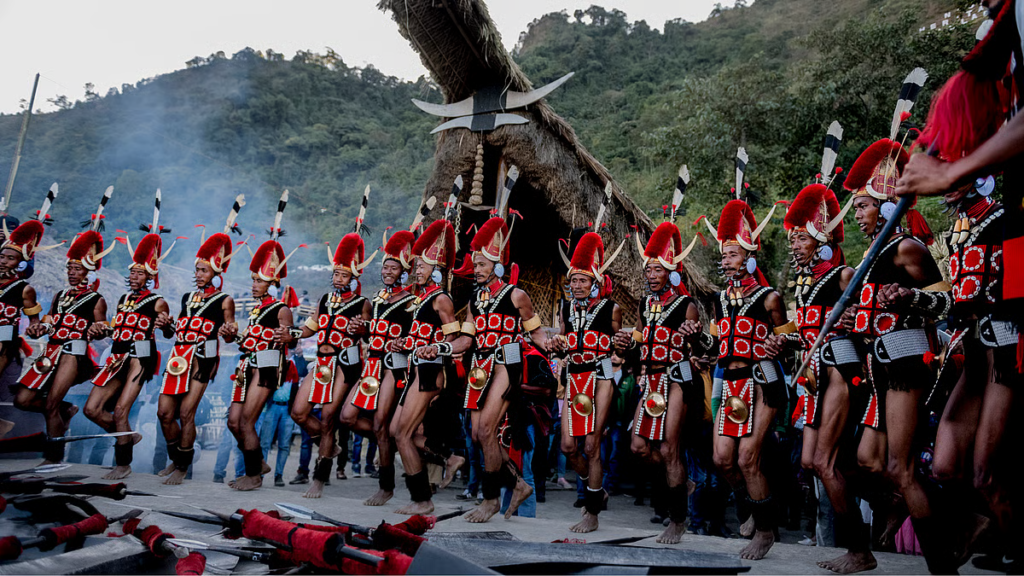
December — Northeast India’s cultural peak. Hornbill Festival runs December 1–10 at the Kisama Heritage Village outside Kohima: sixteen Naga tribes performing in full traditional dress, warrior dances, indigenous sports, and the most concentrated display of living tribal culture in India. Kaziranga records its best rhino and tiger sightings of the season. And in Nagaland, Mizoram, and Manipur — states with Christian majorities — Christmas is not a commercial occasion but a communal one: carol singing through villages, families gathering, churches overflowing.
By Activity: When to Go for What
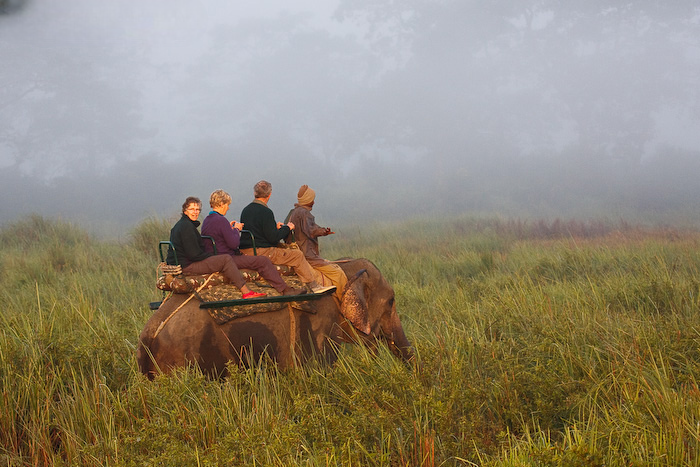
Wildlife and safaris: November to April. Kaziranga, Manas, Nameri, and Sepahijala all peak in this window. Migratory birds arrive from October through March.
Trekking: October–November and March–May. Post- and pre-monsoon trails are dry and accessible. Goecha La (Sikkim), Dzükou (Nagaland-Manipur), and Ziro Valley (Arunachal) are all best in these windows — with the exception of Dzükou in July for the lily bloom specifically.
Festival experiences: October–December and February–April. The full calendar bookends the winter with Hornbill (December), Sekrenyi and Yaoshang (February), Chapchar Kut (March), and Bihu (April).
Waterfalls and river drama: July–September for maximum intensity. October–March for safe-level river rafting.
Photography: October–February for landscape clarity and golden light. May–June for flower seasons. Monsoon for atmospheric drama, green saturation, and waterfall power.
State-by-State: The Quick Verdicts
Assam: November to April for wildlife; April 14–15 for Rongali Bihu. Avoid June–September unless Majuli is your specific goal.
Meghalaya: Two genuine seasons — October to May for trekking and culture, and July–August specifically for waterfall season. One of the few states where monsoon travel is actively rewarding.
Nagaland: October to March. December 1–10 for Hornbill. February for Sekrenyi. The best cultural immersion in Northeast India, concentrated in winter.
Arunachal Pradesh: October to April. March–April for Tawang monastery season and Ziro Music Festival preparations. Avoid high roads in monsoon and deep winter.
Manipur: October to April for general travel; May–June for the Shirui Lily in Ukhrul district.
Mizoram: October to May, with March for Chapchar Kut the clear highlight. The state is accessible year-round but monsoon brings landslide risk on mountain roads.
Tripura: October to March. November for the Orange Festival in Jampui Hills; July for Kharchi Puja if monsoon travel is manageable for you.
Sikkim: Two peaks — March to May for rhododendrons and lower-altitude trekking; October to December for post-monsoon clarity, Goecha La, and Kangchenjunga views.
What to Avoid: The Honest Part
June through September in Arunachal Pradesh is the one blanket warning in this guide. Mountain road closures can strand travelers for days. This is not hyperbole. The infrastructure in remote districts cannot keep pace with monsoon damage, and a blocked road here means genuinely blocked.
December and February in Sikkim’s high-altitude zones — Gurudongmar Lake, Zero Point — carry real road-closure risk without warning. If these are on your itinerary, confirm local conditions on the day and carry flexibility.
Indian school holidays and long weekends turn Cherrapunji, Gangtok, and Kaziranga uncomfortably crowded. If your dates overlap with these windows, book accommodation well ahead or adjust your itinerary.
Hornbill Festival opening day (December 1st) is the most crowded single day of the year at Kisama. The opening weekend is best avoided unless you arrive by 7 AM. Days 3–7 offer the same cultural depth with half the crowds.
The Verdict
If you have to pick one month: October or November. Post-monsoon green, everything open, wildlife building, and the festival calendar swinging into motion. These two months get it right for the widest range of travelers.
For the adventurous traveler willing to work with the logistics: July, specifically for Dzükou Valley and Cherrapunji in their full monsoon glory. It requires planning, flexibility, and the right expectations — but few travel experiences in India match what you find at the end of that effort.
Northeast India does not reward generic planning. But it rewards the traveler who plans specifically — by state, by activity, by month — more generously than almost anywhere else in the country.
