




The numbers alone are staggering. For decades, Cherrapunji held the world record for the highest rainfall in a single year — 26,461 mm in 1860–61, a figure that remains almost incomprehensible. Even today, the plateau receives an average of 11,000 mm annually, mostly during the five-month monsoon that transforms this southern edge of the Khasi Hills into a landscape of thundering water, saturated forest, and mist so thick it sometimes feels like walking inside a cloud.
Cherrapunji — known locally as Sohra, which is the Khasi name the government has now formally adopted — sits on a dramatic escarpment overlooking the Bangladesh plains, 1,484 metres above sea level and 55 km south of Shillong. It is the base for visiting India’s tallest waterfall, the most photographed double-decker living root bridge in the world, and one of South Asia’s most spectacular cave systems. Almost every traveler to Meghalaya passes through it. Few leave without being genuinely moved.
Also Read: Meghalaya’s Double Decker Living Root Bridge Ranked World’s 2nd Most Beautiful Bridge by Time Out
Quick Facts About Cherrapunji
| State | Meghalaya |
| District | East Khasi Hills |
| Altitude | 1,484 metres (4,869 feet) |
| Official Name | Sohra (Cherrapunji is the anglicised colonial name) |
| Language | Khasi, English, Hindi |
| Distance from Shillong | 55 km; approximately 1.5–2 hours by road |
| Distance from Guwahati | 150 km; approximately 4 hours by road |
| Permit Required | No special permit required |
| Best Time to Visit | October to May for clear views; June–September for maximum waterfall drama |
| Annual Rainfall | Approximately 11,000 mm (one of the highest in the world) |
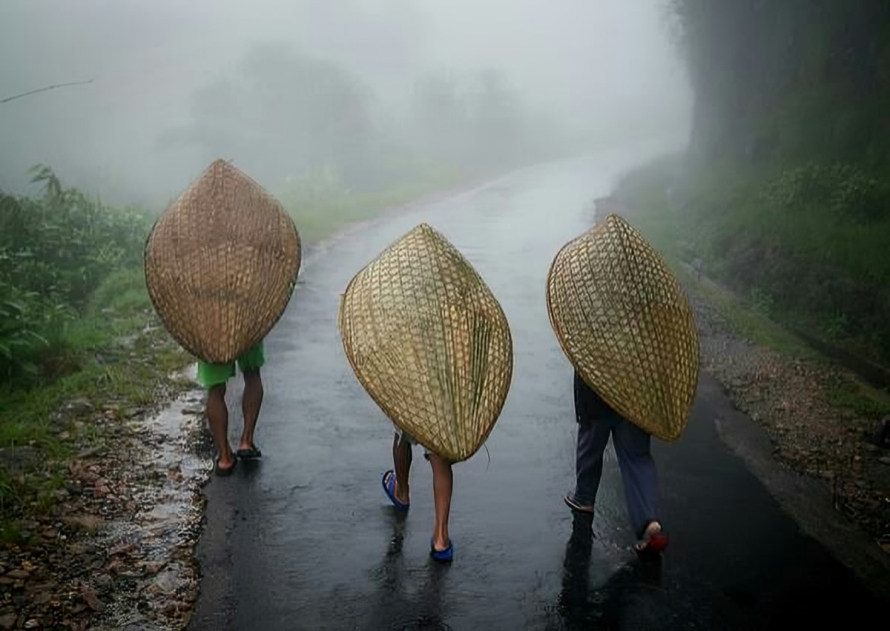
The People of Cherrapunji: The Khasi Community
Cherrapunji sits within the Khasi Hills and its people are Khasi — members of the same matrilineal community described in the Shillong guide. What is distinctive about the Khasi communities of the southern escarpment, particularly around Nongriat and Mawlynnong, is their centuries-old tradition of training the roots of the rubber fig tree (Ficus elastica) across rivers and gorges to create living bridges — a practice of extraordinary patience and ecological intelligence that has attracted global attention.
The living root bridge tradition: Khasi communities in the wet southern valleys discovered that the aerial roots of the rubber fig tree — stimulated by directing them across bamboo or betel-nut trunk guides — would eventually fuse and harden into structures strong enough to carry dozens of people. The bridges take 10 to 15 years to become functional and continue growing stronger for decades. The oldest living root bridges in Meghalaya are estimated to be over 500 years old.
Community stewardship: The bridges and the forests they span are maintained by the local community under traditional governance. The concept of community-owned ecological infrastructure is central to Khasi land management and is a direct reason why the Nongriat forest remains as pristine as it does despite thousands of visitors each year.
Top Attractions in Cherrapunji
1. Nohkalikai Falls — India’s Tallest Plunge Waterfall
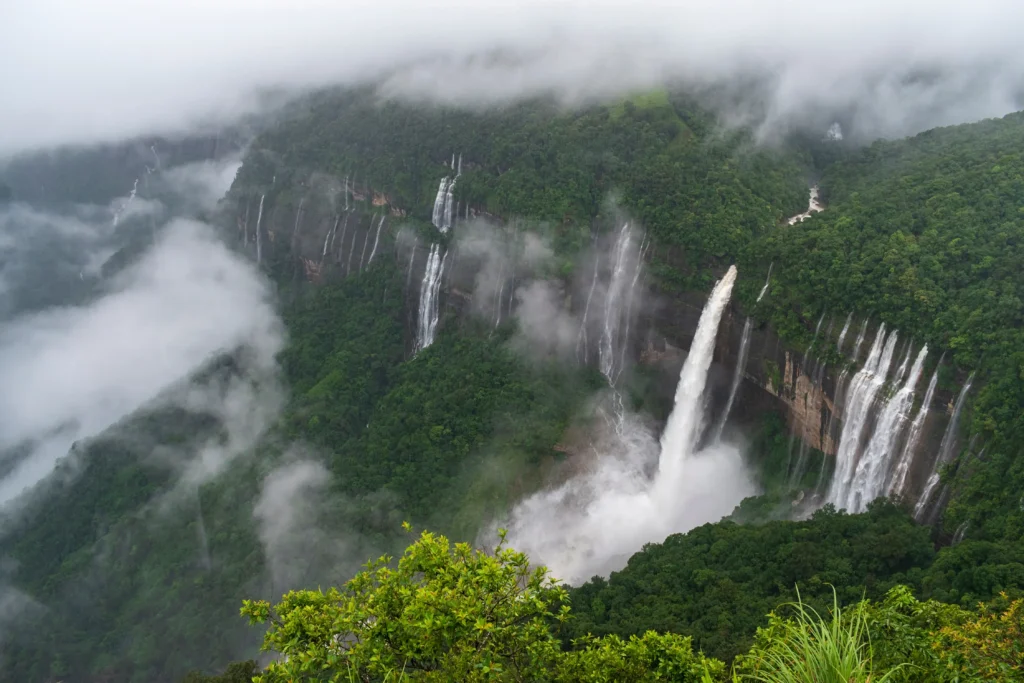
Nohkalikai Falls, plunging 340 metres from the plateau edge into a turquoise green pool at the bottom of the gorge, is India’s tallest plunge waterfall and one of the most dramatic natural spectacles in the country. The name means ‘Jump of Ka Likai’ — after a tragic local legend of a woman named Likai who, overcome with grief, leapt from the cliff. The pool at the bottom glows an extraordinary emerald green from the minerals in the water and the jungle light.
- 340-metre plunge — India’s tallest; visible from a viewpoint platform at the cliff edge
- The pool at the base is accessible by a steep trail (1.5 hours down; 2 hours back up)
- Most spectacular June to October at peak monsoon volume
- October to May: Lower volume but clearer views and more accessible trail
| The trail to the base of Nohkalikai is steep, wet, and slippery — wear proper trekking shoes and allow 3–4 hours for the return trip. The views from the viewpoint platform are excellent; the base visit is for those who want the full experience. |
2. Double Decker Living Root Bridge — Nongriat
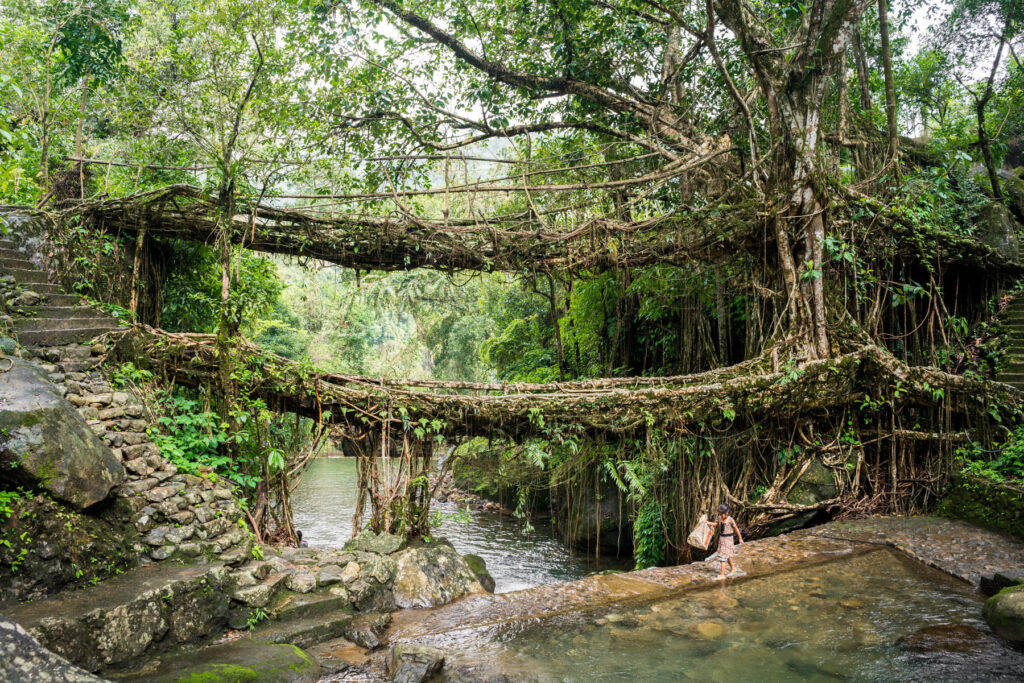
The double decker living root bridge at Nongriat village is Meghalaya’s most iconic image and one of the most remarkable structures in the natural world. Two bridges stacked vertically — the lower bridge perhaps 180 years old, the upper bridge younger — have been grown from the aerial roots of rubber fig trees across a stream in the valley below Tyrna village. The bridge is not a tourist construction. It is a living infrastructure that the Nongriat community uses daily and has maintained for generations.
The trek: From Tyrna village (15 km from Cherrapunji), the trail descends approximately 3,500 steps through dense forest to Nongriat village, passing the single-layer root bridge before arriving at the double decker. The descent takes 45–60 minutes; the return ascent takes 60–90 minutes. It is demanding but well-maintained and manageable for any reasonably fit traveler.
- 3,500 steps from Tyrna to Nongriat — well-maintained but steep
- The village at the bottom offers tea, simple meals, and basic overnight accommodation
- Swimming pool formed by the stream near the bridge — beautiful on a clear day
- Overnight at Nongriat (recommended) allows for early morning and late afternoon light when the bridge is almost empty
Also Read: Meghalaya Living Root Bridges Enter Race for UNESCO World Heritage Status
| The single best piece of advice for the root bridge: stay overnight at Nongriat. The day-trippers descend between 9 AM and 3 PM — by 4 PM the valley is quiet, the light is golden, and you have the bridge almost to yourself. Basic homestays in Nongriat cost approximately ₹500–₹1,000 per night including meals. |
3. Seven Sisters Falls (Nohsngithiang Falls)
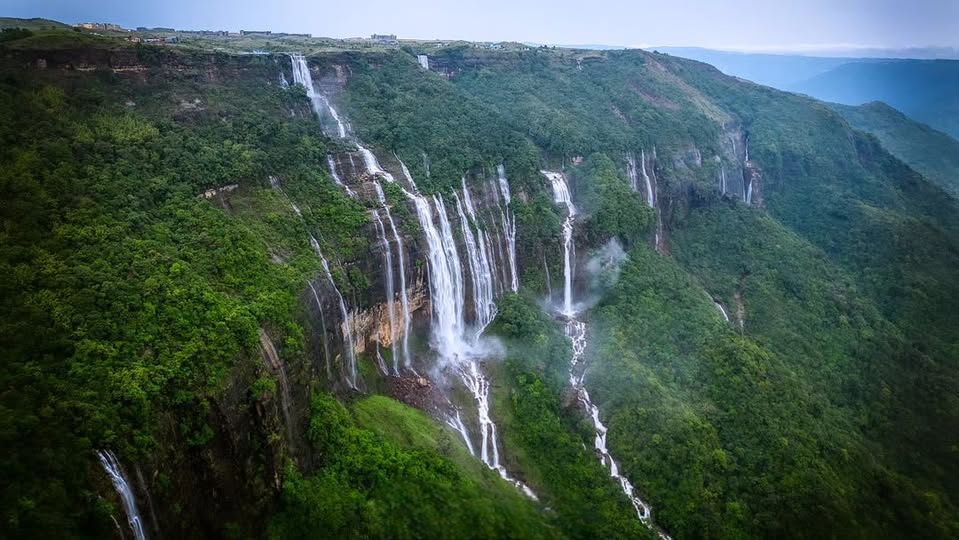
Seven Sisters Falls — known in Khasi as Nohsngithiang — is a remarkable 315-metre waterfall that splits into seven distinct streams as it descends the cliff face, each stream running parallel to the others. During the peak monsoon (July–September), all seven streams run simultaneously and the falls can be seen from several kilometres away. Outside the monsoon, only some streams flow, but the cliff face itself is extraordinarily beautiful.
- Best monsoon spectacle of any waterfall in Meghalaya — all seven streams in full flow
- Viewpoint on the main Shillong–Cherrapunji road; easily combined with Nohkalikai
- October to December: Some streams still running; clearer views with less cloud
- January to May: Minimal water flow — the cliff face is beautiful but the falls are diminished
4. Mawsmai Cave
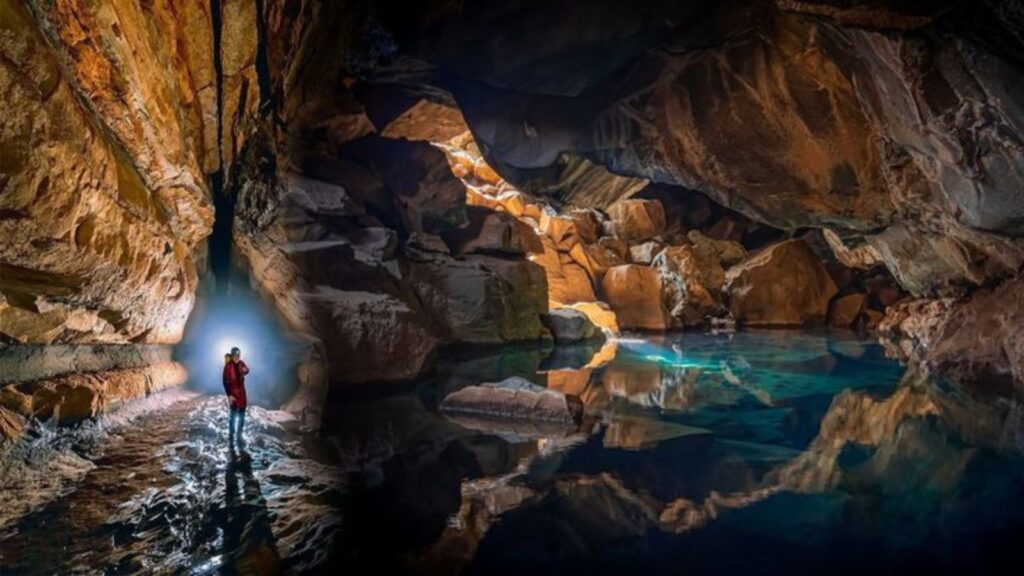
Mawsmai Cave, 6 km from Cherrapunji town, is the most accessible cave in Meghalaya and a good introduction to the extraordinary karst cave systems that make the state a world-class speleological destination. A 150-metre passage through the illuminated cave takes approximately 30 minutes and passes through chambers of stalactites, stalagmites, and narrow squeezes that delight children and adults equally.
- 150-metre illuminated passage; 30-minute visit
- Well-maintained and suitable for all fitness levels; some squeezing required
- Guides available at the cave entrance
- Combine with Nohkalikai and Seven Sisters Falls in a full-day circuit
5. Eco Park & Bangladesh Plains Viewpoint
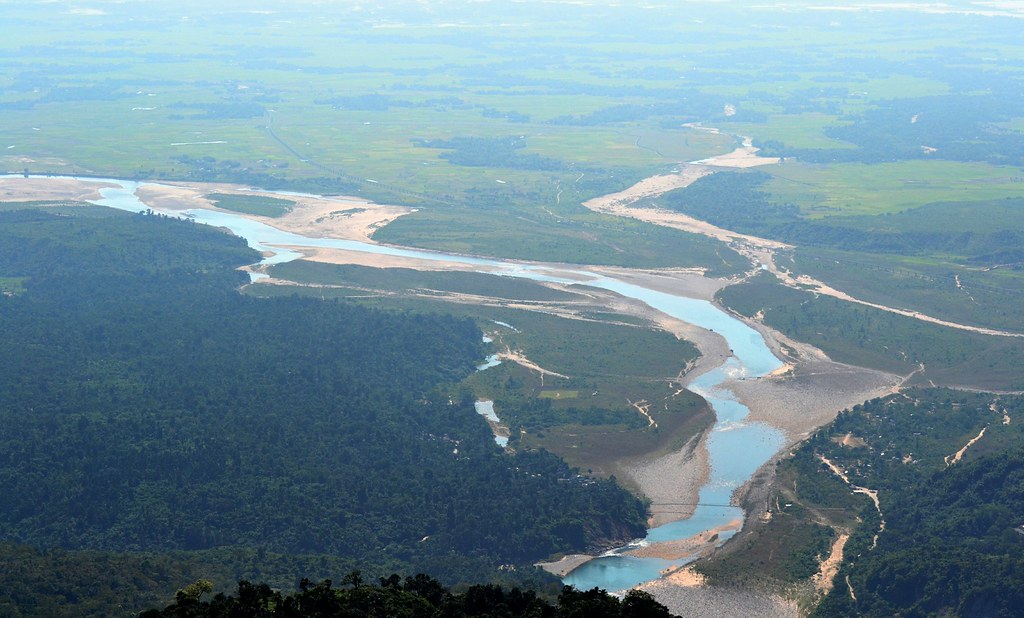
The Cherrapunji Eco Park sits on the escarpment edge and offers the most accessible viewpoint over the Bangladesh plains — a vast, flat, green expanse stretching to the horizon that creates a startling contrast with the misty Khasi Hills above. On very clear days (October to December), distant rivers and the silhouettes of Bangladeshi towns are visible.
- Viewpoint over the Bangladesh plains — one of the most dramatic landscape contrasts in India
- Walking trails through maintained gardens and scrub forest
- Best clarity October to December — monsoon cloud obscures the view June–September
6. Dainthlen Falls
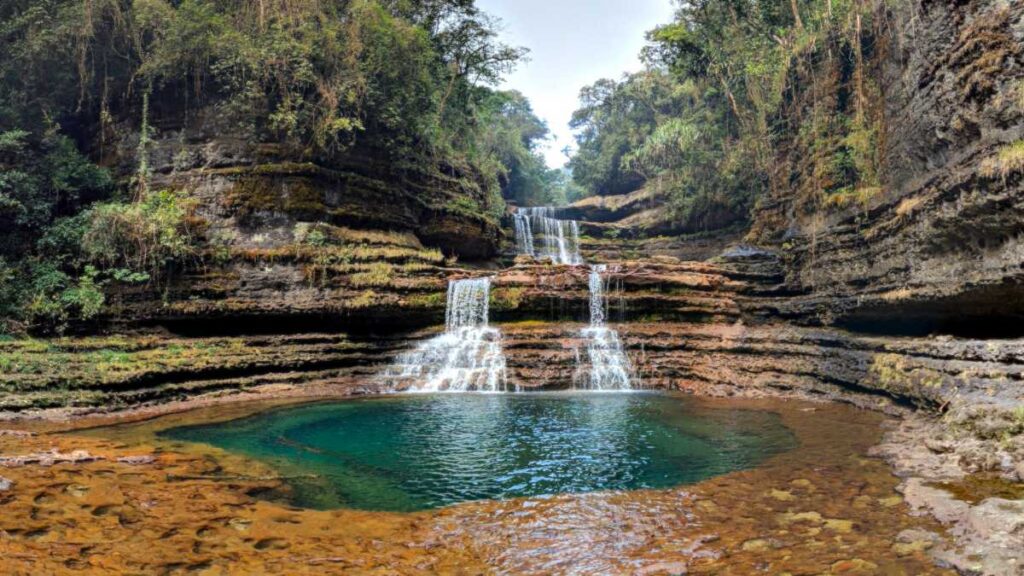
Dainthlen Falls, 3 km from Cherrapunji town, is a beautiful waterfall associated with a Khasi legend of the slaying of a giant serpent (Thlen) — the falls are said to be where the serpent was cut. The falls flow over a wide rock shelf and are particularly accessible and photogenic.
7. Arwah Cave — Advanced Speleology
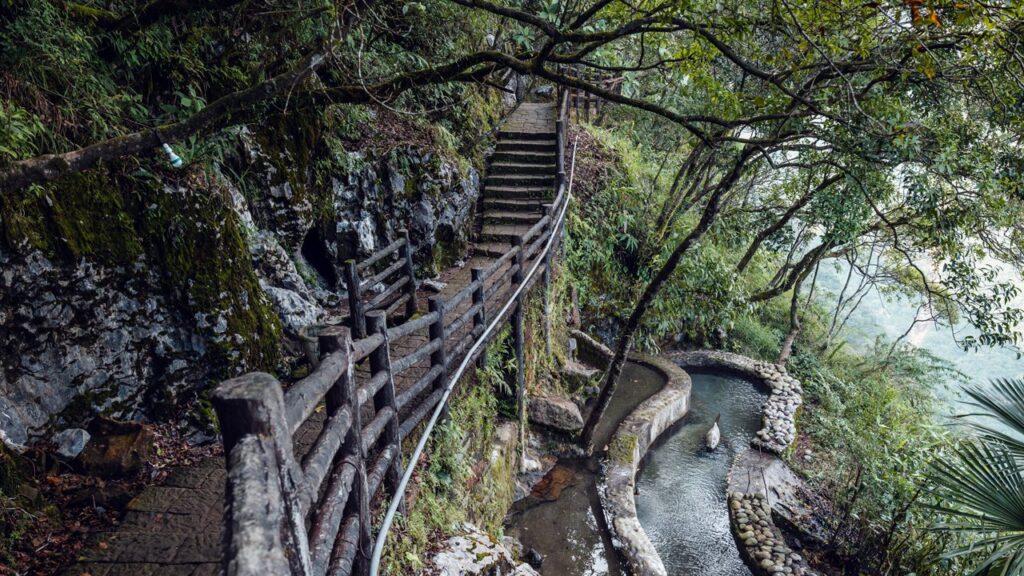
Arwah Cave, near Cherrapunji, offers a more advanced caving experience than Mawsmai — longer passages, more complex chambers, and fossilised marine creatures embedded in the limestone walls. A guided visit with a headtorch takes 45–90 minutes depending on how deep you go.
Top Things to Do in Cherrapunji
- Trek to Nongriat double decker bridge — The signature Meghalaya experience; stay overnight for the full effect
- Waterfall circuit — Nohkalikai, Seven Sisters, and Dainthlen in a single morning with a vehicle
- Mawsmai and Arwah caves — Half a day; combine both for a complete cave experience
- Sunrise at the escarpment — When cloud fills the valley below and only the hilltops emerge above the mist — one of the finest natural spectacles in Northeast India
- Photography — Cherrapunji rewards the camera in every season; different light, different waterfalls, different atmosphere
- Monsoon visit — For experienced travelers; the volume of water is extraordinary; carry full waterproofs
Where to Eat in Cherrapunji
- Cherrapunjee Holiday Resort restaurant — Reliable, good quality, and overlooks the escarpment
- Nongriat village food — Simple rice, lentils, and local vegetables served in homestay kitchens; perfectly satisfying after the trek
- Local dhabas in Sohra town — Basic Khasi food at very low prices; rice, pork, bamboo shoot
Where to Stay in Cherrapunji
- Cherrapunjee Holiday Resort — The most established property on the escarpment; comfortable rooms with valley views; restaurant on site
- Polo Orchid Resort — Mid-range; good escarpment views; reliable service
- Nongriat homestays — Basic but magical; staying in the valley overnight is the single best decision any visitor to Cherrapunji can make; approximately ₹500–₹1,000 with meals
- Cherrapunji Eco Park cottages — Budget-friendly option within the park grounds
How to Reach Cherrapunji
- From Shillong: 55 km; 1.5–2 hours on NH6 then Shillong–Cherrapunji Road; shared taxis from Police Bazar
- From Guwahati: 150 km; 4 hours; taxi via Shillong or direct to Cherrapunji
- By road: The road from Shillong to Cherrapunji passes through Mawkyrwat and offers increasingly dramatic escarpment views as you approach; drive slowly and stop at the viewpoints
Travel Essentials for Cherrapunji
- No permit required for Indian or foreign nationals
- Waterproof jacket and shoes essential year-round — even in the dry season, surprise showers are common
- Carry cash — limited ATMs in Cherrapunji town; use Shillong ATMs before departure
- For the Nongriat trek: sturdy footwear, water, snacks, and a dry bag for valuables
- Leeches active June to October — salt or leech socks recommended for valley treks during monsoon
Best Time to Visit Cherrapunji
- October to December: Best overall — post-monsoon clarity, waterfalls still flowing, cool temperatures, clear Bangladesh plains views
- January to March: Very clear and cool; some waterfalls reduced; ideal for root bridge trek
- April to May: Pre-monsoon; warm; waterfalls building; good for trekking
- June to September: Monsoon; extraordinary volume of water; all waterfalls at peak; travel requires flexibility and full waterproofs
