




Every journey into Northeast India passes through Guwahati. The largest city in the Northeast, spread along the southern bank of the Brahmaputra in western Assam, Guwahati is the region’s transport, commercial, and cultural hub — the point through which the majority of travelers enter before fanning out to Kaziranga, Meghalaya, Sikkim, Arunachal Pradesh, or the other six states. Many treat it only as a transit point, which is a significant mistake. Guwahati is a city of ancient significance, with temples that have drawn pilgrims for over a thousand years, a river frontage of tremendous scale and atmosphere, and a cultural vibrancy that reflects the extraordinary diversity of the region it serves as capital.
The city sits at the point where the Brahmaputra, having descended from the Tibetan plateau and carved through the Eastern Himalayas, enters the plains of India in full force — one of the world’s largest rivers in terms of volume, running so wide at Guwahati that the opposite bank appears in the haze. The Kamakhya Temple on Nilachal Hill, one of the most important Shakti shrines in Hinduism, has stood above this river for centuries. The island of Umananda, in the middle of the Brahmaputra, carries a Shiva temple accessible by ferry. And the city below, humming with traffic and commerce and the languages of a dozen Northeast India states, is one of India’s most characterful large cities.
Quick Facts About Guwahati
| State | Assam |
| Role | Largest city in Northeast India; major commercial and transport hub |
| Altitude | 55 metres |
| Language | Assamese, Bengali, Hindi, English; many Northeast languages spoken |
| Religion | Hinduism (majority); Islam; Christianity; Buddhism |
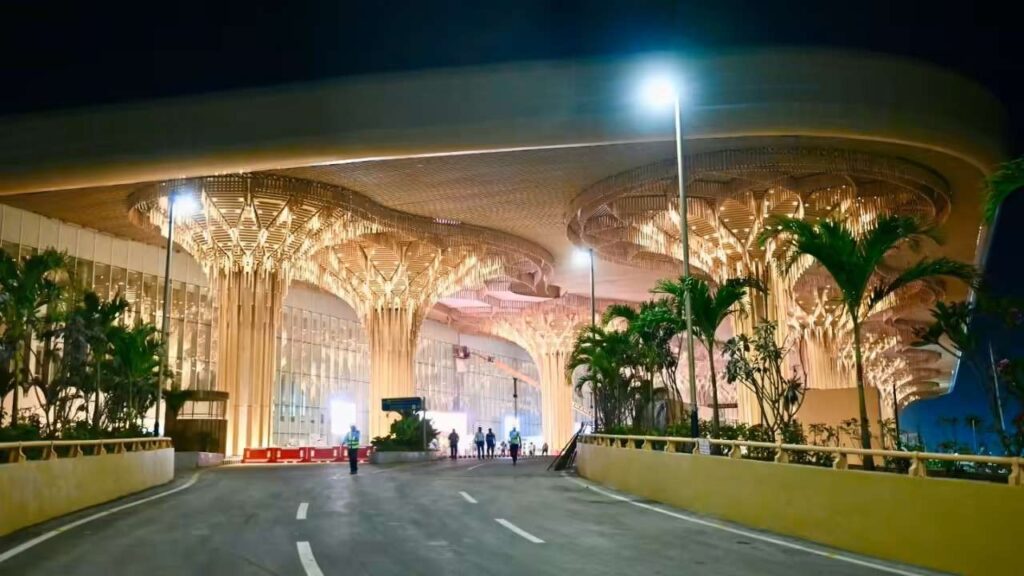
| Airport | Lokpriya Gopinath Bordoloi International Airport — 23 km from city centre |
| Rail | Guwahati Railway Station — well connected to all Indian cities |
| Permit Required | No permits required for Guwahati or Assam |
| Best Time | October to April |
| Distance from Kaziranga | 217 km; approximately 4.5–5 hours by road |
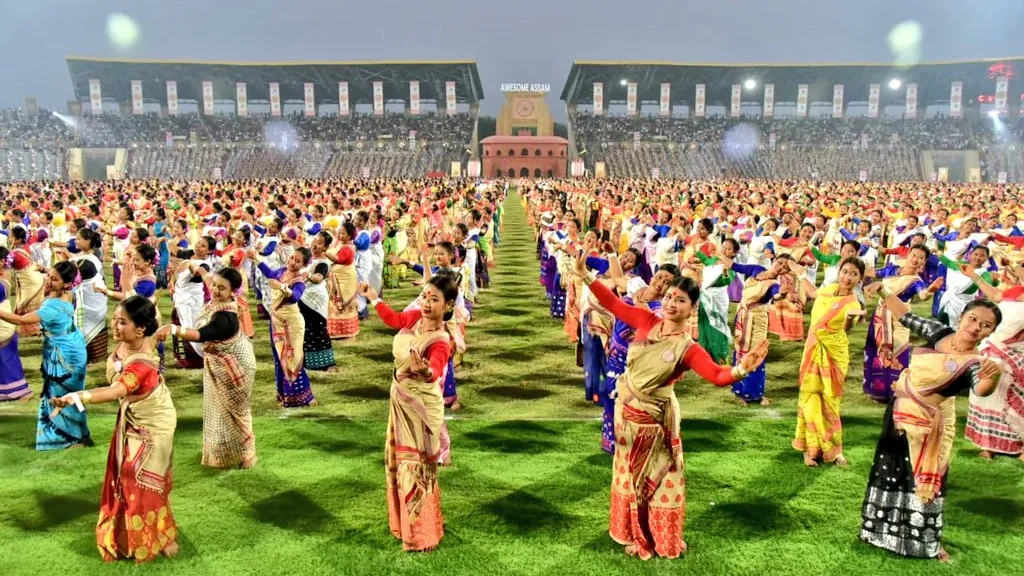
The People of Guwahati
Guwahati’s population is one of the most cosmopolitan in India’s Northeast — the city is home to the Assamese (the state’s majority community), Bengali Hindus, Bengali Muslims, Bodo (Assam’s largest indigenous tribe), and a constant flow of migrants from all eight Northeast states and beyond. This diversity is reflected in the city’s markets, restaurants, cultural institutions, and languages heard in its streets.
Assamese identity: The Assamese people maintain a cultural identity of extraordinary richness — their language (Assamese, an eastern Indo-Aryan tongue), their Bihu festivals, their silk weaving traditions (Muga and Pat silk are Assam’s most celebrated textiles), and their cuisine form the backbone of the city’s cultural character.
The Vaishnavite tradition: The 15th–16th century reformer-saint Srimanta Shankardev established a Vaishnavite bhakti movement in Assam that transformed Assamese culture, creating the Sattra monastery system (best seen at Majuli), the Borgeet devotional music tradition, and the Sattriya dance form — now a classical Indian dance style. Guwahati’s Shankardev Kalakshetra celebrates and preserves this tradition.
Tribal communities: The Bodo — Assam’s most numerous tribal community — have a significant presence in and around Guwahati, as do communities from the Karbi, Rabha, and Mising groups. Their cultural traditions add a tribal dimension to the city’s predominantly Assamese-Vaishnavite cultural identity.
Top Attractions in Guwahati
1. Kamakhya Temple — Shakti Pilgrimage Centre
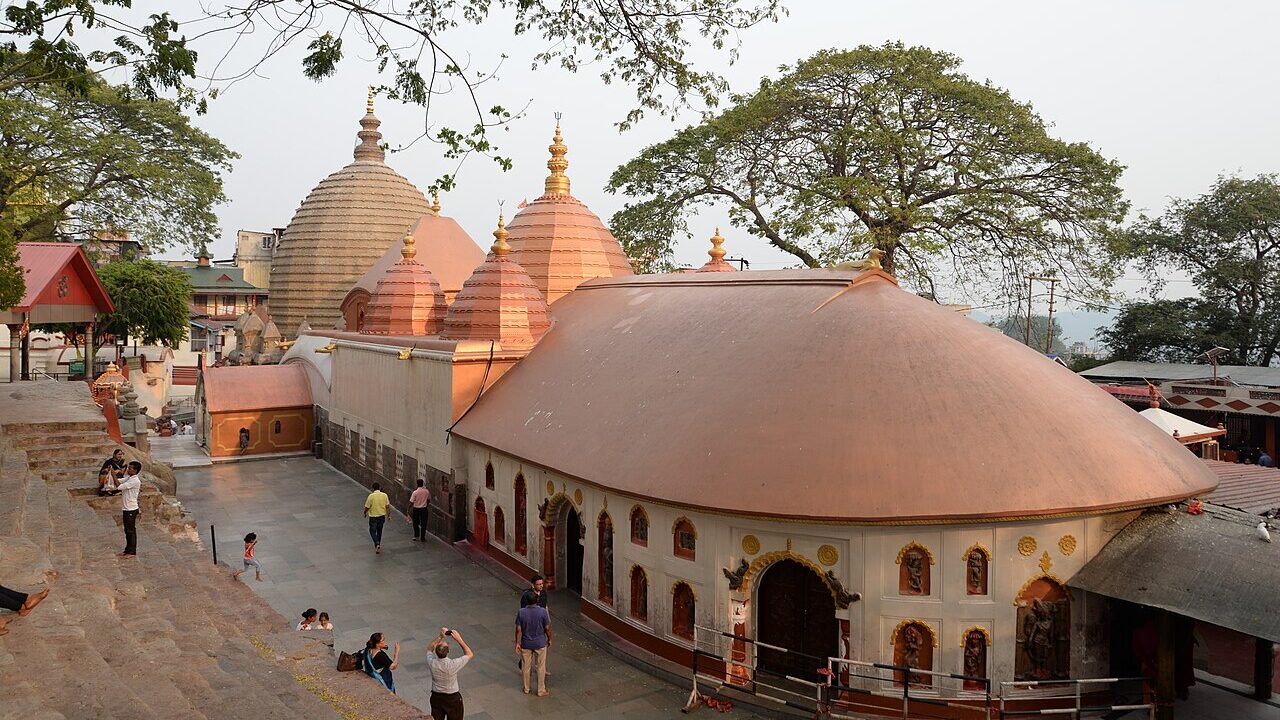
The Kamakhya Temple, crowning Nilachal Hill on the western edge of Guwahati, is one of the most important Hindu pilgrimage centres in India — one of the 51 Shakti Peethas (sacred seats of the goddess) and the most revered of all of them. The temple is dedicated to the goddess Kamakhya in her form as the great goddess of desire (Kameshwari), and the dark, cave-like inner sanctum — where no image exists but rather a yoni-shaped cleft in the rock over which a natural spring flows — is among the most ancient and powerful sacred sites in the Subcontinent.
- One of the 51 Shakti Peethas — among the most sacred Hindu sites in India
- The inner sanctum (sanctum sanctorum) is a natural cave in the rock face rather than a built chamber
- The annual Ambubachi Mela (June) draws over 100,000 pilgrims — one of the largest religious gatherings in Northeast India
- The temple complex includes multiple smaller shrines; allow 1.5–2 hours for the full complex
- Views over the Brahmaputra from Nilachal Hill are excellent — particularly at sunset
| Visiting Kamakhya: The temple opens at 8 AM. Early morning and late afternoon visits avoid the longest queues. Non-Hindu visitors are permitted in the outer temple complex but access to the inner sanctum may be restricted on certain festival days. Dress modestly, remove shoes, and approach with genuine respect for what is a deeply sacred active worship site. |
2. Umananda Island & Shiva Temple
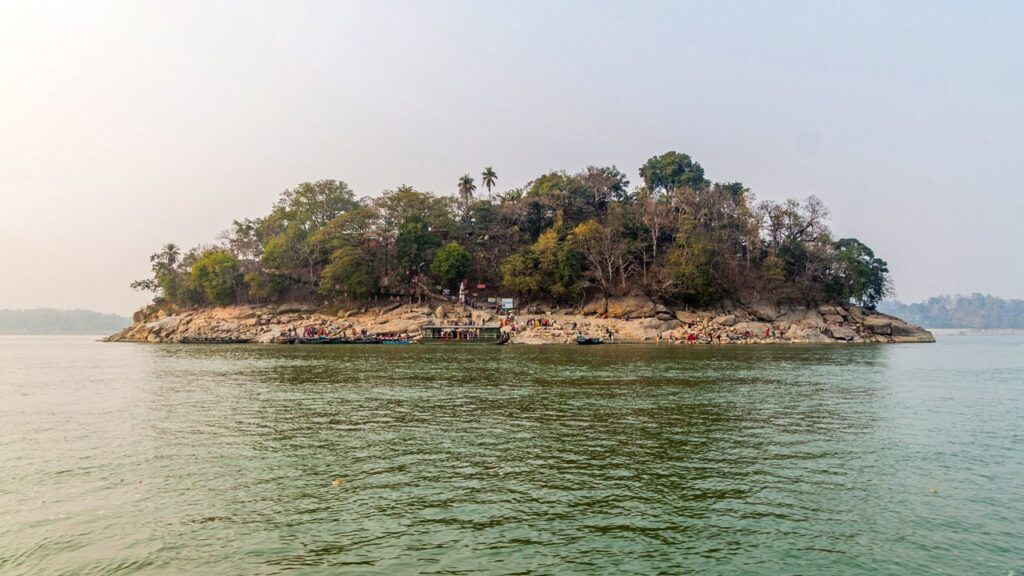
Umananda Island — a small rocky outcrop in the middle of the Brahmaputra, 200 metres wide and carrying a 17th century Shiva temple — is reached by a short ferry ride from Fancy Bazar ghat. The island is home to the rare Golden Langur (actually Assamese Macaque in this context) and the temple, surrounded by river water in all directions, has an atmosphere of remarkable serenity. The ferry crossing itself is a pleasure — watching the wide Brahmaputra from water level is one of Guwahati’s finest experiences.
- 17th century Shiva temple on a river island in the Brahmaputra
- Ferry from Fancy Bazar ghat: approximately 10 minutes; runs throughout the day
- The island has resident monkeys (Rhesus macaque) — do not feed them
- Temple opens at sunrise; best visited early morning or at sunset for the light on the river
3. Brahmaputra River Cruise
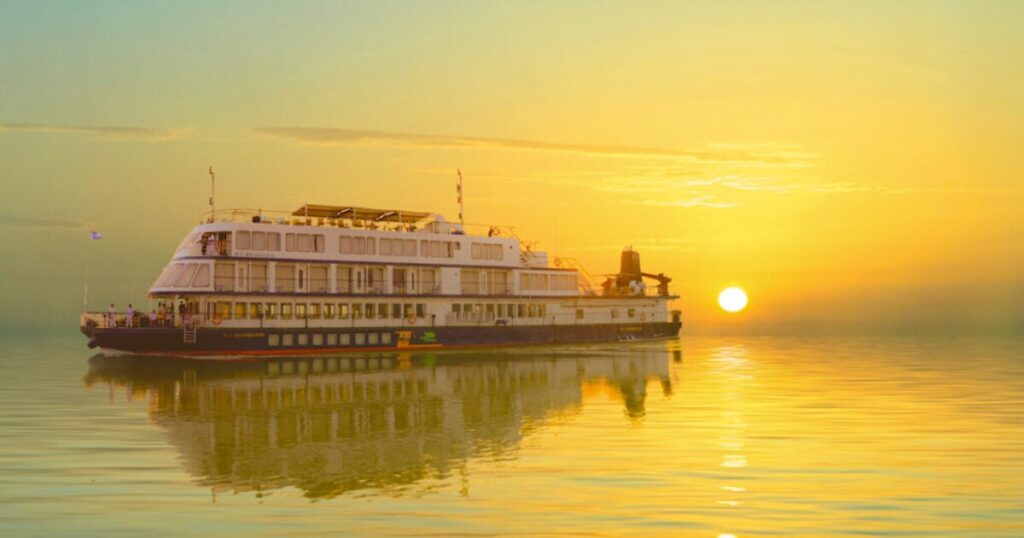
The Brahmaputra at Guwahati runs over 10 km wide in places — one of the most impressive river spectacles in Asia. Several cruise operators run morning and evening cruises from the Kachari Ghat and Fancy Bazar Ghat areas, offering 1–2 hour experiences on the river with views of the city, the Nilachal and Nabagraha hills, and the distant hills of Meghalaya on the southern bank.
- Evening cruises (sunset) are the most popular and atmospheric
- Multiple operators including MV Mahabahu (Assam tourism’s luxury cruise vessel)
- The river fog at dawn is extraordinary — early morning cruises less common but supremely atmospheric
- Combine a river cruise with the Umananda ferry for a full Brahmaputra morning
4. Srimanta Shankardev Kalakshetra
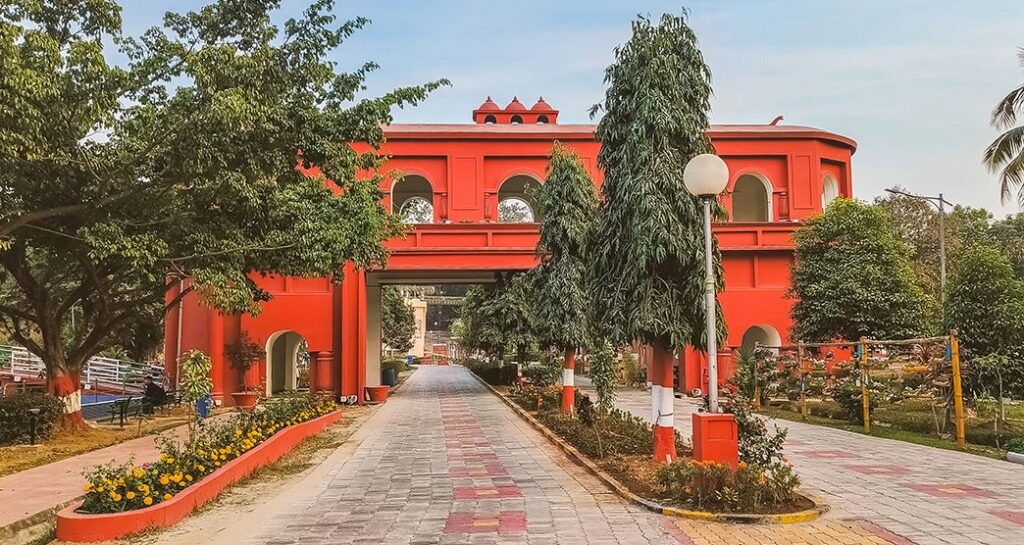
The Srimanta Shankardev Kalakshetra is Assam’s most important cultural complex — a 100-acre institution dedicated to preserving and presenting the arts, crafts, and cultural traditions of Assam and the Northeast. The complex includes a cultural museum of exceptional quality, galleries of Assamese traditional art and craft, theatres for Sattriya dance and Borgeet music performances, and outdoor pavilions representing the tribal cultures of all Assam’s communities.
- Cultural museum: the finest collection of Assamese material culture in any single institution
- Sattriya dance performances — schedule varies; check at the complex on arrival
- Craft galleries: Muga silk, Pat silk, cane work, pottery, and tribal textiles
- The complex grounds are beautifully maintained and pleasant for a half-day visit
5. Assam State Museum
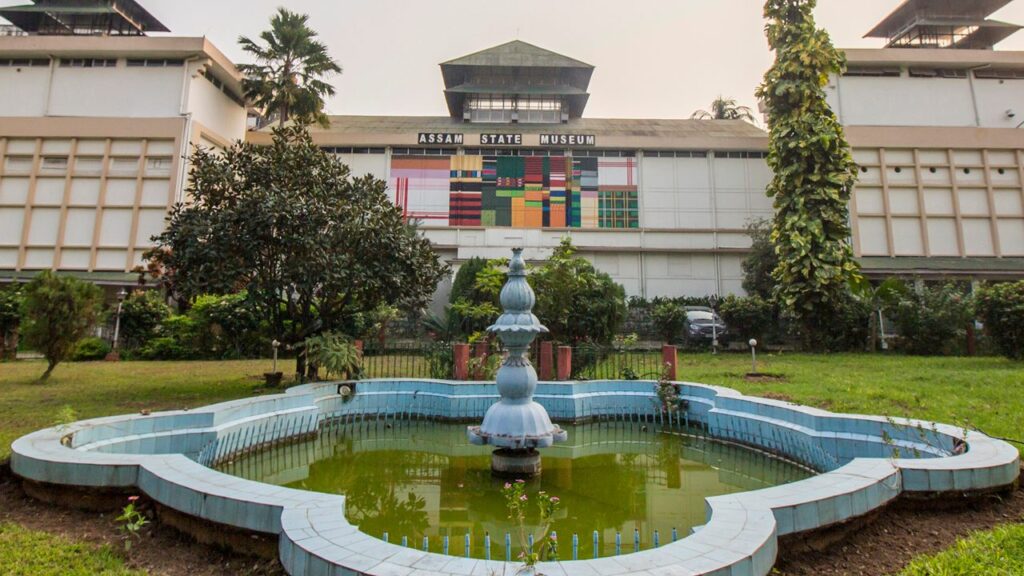
The Assam State Museum in the city centre houses one of the Northeast’s most significant collections of archaeological artefacts, sculpture, coins, and manuscripts — including stone sculptures from the Gupta and Pala periods, bronze objects from the Ahom kingdom, and a remarkable collection of Assamese manuscripts on bark and brass plates. Essential context for any deeper engagement with Assam’s history.
- Outstanding collection of Gupta and Pala period stone sculpture
- Ahom kingdom artefacts including weapons, jewellery, and court objects
- Assamese manuscripts on saanchi pat (bark) — rare and remarkable
6. Assam State Zoo cum Botanical Garden
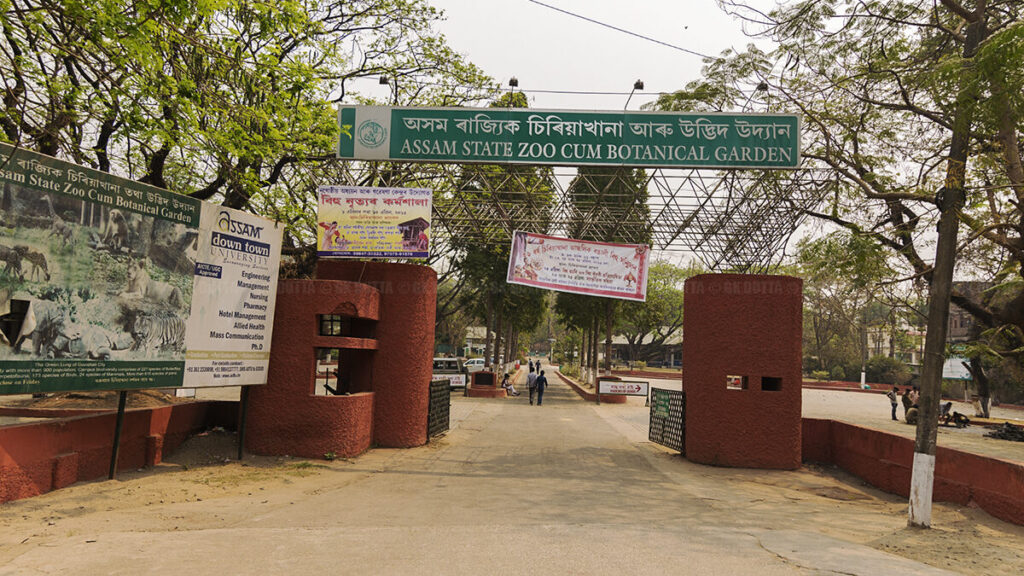
Assam State Zoo cum Botanical Garden, located in the Hengrabari Reserved Forest area of Guwahati, is the largest zoo in Northeast India, spread over approximately 430 acres. Established in 1957, it houses more than 1,100 animals, birds, and reptiles representing over 100 species, including the iconic one-horned rhinoceros, Royal Bengal tiger, and clouded leopard. The botanical section complements the zoo with a diverse collection of indigenous and exotic plant species, making it both a conservation hub and a recreational space in the heart of the city.
- Largest zoo in Northeast India
- Located within Guwahati city (Hengrabari area); around 6–7 km from Paltan Bazar Railway Station
- Open Tuesday to Sunday (closed on Mondays); entry tickets available at the gate
7. Accoland
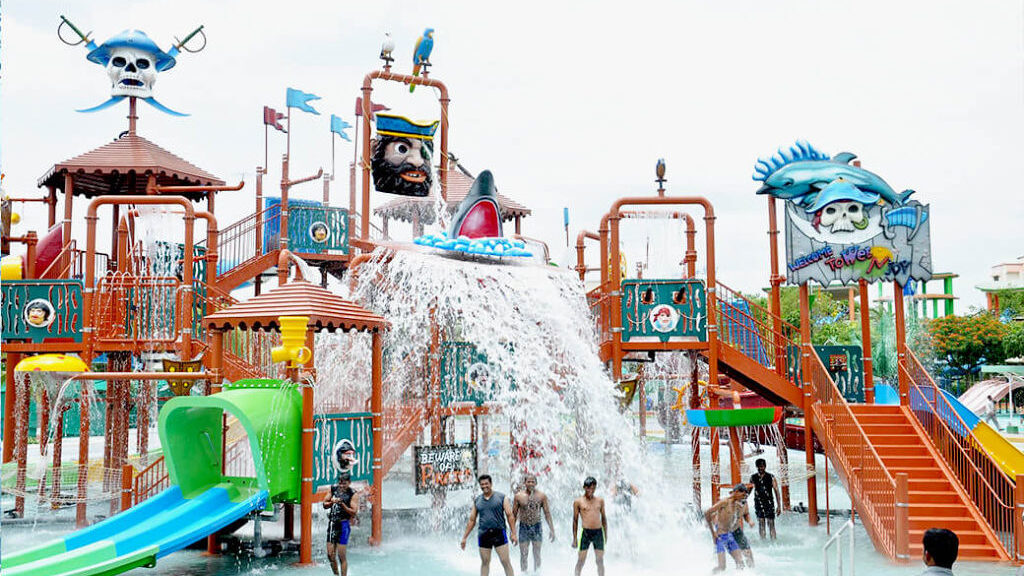
Accoland, located at Rani Road near Guwahati Airport, is the largest amusement and water park in Northeast India. Spread across a spacious campus on the outskirts of the city, it offers a mix of high-thrill rides, family attractions, and water-based entertainment, including wave pools, water slides, and rain dance zones. It is a popular weekend getaway for families, students, and corporate groups looking for a full-day recreational experience close to Guwahati.
- Largest amusement and water park in Northeast India
- Located at Rani Road, approximately 20 km from Guwahati city centre, around 10–15 minutes from Lokpriya Gopinath Bordoloi International Airport
- Open daily; entry tickets available at the gate and through select online booking platforms
Top Things to Do in Guwahati
- Kamakhya Temple at dawn — Arrive at 7:30 AM; the pre-opening light on the gopuram and the Brahmaputra below is extraordinary
- Brahmaputra evening cruise — The river at sunset from water level; bring a camera
- Shankardev Kalakshetra — Half a day; the finest cultural institution in Northeast India
- Umananda Island ferry — Morning; combine with Fancy Bazar market walk
- Paltan Bazar market evening — The most energetic market area in Guwahati; silk shops, food stalls, and the organised chaos of a Northeast India hub city
- State Museum + Dighalipukhuri Lake — A pleasant half-day combining culture and the colonial-era lake park
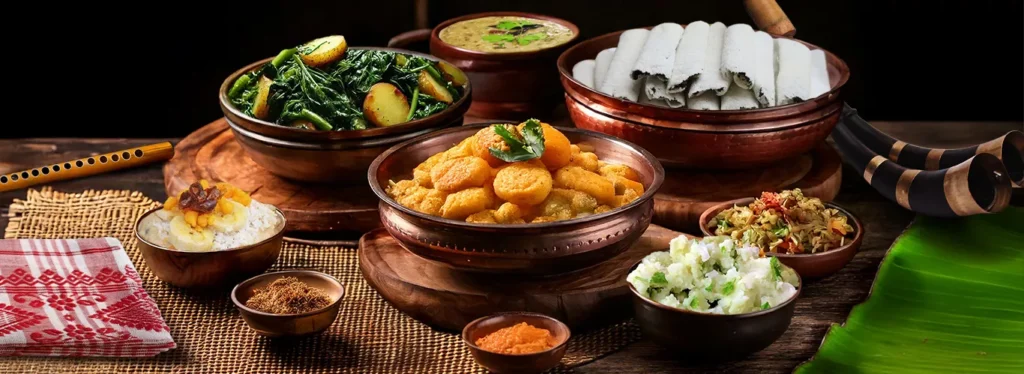
Assamese Cuisine in Guwahati
Dishes to Try
- Masor Tenga — Sour fish curry cooked with tomato or elephant apple (ou tenga); the defining Assamese dish
- Duck with Ash Gourd (Haah aru Kumura) — Slow-cooked duck in a rich preparation; an Assamese festive classic
- Khar — Alkaline preparation using raw papaya and pulses; an acquired taste that opens a door to Assamese flavour
- Pitha — Rice-based cakes, both sweet and savoury; the most ubiquitous Bihu festival food
- Ou Tenga Diya Maas — Fish with elephant apple; tangy and deeply flavoured
- Assam Tea — Drink it the Assamese way: black with a little sugar, or with ginger; not the milky version; this is a flavour experience
Recommended Restaurants
- Khorikaa — Guwahati’s most celebrated Assamese restaurant; authentic home-style cooking
- Paradise — Long-established restaurant near Fancy Bazar; reliable Assamese and Indian food
- Purabi — Assamese sweet shop and snack bar; best pitha and traditional sweets in the city
- Woodlands Hotel Restaurant — Consistent quality; good for travelers wanting Assamese food in a comfortable setting
Where to Stay in Guwahati
- Radisson Blu GS Road — The most reliable luxury option; good amenities; ₹6,000–₹10,000
- Vivanta Guwahati — Excellent location and views; Brahmaputra river view rooms worth the premium; ₹7,000–₹12,000
- Hotel Rajmahal — Good mid-range option near Fancy Bazar; ₹2,500–₹4,500
- Budget hotels near Railway Station — Multiple options; ₹800–₹2,000; convenient for early rail departures
- Paltan Bazar area hotels — Central location; walking distance to city sights; range from budget to mid-range
How to Reach Guwahati
By Air
- Lokpriya Gopinath Bordoloi International Airport — 23 km from city centre; well connected to Delhi, Kolkata, Mumbai, Bangalore, and all Northeast cities
- Prepaid taxi counter at the airport; approximately ₹600–₹800 to city centre
By Train
- Guwahati Railway Station is one of India’s busiest rail junctions — connected to Delhi (Rajdhani Express), Kolkata (Saraighat Express), Mumbai, and all Northeast rail routes
- The Rajdhani Express from Delhi takes approximately 36 hours; the Saraighat Express from Kolkata takes 16–18 hours
By Road
- National Highway 27 (Guwahati–Silchar) and NH17 connect Guwahati to all major Assam cities
- Bus services from Shillong (3 hrs), Kaziranga (5 hrs), Dimapur (7 hrs), and Siliguri (8 hrs)
Guwahati as the Northeast Permit Hub
Guwahati is the most practical city in which to obtain permits for the restricted Northeast states. While permits for Arunachal Pradesh, Nagaland, Manipur, and Mizoram are now available online, many travelers use Guwahati’s permit facilitation offices for in-person processing and to resolve complications.
- Arunachal Pradesh ILP — Arunachal Pradesh House, Guwahati; also available at arunachalilp.in online
- Nagaland ILP — Nagaland House, Guwahati; also available at nagalandilp.in online
- Manipur ILP — Manipur House, Guwahati; also available online at manipurilp.in
- Mizoram ILP — Mizoram House, Guwahati; online at mizoram.gov.in
Also Read: How to Apply For Travel Permits for Traveling to Northeast India
Best Time to Visit Guwahati
- October to February: Best weather; clear skies; comfortable temperatures; festival season (Durga Puja in October, Bihu in January)
- March to May: Warming up; Rongali Bihu (April) — the most important Assamese festival; pre-monsoon lushness
- June to September: Monsoon; heavy rainfall; Brahmaputra floods dramatically; some attractions disrupted but the river itself is spectacular
Also Read: Best Time to Visit Northeast India — Month-by-Month Guide
