




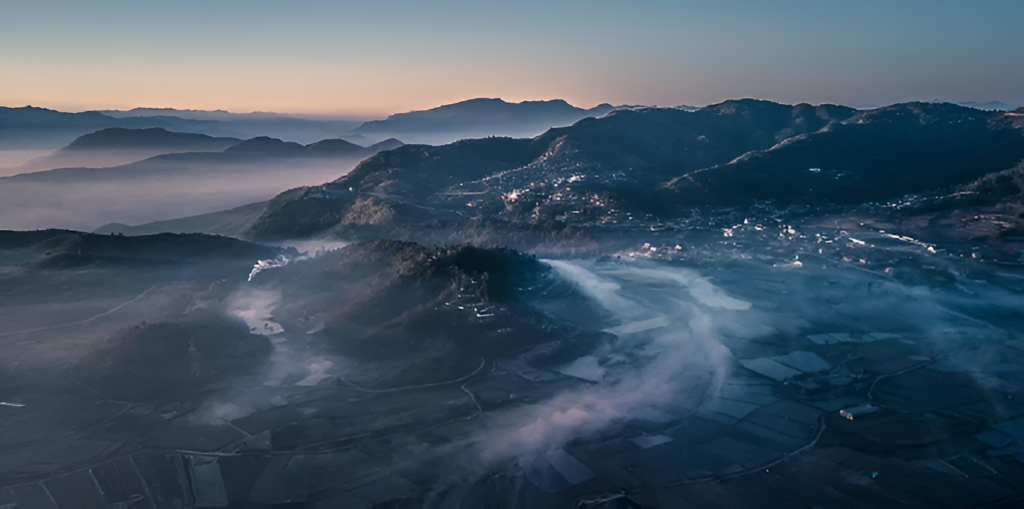
The Mizo call it Phawngpui — the Blue Mountain — and from a distance, wrapped in the haze that settles over the southern Mizo Hills, the name is exactly right. At 2,157 metres, Phawngpui is the highest peak in Mizoram and one of the most biodiverse spots in the entire Eastern Himalayan region. The Phawngpui National Park — covering 50 square kilometres of the peak and its surrounding ridgelines — protects a remarkable assemblage of high-altitude plants, birds, and mammals in one of the most remote and least visited protected areas in Northeast India.
The mountain holds deep significance for the Mizo people. It is the subject of a famous Mizo folk song — ‘Phawngpuia Hla’ — whose melody and lyrics have become one of the most beloved pieces of traditional Mizo music, expressing the longing for home that characterises the Mizo emotional relationship with their hills. The peak is treated with a reverence that goes beyond the merely scenic, and trekkers who make the effort to reach the summit — a rewarding but demanding 2–3 day journey from the nearest access point — find an experience that combines physical achievement with cultural depth.
Quick Facts About Phawngpui
| State | Mizoram |
| District | Lawngtlai |
| Altitude | 2,157 metres (7,077 feet) — highest peak in Mizoram |
| National Park Area | 50 sq km |
| Distance from Aizawl | Approximately 300 km; 8–10 hours by road |
| Distance from Lawngtlai town | 80 km; approximately 3 hours |
| ILP Required | Yes — Mizoram ILP |
| Trek Duration | 1–2 days from the base village; 2–3 days including travel from Lawngtlai |
| Best Time | October to April; March–April for rhododendron bloom |
| Famous For | Highest peak in Mizoram; Blyth’s Tragopan; rhododendrons; panoramic views |
The Ecology of Phawngpui
Flora
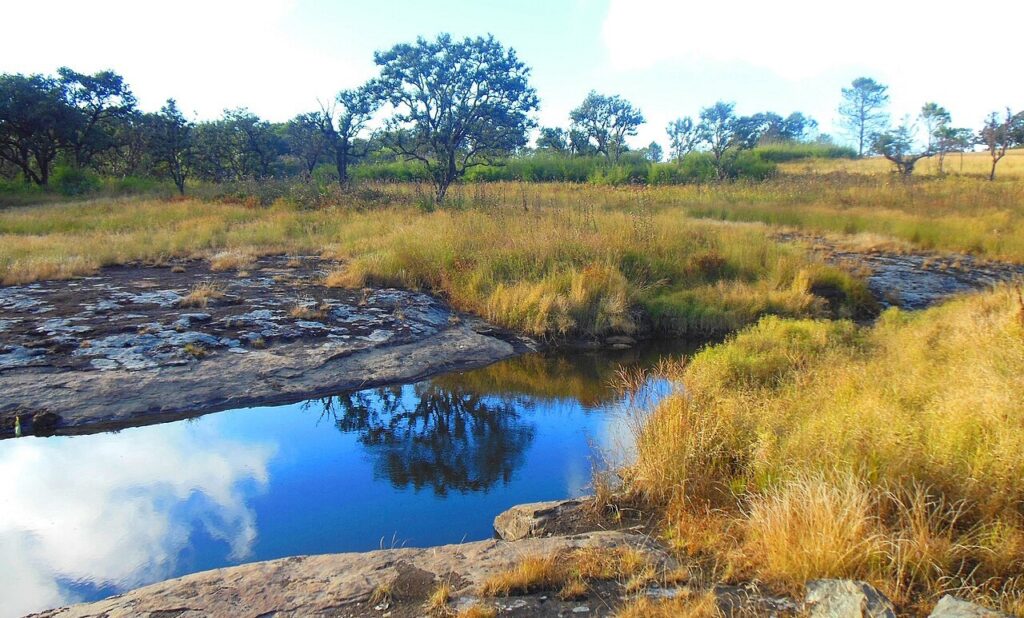
Phawngpui National Park contains one of the most diverse concentrations of plant species in Mizoram — a result of the mountain’s position at the confluence of Eastern Himalayan and Indo-Burmese biodiversity zones. The park has been recorded with over 300 plant species, including multiple rhododendron varieties, extensive orchid populations, and the distinctive high-altitude grassland community on the upper slopes.
Rhododendrons: Multiple rhododendron species bloom across the Phawngpui slopes from March to April — the peak bloom season transforms the upper forest into a display of crimson, pink, and white that is one of Mizoram’s finest seasonal spectacles.
Orchids: Over 100 orchid species have been recorded in the park, including several endemic to this specific highland area. The orchid diversity is a reflection of the micro-climatic variation created by the mountain’s altitude gradient.
High-altitude grasslands: The upper slopes above the treeline feature a distinctive high-altitude grassland community that is both ecologically significant and visually striking — an open, rolling landscape that contrasts sharply with the dense forest below.
Wildlife
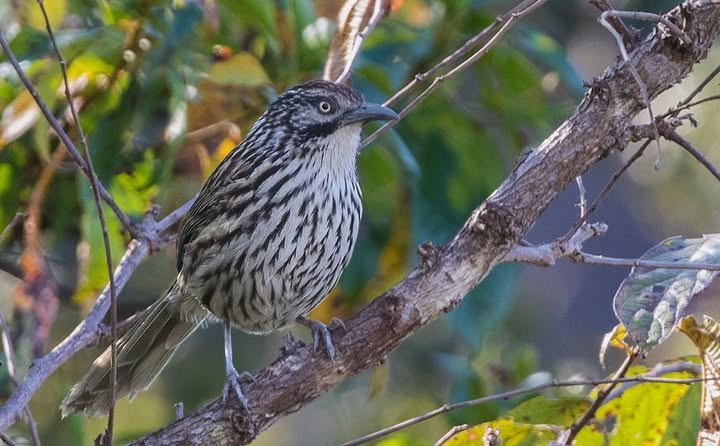
Phawngpui National Park’s wildlife list reads like a catalogue of rarities — species that are globally threatened, regionally endemic, or both.
- Blyth’s Tragopan — Manipur and Mizoram’s most spectacular pheasant; the male’s blue face and red chest with white spots make it one of the most beautiful birds in Asia; found in the rhododendron forest zone
- Hume’s Pheasant — Globally vulnerable; found in the upper forest sections
- Mrs Hume’s Pheasant — Rare; present in the dense forest zones
- Clouded Leopard — Camera traps have confirmed presence; rarely sighted
- Asiatic Black Bear — Present throughout the forest; most active at dawn and dusk
- Red Panda — Present at higher elevations; extremely shy and rarely seen
- Hoolock Gibbon — Asia’s only ape; heard at dawn in the lower forest sections
- Multiple laughingthrush and babbler species — The forest is extraordinarily rich in understorey bird diversity
The Phawngpui Trek — Route & Itinerary
Access
Phawngpui is one of the more remote destinations in Mizoram, requiring both commitment and planning. The base town is Lawngtlai (also spelled Lunglei in older references; Lawngtlai is the district headquarters) approximately 300 km south of Aizawl. From Lawngtlai, a rough road leads approximately 80 km to the base village near the national park. A 4WD vehicle is essential.
Standard Trek Route (2 Days from Base Village)
- Day 1 — Base Village to Phawngpui Summit Camp: The trail ascends from the base village through dense mixed forest, passing through increasingly dense rhododendron stands, emerging above the treeline into the high-altitude grassland zone. The summit or upper camp is reached in 4–6 hours. Total ascent: approximately 700–800 metres.
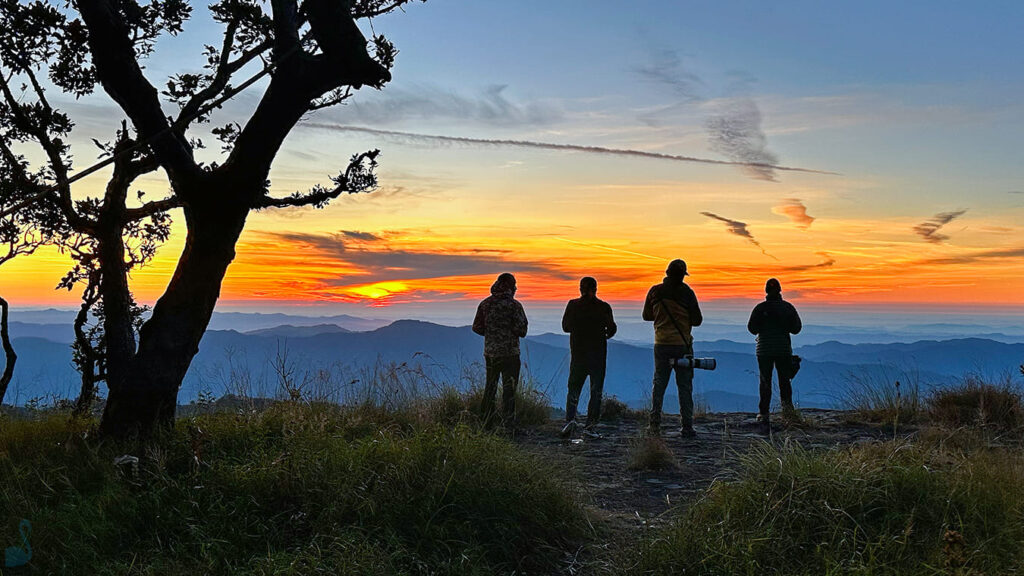
- Day 2 — Summit exploration and return: Morning views from the summit area (on clear days extending across multiple ridgelines into Myanmar and Bangladesh); return to base village by afternoon.
| The Phawngpui summit is most frequently clear in the early morning — cloud builds over the mountain by late morning on most days. The most rewarding approach is to camp near the summit and be in position at dawn. The panorama from the top — across the rolling Mizo Hills and south into Myanmar and Bangladesh — is one of the finest high-altitude views in the Northeast. |
What to Carry
- Cold weather gear: temperatures at 2,157m drop significantly at night, particularly October–February; fleece and waterproof layer essential
- Trekking boots with ankle support — the trail is steep and often wet
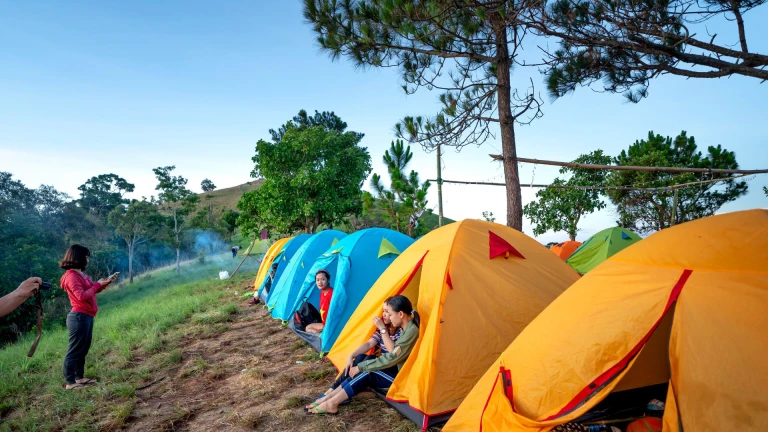
- Tent and sleeping bag for summit camp
- 3 days of food and water purification supplies — no facilities above the base village
- Headtorch for pre-dawn summit approach
- Binoculars — essential for the exceptional birdlife
Guides & Permits
- Forest Department permit required — obtain at the national park office
- Local guide from the base village: strongly recommended and available; approximately ₹1,000–₹1,500 per day
- No solo trekking permitted inside the national park
Also Read: How to Apply For Travel Permits for Traveling to Northeast India
Wildlife & Birdwatching at Phawngpui
For serious birdwatchers, Phawngpui is one of the most rewarding destinations in India. The combination of Eastern Himalayan and Indo-Burmese avifauna at a single location creates a species list that draws birders from across the world.
- Dawn forest walks — The most productive birdwatching window; the chorus of laughingthrushes, babblers, and pheasants at dawn is extraordinary
- Tragopan viewing — The rhododendron forest zone (1,600–2,000m) is the best; be in position before 6 AM
- Raptor watching — Open ridgelines above the treeline; Mountain Hawk-Eagle, Crested Serpent Eagle
- Orchid photography — The forest floor in the middle altitude zones; March–May peak
The Cultural Significance of Phawngpui
The Phawngpuia Hla — the Blue Mountain Song — is one of the most beloved pieces of Mizo oral and musical tradition. The song, which expresses longing for the mountain and the homeland it represents, is sung at community gatherings, festivals, and church events across Mizoram. It is effectively the emotional anthem of the Mizo hills. Any visitor who learns about the song before arriving at the mountain summit will experience the view differently — as the Mizo experience it: not merely as scenery, but as home.
Where to Stay Near Phawngpui
- Base village homestays — The only accommodation option near the park; Mizo family homes; simple but warm; meals provided
- Lawngtlai town — The nearest town with reliable accommodation, Circuit House and basic guesthouses; 80 km from the trailhead
- Camping at/near summit — For trekkers doing the summit; carry all equipment; register with the Forest Department
How to Reach Phawngpui
- From Aizawl: Aizawl to Lawngtlai: approximately 230 km on NH306; 7–8 hours. From Lawngtlai to the base village: 80 km on rough road; 3–4 hours in a 4WD vehicle.
- Vehicle: 4WD essential for the road from Lawngtlai to the park; hire in Lawngtlai or arrange from Aizawl
- Total journey from Aizawl: 2 days recommended — overnight in Lawngtlai, then travel to base village and begin trek
Best Time to Visit Phawngpui
- March to April: Rhododendron bloom peak; the most spectacular visual season; clear skies in the morning
- October to February: Best trekking conditions; clear air; excellent wildlife visibility; cold at night
- May: Late rhododendrons still present; warming; some orchids beginning
- June to September: Monsoon; trails very wet and slippery; roads to Lawngtlai can be disrupted; not recommended
Also Read: Best Time to Visit Northeast India — Month-by-Month Guide
