




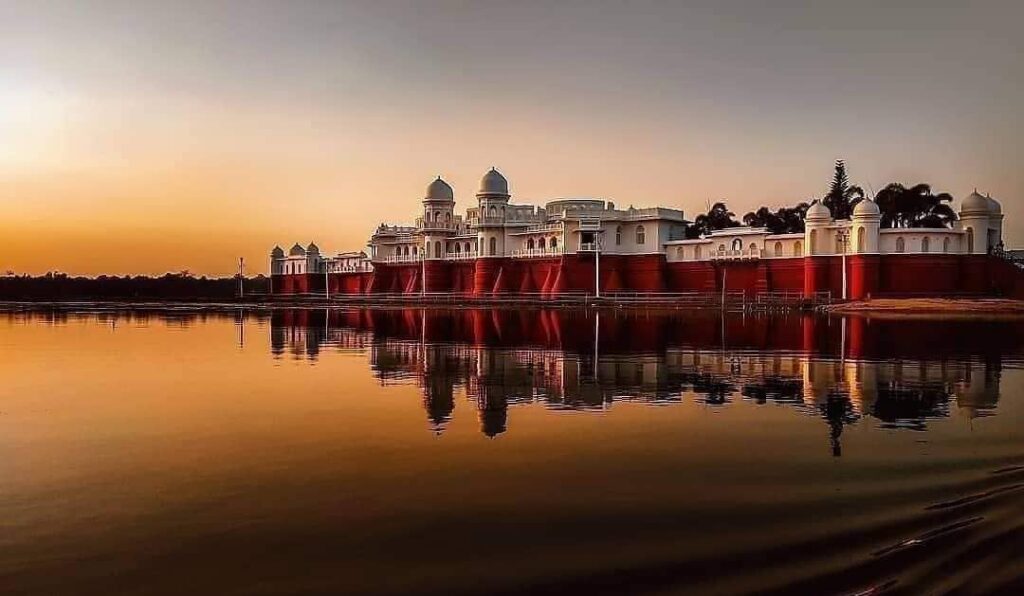
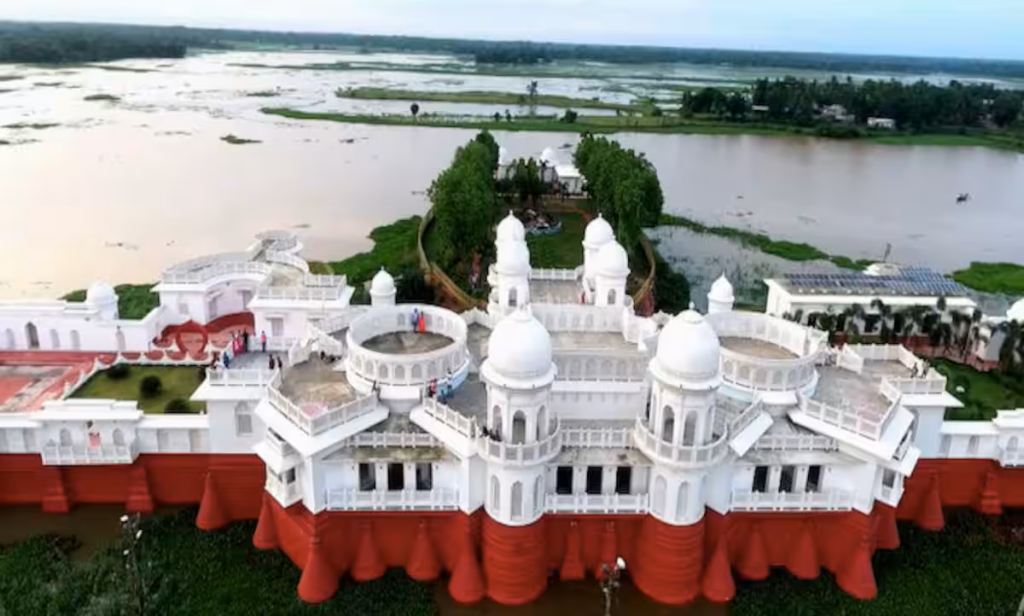
The Maharajas of Tripura built many things — palaces, temples, gardens. But nothing they built is quite like Neermahal. Set in the middle of Rudrasagar Lake, 53 km south of Agartala, the Neermahal Water Palace was constructed between 1930 and 1938 by Maharaja Bir Bikram Kishore Manikya as a summer retreat — a pleasure palace on an island in a lake, reached only by boat, surrounded by water in every direction, its white and terracotta towers reflected in the lake surface. It is one of the most visually distinctive buildings in Northeast India and one of only two water palaces in the entire country.
The architecture of Neermahal is itself a cultural statement. Maharaja Bir Bikram Kishore Manikya commissioned the palace in a style that deliberately synthesised Hindu and Mughal architectural elements — arches and minarets alongside temple towers and Bengal-style domes — in an expression of the inclusive, pluralist cultural vision of the Manikya court. The palace was designed not just as a building but as a symbol of what Tripura’s rulers believed themselves to be: patrons of a culture that belonged to everyone, regardless of faith.
Quick Facts About Neermahal
| Location | Rudrasagar Lake, Melaghar, Tripura |
| State | Tripura |
| Distance from Agartala | 53 km; approximately 1.5 hours by road |
| Construction | 1930–1938 by Maharaja Bir Bikram Kishore Manikya |
| Architectural Style | Hindu-Mughal synthesis; unique to Tripura |
| Lake Name | Rudrasagar Lake — approximately 5 sq km |
| Access | Boat from Melaghar ghat — approximately 10–15 minutes |
| No ILP Required | Tripura is open to all Indian nationals |
| Best Time | October to March; dawn and dusk for photography |
| Famous For | Only water palace in Northeast India; one of two in India; Rudrasagar Lake sunset |
The Palace — Architecture & History
The Design Synthesis
Neermahal’s architecture is unusual enough to require explanation. The palace was designed to blend the two dominant religious traditions of Tripura’s royal culture — the Manikya kings’ Vaishnava Hindu faith and the Mughal-influenced court culture they had absorbed through centuries of interaction with the Mughal and Nawabi courts of Bengal. The result is a building that contains:
- Mughal-style arches and minarets alongside Hindu temple towers (shikhara)
- Bengal-style curved cornice roofs (charchala) over some structures
- Open pavilions (baradari) typical of Mughal pleasure architecture
- Inner sanctum spaces designed for Hindu puja
- A theatrical quality — the palace is designed to be seen from the water, its reflection completing the composition
| The architectural synthesis of Neermahal was not accidental or decorative — it was an intentional cultural statement by Maharaja Bir Bikram Kishore Manikya, who saw pluralism as both a royal value and a political necessity in a state where Hindu, Muslim, and tribal communities had coexisted under Manikya rule for centuries. |
Construction & Royal Use
The palace was built in two phases between 1930 and 1938, using craftsmen from Bengal and employing materials imported from outside Tripura. Maharaja Bir Bikram Kishore Manikya used it as a summer retreat — escaping the heat of Agartala by spending weeks on the cool lake island. After the accession of Tripura to India in 1949, the palace fell into disuse and partial disrepair. Restoration work by the Archaeological Survey of India has stabilised the structure, though some sections remain closed to visitors due to ongoing conservation work.
The Rudrasagar Lake Experience
The Boat Journey
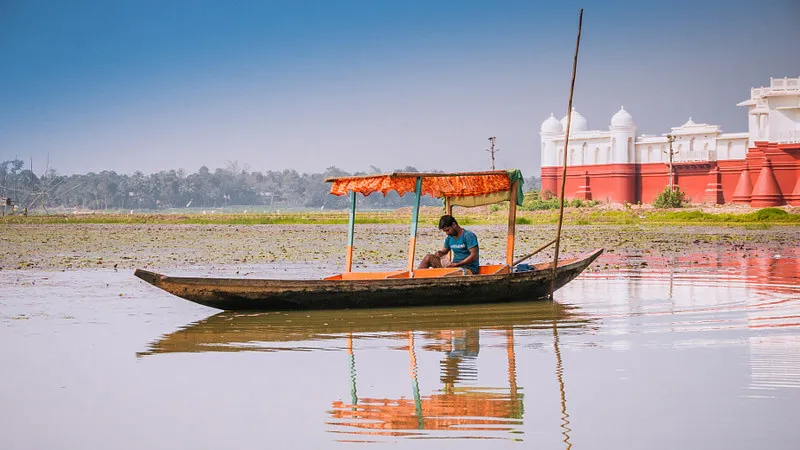
The boat journey from Melaghar ghat to the Neermahal island is an integral part of the experience — you cannot drive to the palace; you must cross the water. The 10–15 minute boat ride across Rudrasagar Lake offers a gradual revelation of the palace: first the towers visible above the water line, then the full facade emerging as the boat approaches, then the island itself coming into detail. This approach — by water, with the palace growing in scale across the lake — is one of the finest architectural arrivals in Northeast India.
- Wooden motorboats from Melaghar ghat: approximately ₹50–₹100 per person return
- Private boat hire available for groups: approximately ₹300–₹500 for a round trip
- The crossing takes 10–15 minutes in normal conditions
- Evening boats are available for sunset photography — the most popular time
Photography — Dawn, Dusk & Reflection
Neermahal is one of the most photographed buildings in Northeast India, and for good reason. The combination of white-and-terracotta palace architecture, open water in every direction, and the extraordinary reflection quality of Rudrasagar Lake on still mornings creates conditions for architectural photography of exceptional quality.
- Dawn — The best photography time; arrive at the ghat before sunrise; the palace reflection on a still morning is a classic image; the eastern light catches the architecture frontally
- Golden hour (late afternoon) — The palace catches warm light in the final hour before sunset; reflection quality remains excellent; the few other visitors at this time allow clear compositions
- Monsoon season (July–September) — The lake is at its fullest and most dramatic; cloudy light softens the architecture; the surrounding water hyacinth and lotus blooms add colour
Rudrasagar Lake Wildlife
Rudrasagar Lake is a significant wetland supporting substantial populations of waterbirds, particularly in winter when migratory species arrive from Central Asia and the Himalayan plateau.
- Spot-billed Pelican — large colonies use the open water sections; winter
- Lesser Adjutant Stork — resident; visible on the lake edges year-round
- Multiple duck and teal species — October to March peak
- Brahminy Kite, Grey-headed Fish Eagle — raptors patrolling the lake surface
- Pheasant-tailed Jacana — walks on floating vegetation at lake edges
- The boat journey to and from the palace is an excellent birding opportunity
What to See at the Palace
The Island & Grounds
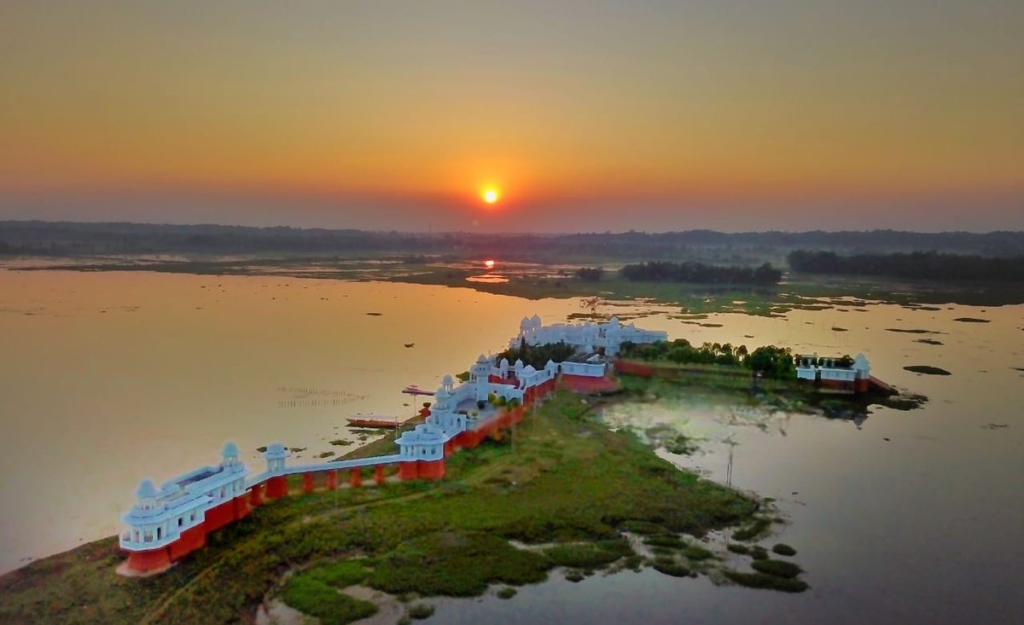
The Neermahal island is small — approximately 1.5 acres — and the palace fills most of it. A walk around the island’s perimeter takes 20–30 minutes and offers views in all directions across the lake. The palace’s multiple courtyards, pavilions, and towers can be explored on foot, with the central baradari offering the best all-round views.
- The central open baradari (pavilion): the finest interior space; views of the lake through arched openings
- The rooftop terrace: panoramic lake views; best for photography
- The Andar Mahal (inner palace): the more private residential quarters; some sections closed for conservation
- The ghats (landing steps): the formal water entrance; the most theatrical architectural moment
The Boat Festival (Neermahal Jal Utsav)
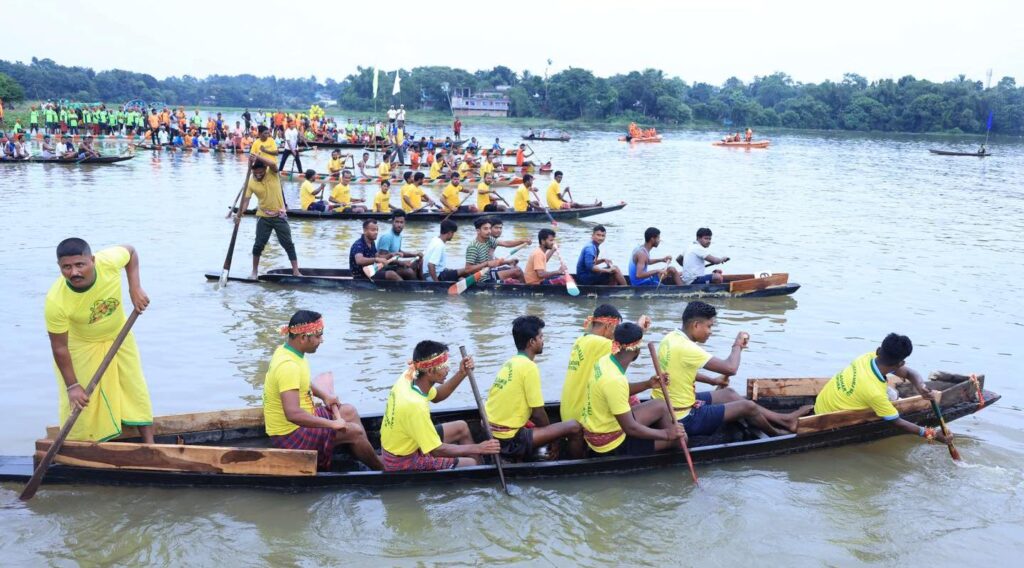
The annual Neermahal Jal Utsav (Water Festival), held on the full moon night of August–September on the Rudrasagar Lake, is one of Tripura’s most spectacular cultural events — decorated boats illuminated with lights process across the lake toward the illuminated palace, to the accompaniment of traditional music. The combination of lights reflecting on the water and the palace as backdrop creates one of the Northeast’s most photogenic festival nights.
- Held annually on the full moon of August–September (check Tripura Tourism for exact dates)
- Decorated illuminated boats on the Rudrasagar Lake
- The palace is illuminated for the festival night
- Traditional music and cultural performances at the ghat
- Book accommodation well in advance — the event draws visitors from across the region
Neermahal as Part of a South Agartala Day Trip
Neermahal is most efficiently visited as part of a combined day trip from Agartala that includes the Tripura Sundari Temple at Matabari (Udaipur) — the two sites are 30 km apart and together constitute the finest single day trip from the state capital.
- Recommended circuit: Agartala → Udaipur/Matabari (55 km; Tripura Sundari Temple) → Neermahal/Melaghar (30 km further; boat to palace) → return to Agartala (53 km)
- Total distance: Approximately 138 km return; allow a full day — depart by 7 AM and return by 7 PM
- Midday light: Neermahal is best at dawn and dusk; if doing a day trip, visit the temple in the morning and arrive at Neermahal for the afternoon golden hour
Where to Eat & Stay Near Neermahal
- Tripura Tourism guesthouse (Melaghar) — Simple accommodation near the ghat; basic but adequate; ₹700–₹1,500; the best option for those wanting to be on-site at dawn
- Day trip from Agartala — The most common approach; 53 km from the capital; manageable as a day excursion
- Udaipur town — 30 km from Neermahal; has better accommodation options than Melaghar; useful base for both Neermahal and Matabari
- Food at Melaghar — Basic Bengali food available at the ghat-side stalls; carry additional snacks for a full day
How to Reach Neermahal
- From Agartala: 53 km south on NH44 to Melaghar; approximately 1.5 hours by car. The road passes through the Gomati district.
- By private taxi: Hire from Agartala for a full day; approximately ₹2,500–₹3,500 for the Neermahal + Matabari circuit
- By bus: State transport buses from Agartala to Udaipur stop at Melaghar junction; services throughout the day; 2–2.5 hours
- To the palace: Boat from Melaghar ghat — walk 200 metres from the main road to the ghat; boats available throughout the day
Travel Essentials for Neermahal
- No ILP required for Tripura
- Carry cash for boat hire and entry fees — no ATMs near the ghat
- Photography: a wide-angle lens for the palace facade from the boat; a zoom for the lake birds
- Early morning visits require arranging private boat hire (the first public boats may not run until 8–9 AM)
- Footwear: remove shoes before entering the inner palace chambers
Best Time to Visit Neermahal
- October to February: Best weather; clear sky reflections; migratory birds on the lake; comfortable temperatures
- August–September full moon: Jal Utsav (Water Festival) — the most spectacular single event at Neermahal
- July to September (non-festival): Monsoon; lake full and dramatic; lotus and water hyacinth in bloom; soft photographic light
- March to May: Warm; lake level dropping; good for photography before the summer heat
