




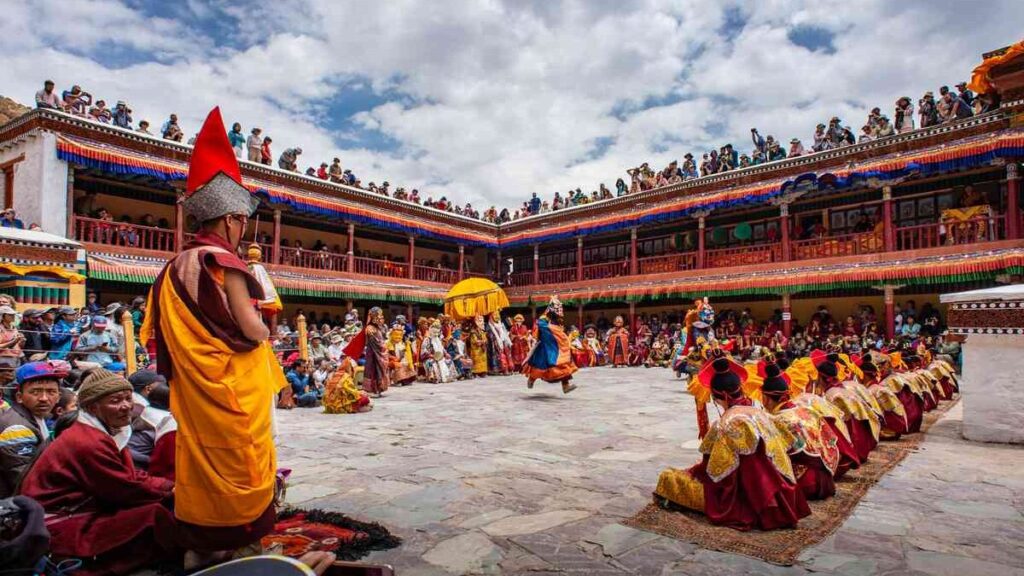
There is a particular kind of stillness that falls over a Himalayan monastery just before the masks come out. Monks in heavy brocade robes wait in the courtyard, drums and long ceremonial horns ready, and then the Chaam begins — a masked dance depicting the triumph of good over evil, performed with a precision passed down through generations of Buddhist monastic tradition. This is the heart of the Losar Festival, and it transforms monasteries across two very different corners of Northeast India — Sikkim‘s Rumtek and Phodong, and Tawang in Arunachal Pradesh — into some of the most vivid stages in the entire Himalayas.
Losar is the Tibetan New Year, celebrated by Buddhist communities across Sikkim, Tawang, Tibet, Nepal, Bhutan, and the broader Himalayan world. Losar 2027 falls on February 7, ushering in the Year of the Fire Sheep according to the Tibetan lunisolar calendar — a 15-day observance, with the first three to four days carrying the main celebrations. Here is a complete look at one of the most colourful and spiritually rich festivals you can experience in Northeast India, and the two states where you can witness it best.
Quick Facts: Losar Festival
| Detail | Information |
|---|---|
| Festival | Losar (also Lossar, Gyalpo Losar) |
| Tibetan Year | Year of the Fire Sheep (2154) |
| Main Celebration Window | February 5–9, 2027 (approx.) |
| Meaning | “Losar” translates to “New Year” in Tibetan |
| Celebrated By | Tibetan Buddhist and Bhutia communities of Sikkim |
| Main Venues | Rumtek Monastery, Phodong Monastery, Pemayangtse Monastery, Tsuklakhang Palace |
| Other Celebration Sites | Lachen, Lachung, Enchey Monastery |
| Also Celebrated By | Monpa community, Tawang district, Arunachal Pradesh |
| Signature Ritual | Chaam (masked monastic dance) |
| Pre-Festival Ritual | Gutor (held two days before Losar) |
| Related Sikkimese Festival | Losoong (Bhutia/Lepcha New Year, usually December) |
What Is Losar? The Deep Agricultural and Animistic Roots of the New Year
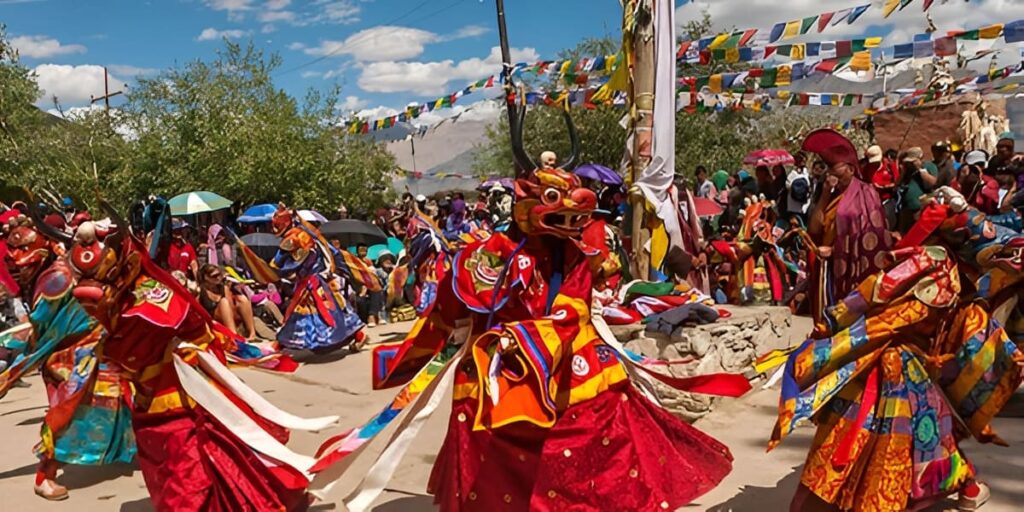
Losar marks the beginning of the new year according to the Tibetan lunisolar calendar, and the word itself breaks down simply: “Lo” means year, and “sar” means new. It is also known as Gyalpo Losar, ranking among the most significant festivals observed by Tibetan Buddhist communities anywhere in the world.
The history of Losar predates Buddhism’s arrival in Tibet and the Himalayan region, tracing back to the pre-Buddhist Bon religion, where it likely marked the winter solstice. In its earliest form, Losar functioned as a winter ceremony in which locals burned large quantities of incense to appease local deities, believing the ritual would drive away negative spirits before the year’s turn. As Buddhism took root and Tibetan astrological methods evolved, the festival’s meaning shifted: Losar came to mark the welcoming of a new harvesting season alongside the new year itself, blending older animistic practices with Buddhist religious observance.
In Sikkim specifically, Losar is deeply embedded in the cultural life of the state’s Tibetan Buddhist and Bhutia communities, carrying a dual significance: honouring the conclusion of the agricultural year and the hard work of local farmers, while functioning as a vivid spiritual reset — a chance to clear away the accumulated negativity of the previous twelve months before stepping into the new one.
The 3-Day Ritual Sequence: From Gutor Cleansing to King’s Day Celebrations
Gutor: The Ritual Cleansing Before the New Year
Two days before Losar, monasteries across Sikkim — most notably Rumtek — host Gutor, an elaborate Chaam performance setting the spiritual tone for the festival. Gutor Chaam depicts the battle between good and evil, culminating in the burning of an effigy made of flour and butter dough, symbolising the destruction of the previous year’s accumulated misfortune.
On Gutor evening, many households also perform Metho — family members carry flaming torches of resinous pine wood through every room while reciting exorcism prayers, then carry the torches to a nearby crossroads and discard them there. The crossroads represents a point of no return for the bad luck being cast away.
Lama Losar and Gyalpo Losar: From Dawn Prayers to King’s Day
The first day, Lama Losar, begins before sunrise. Families rise early to draw water from a sacred source, light butter lamps, and visit their monastery to receive blessings from resident lamas and senior Rinpoches. Households decorate family altars with fresh offerings, putting the preceding week’s preparations — cleaning, decorations, refreshed prayer flags — formally to use.
The second day, Gyalpo Losar, opens the festival out into the wider community. Historically associated with celebrations involving Tibetan royalty and local chieftains, this is the day of public gatherings, communal feasting, and the larger Chaam performances that draw the biggest crowds at Rumtek and Phodong. Friends and extended family visit one another, exchanging white silk khatas and flowers as gestures of goodwill for the year ahead.
Choe-Kyong Losar: Honouring the Protective Deities
The third day is dedicated to Choe-Kyong, the Dharma protectors of Tibetan Buddhism. Rooftop prayer flags are refreshed once more, and tsampa — roasted barley flour mixed with butter — is offered up in gratitude, both to the protective deities and tossed into the air as a shared blessing among family members gathered for the occasion.
The Guthuk Noodle Custom: Decoding Hidden Symbolic Ingredients

On the eve of Losar, families across the Tibetan Buddhist world prepare and eat Guthuk — a nine-ingredient noodle soup that is as much a social game as a meal. Large dough balls are mixed into the soup, each secretly stuffed with a symbolic item, and family members bite into their portion to discover what fate or trait has been hidden inside.
The hidden items carry specific, often humorous meanings: wood signals a kind heart, chilli a sharp tongue, charcoal a cold heart, wool a soft and easygoing nature, and a coin foretells prosperity. The reveal of each item is met with laughter and good-natured teasing, making Guthuk one of the warmest, most communal moments of the entire Losar build-up.
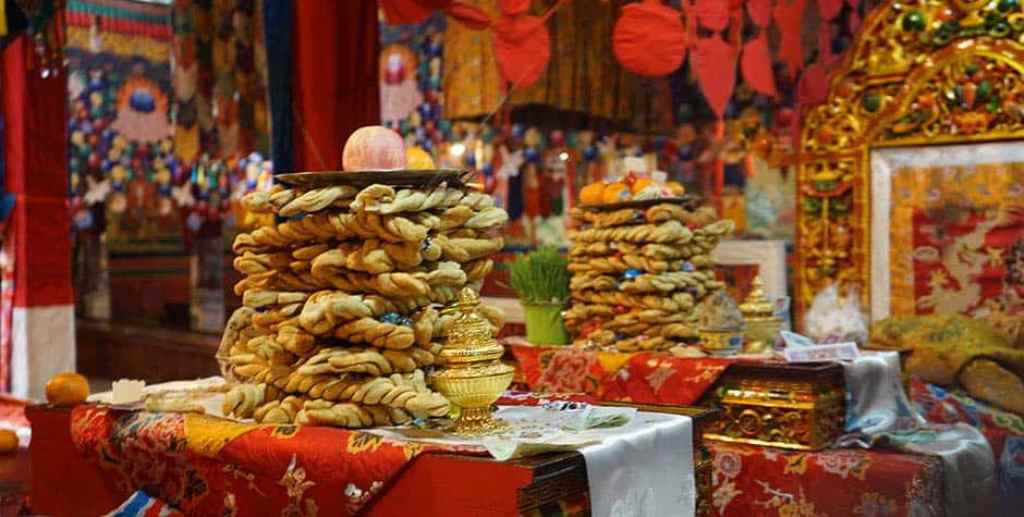
Khapse, deep-fried twisted pastry biscuits, are prepared in large batches and piled high on family altars throughout the festival, both as offerings and to welcome guests.
The Chaam Dance: Understanding Sikkim’s Sacred Masked Monastic Exorcisms
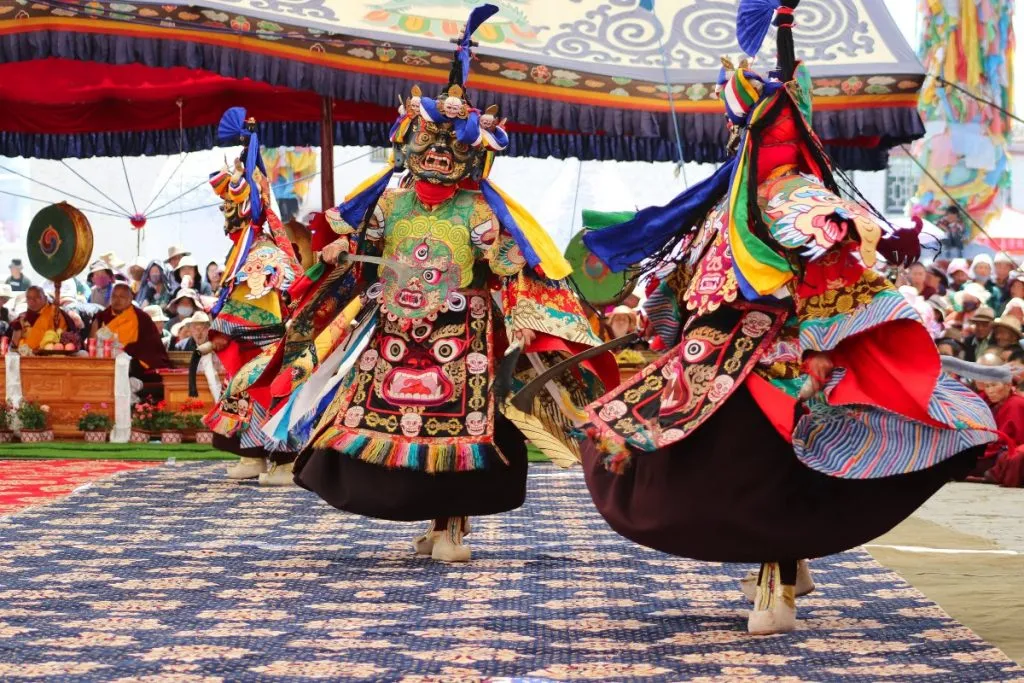
No understanding of Losar is complete without understanding the Chaam, the sacred masked dance performed exclusively by monks that forms the visual and spiritual centrepiece of the entire festival.
The Chaam is performed in the courtyards of major monasteries — Rumtek, Phodong, Pemayangtse, and the Tsuklakhang Palace in Gangtok are among the most significant venues. Monks dress in heavy brocade robes in deep reds, gold, and royal blue, paired with elaborate, often deliberately frightening masks representing wrathful deities and protective spirits. The dancers build toward a climactic sequence that, in many monasteries, culminates in the Black Hat Dance (Shanag) — a depiction of subduing evil spirits widely considered the most dramatic moment of the performance.
The Chaam is not staged for tourist entertainment, even though visitors are warmly welcomed to watch. For the monks performing it, this is a form of moving meditation and ritual exorcism, rooted in Vajrayana Buddhist tradition and narratives associated with Guru Padmasambhava, the figure credited with bringing Buddhism to Tibet.
Melodies of the Monasteries: Radung Horns and Gya-Ling Oboes
The Chaam’s choreography is guided entirely by its music. The radung — long ceremonial horns producing a deep, resonant drone — set the foundational atmosphere. Layered above this is the gya-ling, a high-pitched, oboe-like double-reed instrument providing the piercing melodic line that guides the dancers’ synchronised footwork. Listen for the interplay between the two and the performance becomes far easier to follow.
Losar Beyond Sikkim: The Monpa Celebration in Tawang
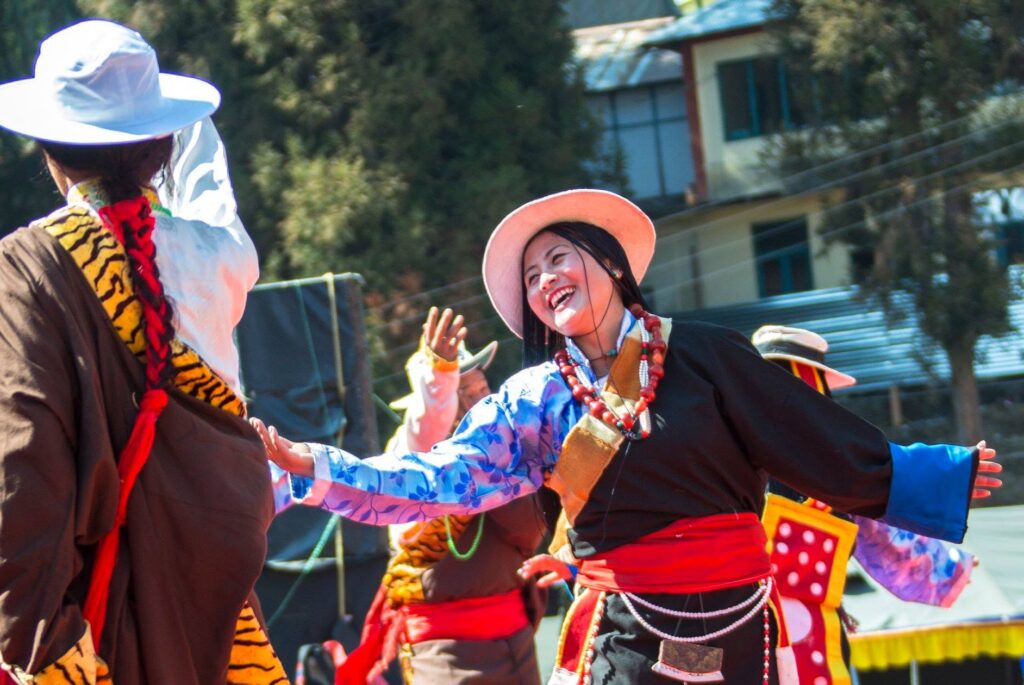
Sikkim is not the only place in Northeast India where Losar fills the streets with colour. In Tawang district, Arunachal Pradesh, the Monpa community — Buddhist inhabitants of the region since roughly 500 BC — celebrates Losar as the most important festival on their calendar, with its own distinct character.
Monpa Losar generally falls in late February or early March and can last 8 to 15 days, with the first three days, again called Gyalpo Losar, carrying the greatest significance. Preparations begin weeks ahead: households stock butter, cheese, and flour, and spend a day preparing Bongp-Nelap (fried loaves) and Khapse (fried biscuits). Homes are decorated with the Tashi Dargye, the eight auspicious Buddhist symbols, painted onto walls to invite prosperity.
On the first morning, a family member draws water from a nearby stream before dawn — considered especially purifying for having been cleansed by the previous night’s starlight. Families dress in their finest attire and gather at the household chapel to light butter lamps, while many also travel into Tawang Township to seek blessings at the Tawang Monastery, one of the largest Buddhist monasteries in India. Families do not visit each other’s homes on this first day; from the second day onward, social visiting begins, with Guthuk — the same symbolic noodle soup found in Sikkim — shared in the evening.
Monpa Losar shares its Tibetan Buddhist DNA with Sikkim’s version, including the Aji Lhamu masked dance, but unfolds in a more intimate, village-and-monastery setting centred entirely on Tawang. Sikkim’s Rumtek and Phodong offer grand, large-scale Chaam spectacles; Tawang offers a quieter, deeply communal version of the same New Year, set against some of the highest terrain in the Himalayas. Travellers heading there should also watch for the Torgya Festival, a related monastic exorcism ritual at Tawang Monastery, typically in January.
Losar vs. Losoong: Clearing Up the Confusion Between Sikkim’s Winter Festivals
Visitors researching Sikkim’s winter festival calendar will frequently encounter both “Losar” and “Losoong,” and the two are easy to confuse, since they share rituals, venues, and the same Chaam dance tradition.
Losar is the Tibetan New Year proper, observed per the Tibetan luni-solar calendar and typically falling in February. Losoong, by contrast, is the New Year festival specific to Sikkim’s Bhutia and Lepcha communities (who call it Namsoong), generally falling in December and marking the end of the local harvest season. Losoong is adapted from Losar’s traditions but has become its own distinct Sikkimese observance, with its own emphasis on archery contests alongside shared Chaam performances.
If your interest is the Tibetan New Year in its traditional February timing, you want Losar; if you want Sikkim’s harvest-linked December celebration, that is Losoong.
Master Itinerary Map: Tracking Losar at Rumtek, Phodong, and Pemayangtse
Rumtek Monastery, roughly 24 km from Gangtok, is widely regarded as the grandest venue for Losar in Sikkim, hosting the most elaborate Gutor Chaam performances. Phodong Monastery, in North Sikkim, is the other major centre, with an equally rich Chaam tradition in a more intimate setting. Pemayangtse Monastery in West Sikkim also hosts its own pre-Losar Chaam, and Tsuklakhang Palace in Gangtok offers a more accessible option for visitors staying close to the capital. Smaller celebrations take place in Lachen and Lachung, though winter snowfall can restrict road access during the festival.
The Losar Monastic Field & Etiquette Protocol
- Clockwise circumambulation (Kora): always walk clockwise around shrines, prayer wheels, and stupas.
- Photography perimeter: outer courtyard Chaam performances are generally open to photography; the main prayer hall (Du-Khang) is strictly off-limits for cameras. Turn off flash near monks.
- Acclimatisation priority: if heading north to Lachen or Lachung, spend at least two nights adjusting to altitude in Gangtok or Mangan first.
- The khata gesture: if granted an audience with a senior monk, present a white silk khata folded in half, open edges facing away from you.
Winter Travel Logistics: Gangtok Permits, Bagdogra Transit, and Road Conditions
Sikkim in February is cold, particularly near Lachen and Lachung, so pack proper winter layers and grippy footwear. Most travellers fly into Bagdogra Airport near Siliguri, then travel onward to Gangtok by road — roughly 4–5 hours depending on conditions.
Indian citizens do not require an Inner Line Permit for Gangtok and most of East Sikkim, but North Sikkim, including Lachen and Lachung, requires a separate permit through a registered tour operator. Check current requirements with Sikkim Tourism well in advance. Book Gangtok accommodation early, as the festival coincides with a rise in both domestic and international visitor interest.
If you are heading to Tawang instead, the journey is longer but equally rewarding: fly into Tezpur or Guwahati in Assam, then travel by road via Bomdila — a spectacular but demanding mountain drive best done with a hired vehicle. An Inner Line Permit is mandatory for Indian nationals entering Arunachal Pradesh, available online or through Arunachal Bhavan offices, and should be arranged well ahead of travel.
Read more: How to Apply For Travel Permits for Traveling to Northeast India
Why Losar Is Worth the Journey
Losar offers something genuinely rare in the modern festival calendar: a celebration that has not been substantially altered for tourism, even as it welcomes visitors warmly. The Chaam dancers at Rumtek are not performing for an audience in any conventional sense — they are conducting a religious rite that happens to be extraordinary to witness.
For travellers willing to brave Sikkim’s February cold, the reward is substantial: ancient monasteries wrapped in prayer flags, the hypnotic drone of radung horns under the gya-ling’s piercing melody, masked monks moving through centuries-old choreography, and a community genuinely celebrating the turn of its own calendar.
Use the NE India Trip Planner to start planning your February 2027 visit to Sikkim, and explore the NorthEast India Connect Festivals & Events category for more celebrations across the region.
