




Assam welcomes visitors with tea gardens, river islands, and some of the warmest hospitality in Northeast India — but a few words of the local tongue can turn a good trip into an unforgettable one. The Assamese language, known to its own speakers as Akhomiya, is the door to that hospitality. You don’t need fluency. You need enough basic Assamese phrases for travelers to greet a homestay host, bargain gently at a riverside bazaar, or ask for help in an emergency. This guide gives you exactly that: a complete Akhomiya language guide organized by real travel situations, plus the etiquette and cultural context that makes locals light up when a visitor makes the effort.
What Is the Assamese Language?
Assamese (Akhomiya, অসমীয়া) is the official language of Assam and one of the easternmost languages in the Indo-Aryan language family, spoken by more than 15 million people across the Brahmaputra Valley, with speaker communities also found in Arunachal Pradesh, Meghalaya, and Nagaland. It’s one of the 22 scheduled languages recognized under the Indian Constitution and is written in the Assamese script, a variant of the Eastern Nagari script it shares closely with Bengali, though the sounds, vocabulary, and grammar are distinctly its own.
Assamese carries centuries of influence from Sanskrit, Austroasiatic, and Tibeto-Burman languages spoken by Assam’s many indigenous communities, which is part of why it sounds different from anything you’ll hear in mainland India. In most towns and cities, especially around Guwahati, English and Hindi will get you by — but the moment you step into a village homestay, a tea estate, or a river island like Majuli, Assamese (and often a local tribal language alongside it) becomes the everyday tongue.
Quick Pronunciation Primer
A few sound rules will help you read the phrases below out loud with confidence:
- The soft “x” sound (as in Akhomiya, xosta) is pronounced closer to a breathy “h” or soft “kh” — not like the English letter X.
- “A” is generally pronounced like the “a” in “cat” or “bra,” depending on position in the word.
- The “ৰ” (r) is softer and less rolled than in Hindi — closer to the r in the British “very.”
- Assamese is spoken with a gentle, even intonation — locals often notice (and appreciate) visitors who slow down and keep their tone soft rather than clipped.

Basic Assamese Phrases for Travelers
These 38 phrases are grouped by the real situations you’ll run into on the road — from checking into a homestay to handling an emergency. Save this section for offline use; a screenshot works fine without a signal.
Greetings & Introductions
| Assamese (Akhomiya) | Pronunciation | English Meaning |
| নমস্কাৰ | Nomoskar | Hello (formal) |
| ভাল নে? | Bhal ne? | Hi / You good? (informal) |
| আপুনি কেনেকুৱা আছে? | Apuni kenekuwa asey? | How are you? (formal) |
| মই ভাল আছোঁ | Moi bhal asu | I am fine |
| আপোনাৰ নাম কি? | Aponaar naam ki? | What is your name? |
| মোৰ নাম… | Mor naam… | My name is… |
| ভাল লাগিল | Bhal lagil | Nice to meet you |
| ধন্যবাদ | Dhanyabad | Thank you |
| মাফ কৰিবা | Maaph koriba | Sorry / Excuse me |
Everyday Yes/No & Basics
| Assamese (Akhomiya) | Pronunciation | English Meaning |
| হয় | Hoi | Yes |
| নাই | Nai | No |
| ভাল লাগিছে | Bhal lagise | I like it |
| মই বুজি নাপালোঁ | Moi bujhi napalu | I don’t understand |
| আপুনি ইংৰাজী কব পাৰেনে? | Apuni ingraji kobo parene? | Do you speak English? |
Directions & Getting Around
| Assamese (Akhomiya) | Pronunciation | English Meaning |
| টয়লেট ক’ত আছে? | Toilet kot ase? | Where is the toilet? |
| ৰেইলৱে ষ্টেচন ক’ত আছে? | Railway station kot ase? | Where is the railway station? |
| কেনেকৈ পাম…? | Kenekoi pam…? | How do I get to…? |
| বাযঁ | Bayen | Left |
| সোজা | Xoja | Straight ahead |
| মোক সহায় কৰিব পাৰিবানে? | Mok sahajyo koribo paribane? | Can you help me? |
Shopping & Bargaining
| Assamese (Akhomiya) | Pronunciation | English Meaning |
| এটা কিমান দাম? | Eta kiman daam? | How much is this? |
| ইয়াত কিমান পইচা লাগে? | Iyaat kiman poisa lage? | How much does this cost? (general) |
| মই এটা লম | Moi eta lom | I’ll take this one |
| বজাৰ ক’ত আছে? | Bajar kot ase? | Where is the market? |
| সস্তা কৰিব পাৰেনে? | Xosta koribo pare ne? | Can you lower the price? |
Food & Dining
| Assamese (Akhomiya) | Pronunciation | English Meaning |
| ভাত খাইছানে? | Bhaat khaisa ne? | Have you eaten? (common greeting) |
| মোৰ ভুক লাগিছে | Mur bhuk lagise | I’m hungry |
| পানী আছে নেকি? | Paani ase ne ki? | Do you have water? |
| মই মাংস নাখাওঁ | Moi mangso nakhau | I don’t eat meat (vegetarian) |
| উচৰত হোটেল আছে নেকি? | Usorot hotel ase ne ki? | Is there a restaurant nearby? |
| বহুত ভাল! | Bohut bhal! | Very good! / Delicious! |
Emergency & Health Phrases
These are worth memorizing even if you skip everything else — they’re the ones you hope not to need.
| Assamese (Akhomiya) | Pronunciation | English Meaning |
| সহায় কৰিবা! | Sahajyo koribo! | Please help! |
| মই ডাক্তৰ লাগিব | Moi doktor lagibo | I need a doctor |
| পুলিচ ষ্টেচন ক’ত আছে? | Police station kot ase? | Where is the police station? |
| মই অসুস্থ | Moi asustha | I am unwell |
| মই হেৰাইছোঁ | Moi haraisu | I am lost |
Photography & Courtesy
| Assamese (Akhomiya) | Pronunciation | English Meaning |
| মই ফটো তুলিব পাৰিমনে? | Moi photo tulibo parimne? | May I take a photo? |
| বিদায় | Bidai | Goodbye |
| ভাল থাকিবা | Bhal thakiba | Take care / Stay well |
A small note on tone: Assamese doesn’t have a heavily formal-versus-casual grammar system like some Indian languages, but adding “aapuni” (you, respectful) instead of “tumi” (you, casual) when speaking to elders or strangers is always the safer, more polite choice.
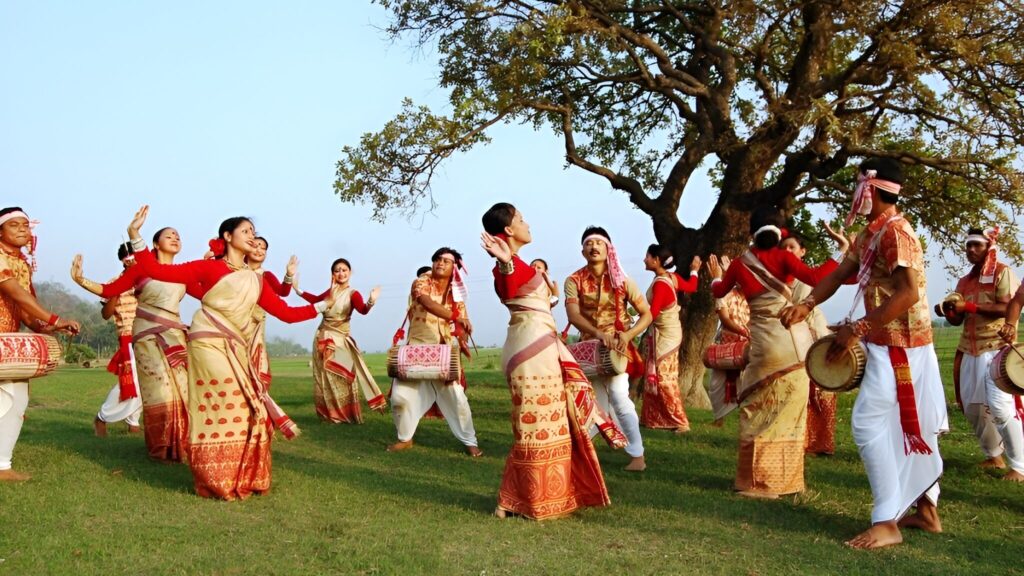
Useful Words in Assamese with English Meaning
Beyond full phrases, a scattering of standalone words will help you navigate markets, food stalls, and transport far more smoothly.
| Assamese Word | Pronunciation | English Meaning |
| পানী | Pani | Water |
| ভাত | Bhaat | Rice |
| মাছ | Maas | Fish |
| গাড়ী | Gari | Vehicle / car |
| নাও | Nao | Boat |
| ঘৰ | Ghor | House / home |
| বহুত | Bohut | A lot / very |
| পইচা | Poisa | Money |
| চাবি | Sabi | Key |
Numbers for Bargaining and Transport
Prices at local markets and shared transport are often negotiated by ear rather than posted on a tag, so numbers matter more here than almost anywhere else.
| Assamese Numeral | Pronunciation | Number |
| এক | Ek | 1 |
| দুই | Dui | 2 |
| তিনি | Tini | 3 |
| চাৰি | Sari | 4 |
| পাঁচ | Pas | 5 |
| ছয় | Soy | 6 |
| সাত | Xat | 7 |
| আঠ | Ath | 8 |
| ন | No | 9 |
| দহ | Dah | 10 |
| কুৰি | Kuri | 20 |
| শ | Xo | 100 |
Assam Travel Etiquette
Language is only half the picture — how you carry yourself matters just as much. Keep these Assam travel etiquette essentials in mind:
- Greet with folded hands. A soft “Nomoskar” with palms together is the standard, warm greeting — appropriate for everyone from a shopkeeper to a temple priest.
- Use kinship terms as a sign of respect. Assamese culture often addresses strangers with familial terms — “Bou” (sister-in-law/married woman), “Deuta” (father, for older men), “Khura” (uncle) — rather than a name. Locals will appreciate a visitor who picks up on this, even loosely.
- Remove your shoes before entering homes, satras (Vaishnavite monasteries), and temples. This is non-negotiable at religious sites like Kamakhya Temple or the satras of Majuli.
- Dress modestly at religious and rural sites. Covered shoulders and knees are appreciated, particularly for women, at temples and in more traditional villages.
- Accept food and tea when offered. Hospitality is central to Assamese culture, and a gamosa (the traditional red-and-white handwoven towel) is often presented as a welcome gift. Politely declining outright can come across as rude — even a small taste is a gracious response.
- Use your right hand for eating, giving, or receiving items. This etiquette, common across South Asia, applies in Assam as well.
- Ask before photographing people, especially in tribal villages. Many indigenous communities in Assam, from the Mising to the Bodo, appreciate being asked first — a simple gesture and smile usually works even without shared language.
- Avoid touching anyone’s head, including children. This is considered disrespectful across most of Assam’s ethnic communities.
- Don’t be surprised by “Bhaat khaisa ne?” It’s less a literal question and more a warm way of asking “how are you,” rooted in rice being central to Assamese life.
Small gestures like these tend to matter more in Assam than in more heavily touristed parts of India — hospitality here is personal, and locals notice when a visitor makes an effort to meet it halfway.
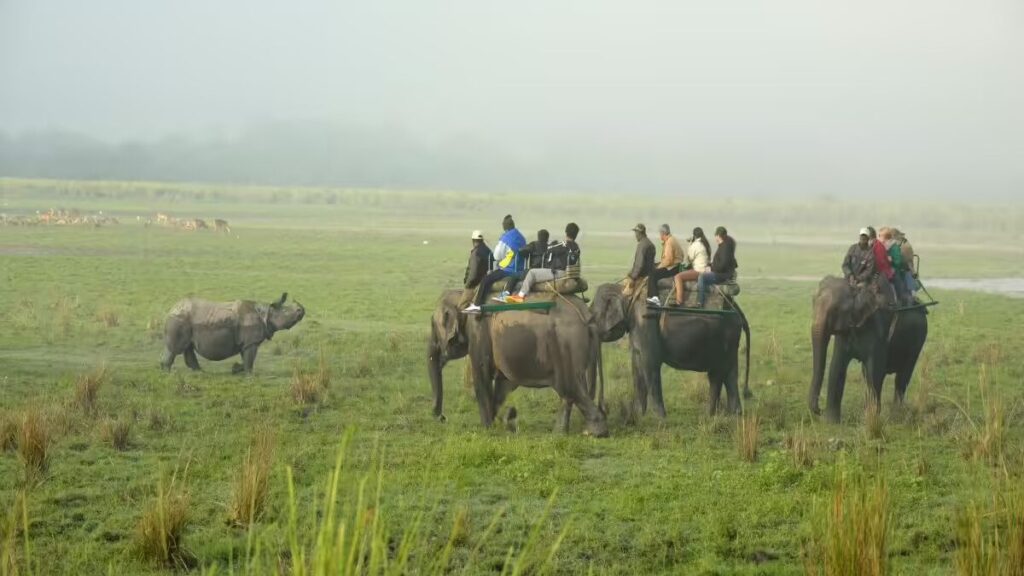
Tips for Learning Assamese Quickly Before Your Trip
You don’t need weeks of study to travel comfortably. A few practical habits go a long way:
- Practice the phrase tables above out loud for 10 minutes a day for a week before you fly in — muscle memory matters more than perfect grammar.
- Save a screenshot of the tables for offline access, since the signal can be patchy in rural Assam and on river islands like Majuli.
- Listen before you speak. Assamese pronunciation, especially the soft “x” sound, is easier to pick up by ear from hosts, drivers, and shopkeepers than from a phonetic guide alone.
- Pair phrases with a smile and a slower pace. Locals are used to visitors mispronouncing words, and warmth carries the message even when pronunciation doesn’t land perfectly.
- Learn the etiquette alongside the words. A perfectly pronounced phrase said with the wrong gesture (like offering something with your left hand) can undercut the effort — the two go hand in hand.
Frequently Asked Questions
Is Assamese hard to learn for English speakers?
Not especially. Assamese spelling is largely phonetic — words are pronounced close to how they’re written — and the grammar doesn’t have the heavy formal/informal verb systems found in some other Indian languages. The main learning curve is the script and a few unfamiliar sounds like the soft “x.”
Is Assamese the same as Bengali?
No. Assamese and Bengali share the Eastern Nagari script and many Sanskrit-derived words, which makes them look similar in writing, but they differ in pronunciation, grammar, and vocabulary. Speakers of one generally can’t fully understand spoken fluent speech in the other without exposure.
Do I need to know Assamese if I’m only visiting Guwahati?
Not strictly — English and Hindi are widely understood in Guwahati’s hotels, airports, and tourist-facing businesses. That said, a few basic Assamese phrases go a long way in local markets, with auto-rickshaw drivers, and at smaller family-run eateries.
How do you say hello in Assamese?
The formal greeting is “Nomoskar,” typically said with palms folded together. Among friends or in casual settings, “Bhal ne?” (roughly “You good?”) works as an informal hello.
What language do people speak in Majuli and rural Assam?
Assamese remains the common link language, but many indigenous communities — including the Mising, Deori, and Sonowal Kachari — speak their own tribal languages at home alongside Assamese, especially in Majuli and the rural Brahmaputra Valley.
Is English widely understood in Assam?
Yes, in cities and most tourism-facing businesses. It thins out quickly in villages, tea estates, and river islands, which is exactly where a handful of Assamese phrases makes the biggest difference.
Final Thoughts
You don’t need to master the Assamese language to travel through Assam well — you need curiosity, a working list of basic Assamese phrases for travelers, and respect for the customs that shape everyday life here. Whether you’re bargaining at a Guwahati market, chatting with a homestay host in Majuli, or handling an unexpected emergency, a little Akhomiya goes further than you’d expect. Save this guide, practice the phrases before you land, and let the language open doors that a map alone never could.
Looking for verified homestays, local guides, and vetted experiences across Assam and the rest of Northeast India? Explore our full directory at NorthEast India Connect to plan a trip that goes beyond the phrasebook.
