




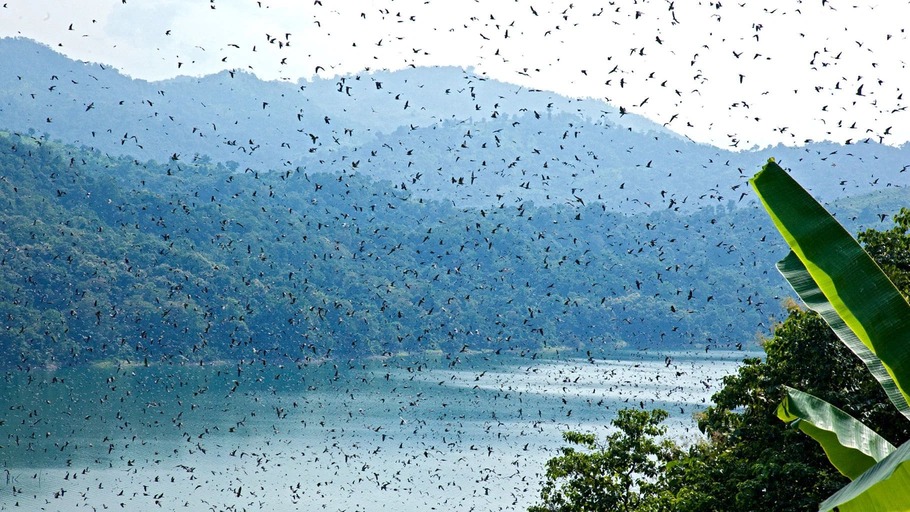
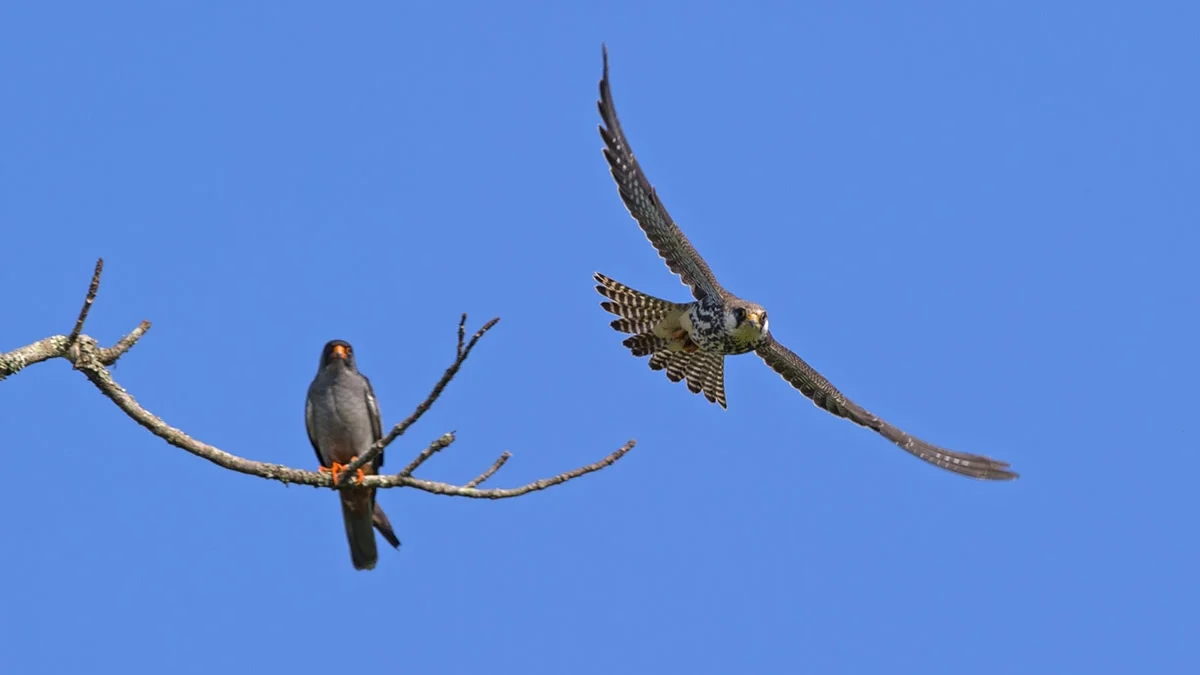
Every October, the sky above a small village in Nagaland’s Wokha district fills with more raptors than most people will see in a lifetime. Pangti, a Lotha Naga settlement of fewer than 8,000 people, hosts the largest known roosting congregation of Amur falcons anywhere on Earth — sometimes over a million birds in a single season — which is why it now carries the official title of “Falcon Capital of the World.”
What makes Pangti’s story remarkable isn’t just the spectacle. A little over a decade ago, this same village was the site of one of the largest unrecorded raptor massacres in conservation history. How it got from there to here is one of the best conservation comeback stories in Northeast India, and a genuinely good reason to plan a trip around it.
Quick Facts About Pangti
| Location | Wokha district, Nagaland (near the Doyang Reservoir) |
|---|---|
| Tribe | Lotha Naga |
| Population | Approximately 7,800 |
| Claim to Fame | “Falcon Capital of the World,” declared 6 November 2013 |
| Peak Bird Numbers | Estimated up to 1 million Amur falcons in a single season |
| Migration Window | Late October to late November |
| Annual Festival | Amur Falcon Conservation Week, 8-10 November |
| Nearest Airport/Railhead | Dimapur |
| ILP Required (Indian Tourists) | Yes — Nagaland is an Inner Line Permit state |
The 2012 Massacre That Shocked a Nation
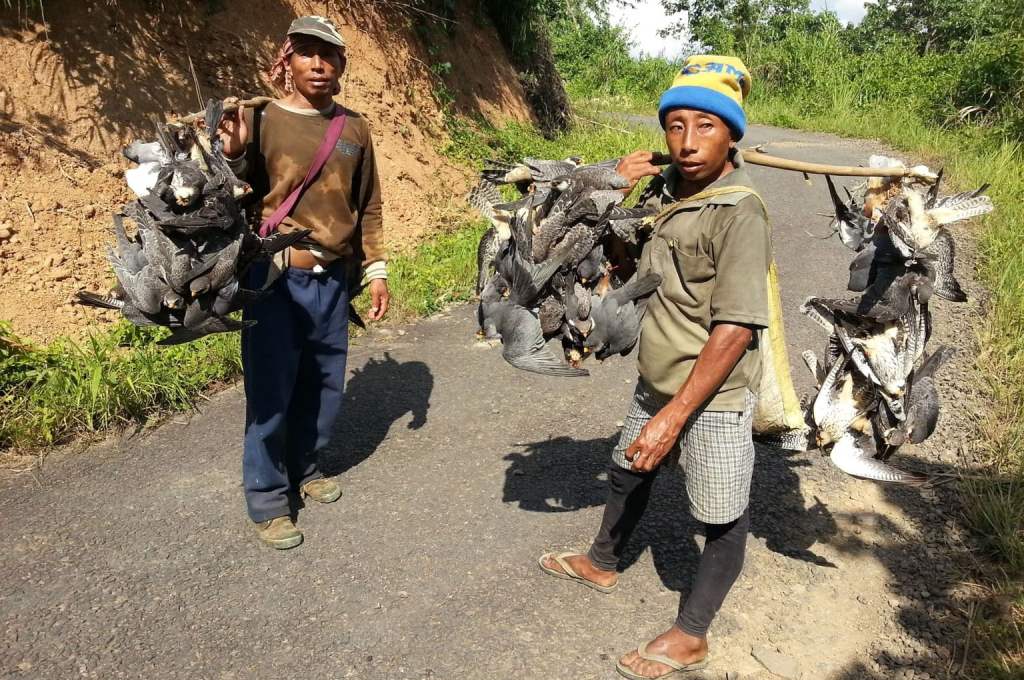
Amur falcons had likely been stopping at Doyang for generations, but it was the Doyang Hydro Project’s reservoir, completed in the 1990s, that turned the area into the single largest roosting site recorded anywhere for the species. For years, that abundance simply meant easy hunting.
In October 2012, a team of conservationists and researchers travelled to Pangti to document reports of mass trapping, and what they found was staggering. Hunters strung old fishing nets across trees at the forest edges where falcons came to roost each evening, then collected the catch each morning. According to the Better India’s reporting on the episode, between 12,000 and 14,000 birds were being killed every single day at the peak of the season — roughly 120,000 to 140,000 birds over just ten days, by some independent estimates, an amount equal to a meaningful slice of the species’ global adult population. The birds, smoked and salted, were sold openly in local markets.
The images and footage that emerged triggered national and international outrage, and put Nagaland’s government in an uncomfortable position: India is a signatory to the Convention on Migratory Species, obligating it to protect exactly this kind of bird.
From Hunters to Guardians: How Pangti Became the Falcon Capital
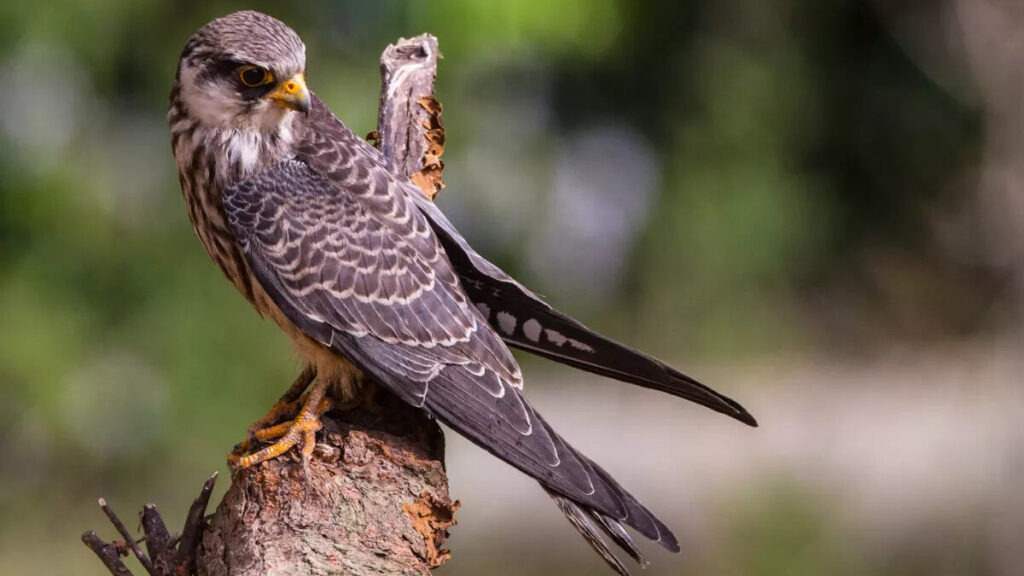
What happened next is the part of the story that conservation researchers still study. The Nagaland government warned that development funding to villages involved in hunting would be reviewed and potentially cut. The Pangti Village Council, under that pressure, agreed to a hunting ban — but the real shift came from sustained, patient work on the ground by the Nagaland Forest Department, the Wildlife Trust of India, Conservation India, and Naga-led groups like Natural Nagas and the Nagaland Wildlife and Biodiversity Conservation Trust.
Schools became a quiet but powerful part of the campaign. Children were taught about migration, and many went home and pushed their own parents to stop hunting. As Pangti farmer Lijon Ngully put it at the time, the fear was simple: keep hunting, and the falcons would disappear for good.
It worked faster than almost anyone expected. By the very next season, not a single bird was trapped in Pangti. The Amur Falcon Roosting Area Union was formed in 2014 to keep the momentum going. A six-foot monolith was unveiled near the roosting site in January 2016, commemorating the “Falcon Capital of the World” title, and the village has since collected the Earth Heroes Award, the Balipara Foundation Award, and a Governor’s Commendation Certificate, among others. A 26-minute documentary on the turnaround, The Pangti Story, went on to win a National Award for Best Environment Film.
Researchers also used the moment to learn more about the birds themselves. In 2013, three Amur falcons were fitted with lightweight, solar-powered satellite transmitters and released near Pangti, each named after the place that had just saved them — Naga, Wokha, and Pangti. One of them, Naga, kept transmitting for several years and was tracked clocking more than 60,000 km across repeated migrations, giving scientists their clearest picture yet of exactly how far these small falcons travel each year.
Why a Million Falcons Choose Doyang
The science behind the spectacle is almost as compelling as the conservation story. Amur falcons breed in the Russian Far East, northeastern China, and Mongolia, then funnel southwest across the Tibetan plateau and Northeast India before launching into one of the most extreme journeys of any bird: a non-stop, multi-day flight of roughly 5,600-6,000 km across the Arabian Sea to winter in southern and eastern Africa.
Doyang is where they refuel before that crossing. The reservoir’s shoreline produces huge post-monsoon swarms of flying termites just as the falcons pass through in October and November, giving them exactly the fat reserves they need for the ocean leg ahead. It’s a coincidence of geography and timing that happens to converge, almost nowhere else on the planet, in this one stretch of Wokha district. Local Lotha elders say the falcons were never really a mystery to them — they simply called the bird “Eninum” long before the rest of the world had heard of Pangti at all.
Pangti vs Other Amur Falcon Roosts in Northeast India
Pangti isn’t the only place in the region where Amur falcons pass through, but it remains the standout.
| Roosting Site | State | Scale | Conservation Status |
|---|---|---|---|
| Pangti / Doyang | Nagaland | Up to ~1 million birds, the largest known roost globally | Hunting-free since 2013; official “Falcon Capital” title |
| Tamenglong | Manipur | Smaller, regionally significant roost | Active conservation since 2018, annual festival |
| Umrangso | Assam (Dima Hasao) | Smaller roost, historically hunted | Community project led by WTI and Blue Hills Society |
If Tamenglong and Umrangso represent the wider region’s ongoing conservation work, Pangti is the place where the model originated and where the numbers are, quite simply, on another scale entirely.
The Amur Falcon Festival: What Happens and When
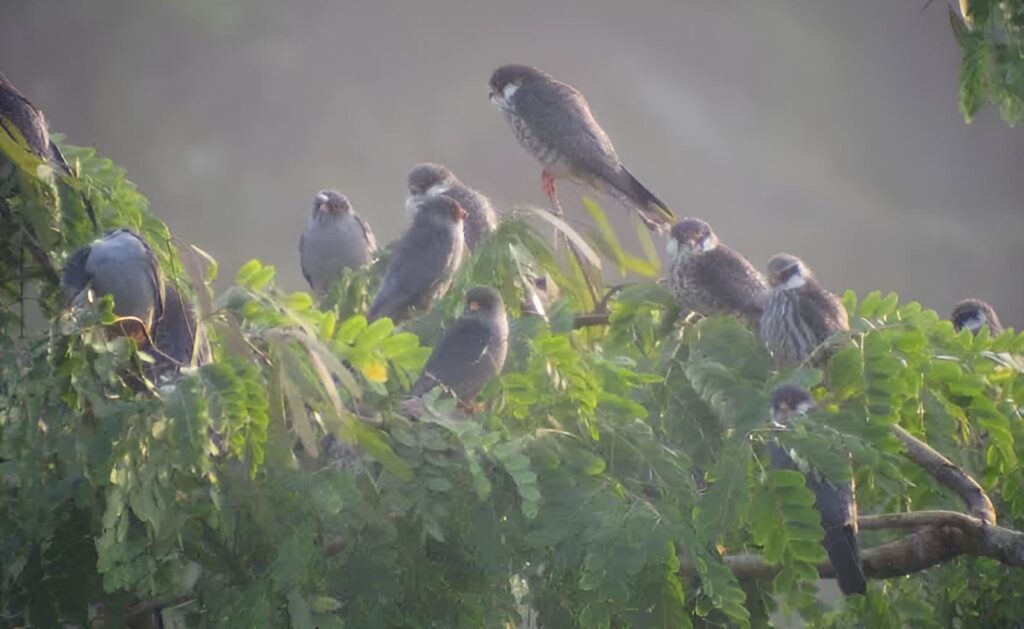
Pangti’s Amur Falcon Conservation Week and Festival runs every year from 8 to 10 November, deliberately timed to overlap with Tokhu Emong, the Lotha Naga post-harvest festival. Expect a genuinely full programme: cultural performances, wildlife film screenings, birdwatching walks, nature treks, photography contests, cross-country races, and food stalls serving local Lotha dishes alongside more adventurous additions like cycling and zip-lining.
It’s a smaller, far less commercial counterpart to Nagaland’s famous Hornbill Festival in December, but for anyone genuinely interested in the falcons rather than the festivities, the days just before and after the official dates — when the roosting numbers are highest — can be even more rewarding.
Best Time to Visit Pangti
Falcons arrive in numbers from late October and stay through late November, with the roosting spectacle visible at dusk, when thousands stream in from the day’s foraging, and again at dawn, when they disperse. Late October to mid-November is the peak window; by early December, most birds have already begun the Arabian Sea crossing.
How to Reach Pangti
- Fly or take the train into Dimapur, Nagaland’s main air and rail gateway.
- Continue to Wokha, either via Kohima (a reasonable overnight stop — our recommended Kohima homestay is well placed for this route) or more directly from Dimapur; expect anywhere from 3 to 6 hours depending on the route and road conditions.
- Press on to Pangti and the Doyang roosting site, roughly 20-50 km beyond Wokha on a road that’s improved in recent years but is still rough in patches — hire a sturdy vehicle and budget extra time.
Every non-resident Indian citizen needs an Inner Line Permit to enter Nagaland; it’s inexpensive, but apply with enough lead time. Foreign nationals should check current Protected Area Permit and Foreigners Registration requirements before travelling, since rules around Northeast India’s restricted zones do shift.
Where to Stay and a Quick Reality Check
Tourist infrastructure here is genuinely basic, and that’s worth knowing before you go. The Wildlife Trust of India helped build a community eco-tourism guest house in Pangti, incorporating local Lotha architectural touches, and a handful of village homestays operate around Doyang during the season — but don’t expect hotel-standard rooms, reliable hot water, or restaurant menus. Most visitors eat what the homestay cooks, and that’s usually the best part of the trip anyway.
Travel Tips and Etiquette
- Respect the Silence Zone. Authorities declare a temporary 3 km silence zone around the roosting site during migration season — keep noise, drones, and bright lights to a minimum.
- Go with a local guide. Beyond etiquette, guides know exactly where and when the roosting flights happen, which makes a genuine difference to what you’ll actually see.
- Pack for rough roads and cold mornings. Layered clothing and decent footwear matter more here than anywhere else on a typical Nagaland itinerary.
- Carry cash and your ILP. ATMs are scarce beyond Wokha town.
Frequently Asked Questions About Pangti
Why is Pangti called the Falcon Capital of the World? Nagaland earned the title officially on 6 November 2013, after ornithologists confirmed that the Doyang-Pangti area hosts the largest recorded roosting congregation of Amur falcons anywhere on Earth, sometimes approaching a million birds in a single season.
Is it safe and ethical to visit during the migration season? Yes, provided you follow local guidance — keep noise down within the declared silence zone, avoid flash photography near roosting trees, and go with a local guide rather than wandering the shoreline alone.
Can I visit Pangti outside the festival dates? Absolutely, and many serious birdwatchers prefer it. The roosting spectacle runs the entire window from late October to late November, well beyond the three official festival days.
Final Thoughts
Pangti is proof that a conservation story can be just as good a reason to travel somewhere as a landscape or a monument. A village that once filled local markets with smoked falcon meat now organises its calendar around protecting the very same birds — and watching a million falcons lift off a reservoir at dawn is the kind of thing photographs genuinely undersell.
For more on Nagaland’s festivals and trails, browse our Nagaland travel coverage or pair this trip with our Dzükou Valley guide for a longer Naga Hills itinerary.
