




There’s a particular kind of place in Northeast India where the mobile network simply stops working, the mountains turn faintly Himalayan, and you realise you’ve crossed into a different country’s weather system without crossing a single checkpoint. Saralpara, a forest village tucked into the Kokrajhar district of Assam’s Bodoland Territorial Region, is exactly that place. It sits directly on the Indo-Bhutan border, close enough to Bhutan’s Sarpang district headquarters that prayer flags and small Bhutanese shrines dot the hillside, and it has quietly become one of Lower Assam’s most-loved picnic destinations without ever really trying to be a tourist attraction.
Quick Facts About Saralpara
| Location | Kokrajhar district, Bodoland Territorial Region (BTR), Assam |
|---|---|
| Border | Directly adjoins Bhutan’s Sarpang district |
| Distance from Kokrajhar Town | Approximately 55-65 km (2-2.5 hours) |
| Distance from Guwahati | Approximately 215-250 km (6-7 hours) |
| Entry Fee | Around ₹500 for a four-wheeler, ₹200 for a two-wheeler |
| Known For | Rivulets, mountain views, the Indo-Bhutan border, the Rongjali Bwisagu festival |
| Best Time to Visit | October to March (avoid the monsoon) |
| Mobile Network | None at the site — plan accordingly |
Where Is Saralpara, Exactly?
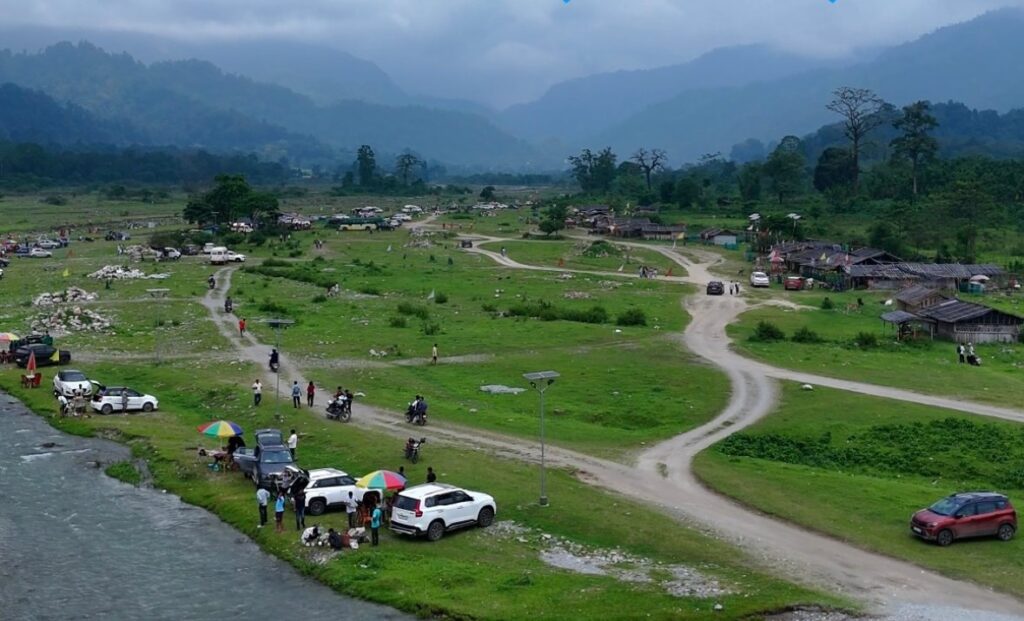
Saralpara sits at the edge of Assam‘s Kokrajhar district, right where the plains give way to the foothills of Bhutan. It’s officially classified as a forest village, home to a mix of Bodo, Nepali, Rabha, Santhal, and Adivasi communities who have lived along this stretch of border for generations. The pull for visitors, though, is geography rather than population: a rivulet runs through a narrow valley here, framed by forested hills on the Indian side and the visibly higher terrain of Bhutan just beyond.
The road to Saralpara cuts through the Ultapani Reserve Forest and the Chirang Reserve Forest, two stretches of dense, biodiverse jungle that are part of a much larger transboundary forest landscape shared with Bhutan. Wild elephants are a genuine possibility on the drive in, which is part of the adventure rather than a deterrent.
What Makes Saralpara Worth the Detour
Most visitors come for a single, simple reason: the picnic. Boulders along the riverbed make natural seating, the water is genuinely clear, and the surrounding mountain backdrop is the kind that photographs well without any filter. Mornings here are particularly atmospheric, with mist settling over the valley before the sun burns it off, and the light through the tree line tends to draw in photographers chasing that exact window just after sunrise.
The border itself adds a layer most picnic spots simply don’t have. Scattered Bhutanese temples and prayer flags sit close enough to feel like part of the same landscape, and on a clear day, the terrain rising into Bhutan gives Saralpara a faintly Himalayan character that’s unusual this far into the Brahmaputra plains.
An informal Indo-Bhutan friendship market has also operated near the border crossing here, where vendors from both sides have traded handicrafts, warm clothing, and local produce — though cross-border movement rules do shift, so it’s worth checking the current status locally before assuming you can cross over. Even without crossing the line, simply standing close enough to see Bhutanese rooftops and prayer flags from Indian soil is, for most first-time visitors, reason enough to make the drive.
The Open Rongjali Bwisagu: Saralpara’s Indo-Bhutan Festival
If you want a reason to time your visit precisely, this is it. Every April, around the Bodo New Year, the Bodoland Territorial Council’s Tourism and Cultural Affairs departments organise an “Open Rongjali Bwisagu” celebration directly at the Saralpara picnic spot. According to Sentinel Assam’s coverage of the event, Bhutanese officials and guests travel over from Sarpang and Gelephu to join in, with cultural troupes performing folk Bwisagu dances and songs late into the day.
It’s a genuinely cross-border affair — locally brewed rice beer, pork, and snail dishes are shared between communities on both sides of the line, and past editions have been inaugurated by senior BTC and Bhutanese officials as a deliberate statement of goodwill between the two countries. If your travel dates can flex toward mid-April, this is one of the more unusual cultural events you can stumble into in Northeast India.
Saralpara vs Baokhungri vs Other Kokrajhar Getaways
Kokrajhar packs more variety into its festival calendar than its size suggests, and most of it clusters around the same Bodo New Year season.
| Destination | Best Known For | Distance from Kokrajhar Town | Best Time |
|---|---|---|---|
| Saralpara | Indo-Bhutan border views, riverside picnics, Open Bwisagu festival | ~55-65 km | October-March; mid-April for the festival |
| Baokhungri Hill | Sacred hill-climb festival, golden langurs, paragliding | ~10 km | April (festival), year-round for trekking |
| Chakrashila Wildlife Sanctuary | Golden langur sightings, birdwatching | ~25-30 km | November-March |
| Raimona National Park | Tiger reserve buffer, transboundary wildlife corridor | ~60-70 km | November-April |
If you only have time for one, Saralpara’s edge is the border itself — nowhere else on this list lets you stand this close to Bhutan without paperwork. For a deeper look at the region’s biggest cultural draw nearby, our Baokhungri Festival guide covers the sister celebration happening just down the road in the same season.
Nearby: Raimona National Park and the Golden Langur
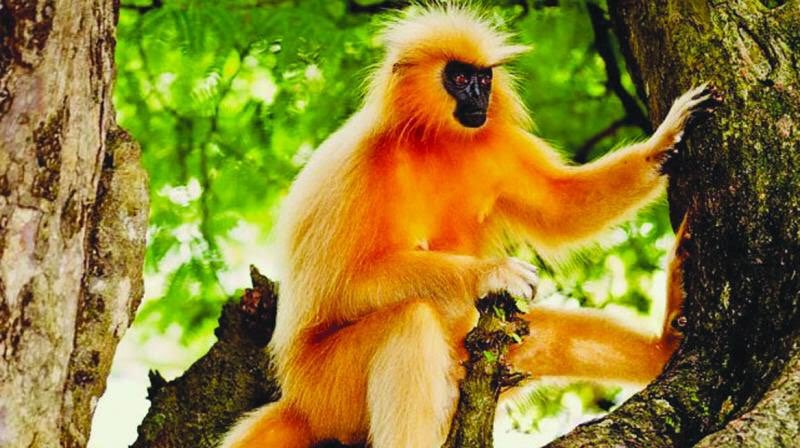
Roughly an hour or so beyond Saralpara sits Raimona National Park, declared in 2021 as Assam’s sixth national park and a vital westward buffer for the Manas Tiger Reserve. The park forms part of a connected forest corridor stretching into Bhutan, supporting populations of the endangered golden langur alongside a wide range of birdlife. Combining a Saralpara picnic with a Raimona detour, or a stop at the better-known Manas safari circuit, makes for a genuinely worthwhile two-day Bodoland itinerary rather than a single afternoon trip.
Where to Stay Near Saralpara
Don’t expect a hotel at Saralpara itself — this is a day-trip destination for most visitors, and tourist infrastructure right at the picnic spot is minimal by design. A small number of community-run homestays have started operating around the wider Saralpara and Raimona area, often through local self-help groups, offering basic rooms and home-cooked meals rather than hospitality-brochure comfort. For anything more conventional, Kokrajhar town and Gossaigaon both have a reasonable spread of budget and mid-range hotels, and either makes a sensible base if you’re combining Saralpara with a longer Bodoland itinerary.
A Village Where Several Communities Share One Hillside
Part of what makes Saralpara quietly interesting, beyond the scenery, is who lives here. The village is home to Bodo, Nepali, Santhal, and other Adivasi families who have coexisted along this stretch of border for generations, and it shows in small, visible ways — a Bathou shrine, a Buddhist temple, a Shiva temple, and a village church all sit within a short walk of each other. It’s a low-key but genuine illustration of the kind of everyday religious coexistence Northeast India does quietly well, without anyone making a show of it.
Best Time to Visit Saralpara
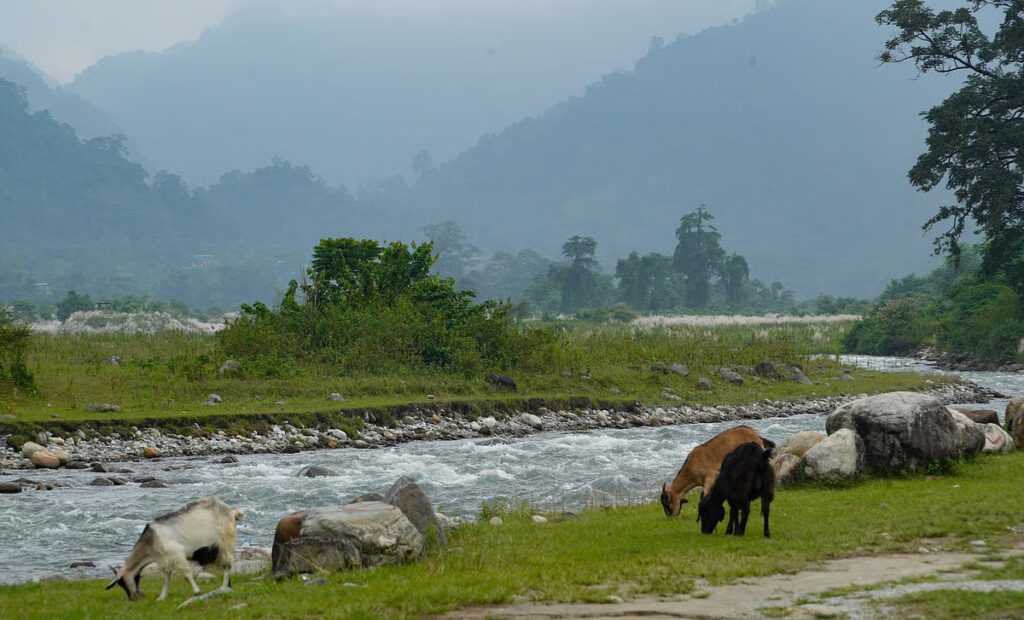
Winter, from October through March, is hands-down the best window — dry weather, comfortable daytime temperatures, and a riverbed that’s safe and pleasant to sit beside. The monsoon months turn the rivulet’s banks damp and slippery and bring a real risk of sudden water-level changes, so they’re best avoided unless you specifically want to time a trip around the Bwisagu festival in mid-April, when the weather is warm but the cultural payoff is worth the heat.
How to Reach Saralpara
- Get to Kokrajhar or Bongaigaon first. Kokrajhar has its own railway station with reasonable connectivity to Guwahati, and Guwahati’s airport is the nearest major air hub, roughly 6-7 hours away by road. Bongaigaon, slightly further from Saralpara but better connected by rail, is a workable alternative base.
- Drive via NH-27 and the Bishmuri-Saralpara-Sarbhong Road. From Kokrajhar town, this is the most direct route, taking around 2 to 2.5 hours depending on road conditions. From Bongaigaon, you’ll join the same NH-27 stretch before branching off near Bishmuri, adding roughly half an hour to the journey.
- Expect a checkpoint near Bismuri. This is a sensitive border stretch, and there’s an army camp along the way — carry photo ID, and don’t be surprised by security checks.
- A personal vehicle is strongly recommended. Public transport is thin and infrequent on this route, and the last stretch through reserve forest is far easier with your own wheels.
Entry Fees, Rules, and a Reality Check
Saralpara isn’t a polished tourist park, and that’s mostly the point — but a few practicalities matter. The local committee charges roughly ₹500 for a four-wheeler and ₹200 for a two-wheeler at the entry gate. There’s no mobile network at the site, so plan your day, tell someone your route, and don’t count on calling for help. Swimming in the rivulet isn’t advisable, since currents can pick up with little warning. And because this is an active border zone, entry is occasionally restricted for security reasons without much notice — a quick check with a local contact or your homestay before setting off can save a wasted trip.
Frequently Asked Questions About Saralpara
Is Saralpara safe to visit? Yes, for day visits during daylight hours with sensible precautions — leave before dusk, since the roads have no lighting or network coverage after dark.
Can I cross into Bhutan from Saralpara? Cross-border access rules here have changed over the years and aren’t something to assume; check the current status with local authorities or your guide rather than relying on older information.
Is one day enough? A day trip covers the essentials comfortably, but pairing it with Raimona National Park or the Baokhungri area makes for a much richer two-day Bodoland trip.
Final Thoughts
Saralpara isn’t trying to be a polished destination, and that’s exactly its appeal — a riverside picnic spot that happens to sit on an international border, with a genuinely unusual cross-cultural festival thrown in once a year. It rewards travellers willing to drive a little further into Assam’s quieter corners.
For more on this part of the region, browse our Assam travel coverage or read our Baokhungri Festival guide to plan a longer Bodoland itinerary.
