




Three decades ago, the only way into Anini was by military helicopter. The small border town in Arunachal Pradesh had no roads, no hotels, and no particular reason to expect the outside world. Today, a festival is running there. And not just any festival — one that has grown to its fifth edition while remaining stubbornly committed to the principles that made it worth coming to in the first place: live music under Himalayan skies, adventure in untouched terrain, and an authentic encounter with the Idu Mishmi people who have called the Dibang Valley home for generations.
The Anini Winter Fest 2026 — AWF 5.0 — takes place on September 19 and 20, 2026 in Anini, Dibang Valley, Arunachal Pradesh. It is a two-day music and adventure festival set in one of India’s last great wildernesses. Check the official AWF website and Instagram for confirmed tickets and the final programme as September approaches.
Quick Facts: Anini Winter Fest 2026
| Detail | Information |
|---|---|
| Festival | Anini Winter Fest 2026 (AWF 5.0) |
| Dates | September 19–20, 2026 |
| Location | Anini, Upper Dibang Valley district, Arunachal Pradesh |
| Elevation | 1,968 metres above sea level |
| Organised By | Community-led, local organisers since 2022 |
| Categories | Live music, adventure activities, Idu Mishmi cultural experiences |
| ILP Required | Yes — “Upper Dibang Valley” must be explicitly named on permit |
| Official Website | aniniwinterfest.com |
| Nearest Airport | Dibrugarh Airport, Assam (~235 km) |
| Road Route | Dibrugarh → Dhola-Sadiya Bridge → Roing → NH-313 → Mayodia Pass → Hunli → Anini |

What Is the Anini Winter Fest?
The Anini Winter Fest began in 2022, conceptualised and organised by local young people from Anini itself with a specific goal: to promote sustainable tourism in the Dibang Valley while showcasing Idu Mishmi culture on a platform the valley had never had before. It started modestly — a small gathering at Karu Resort in Anini — and has grown with each edition into something that now draws visitors from across India and beyond.
Five editions in, AWF occupies a genuinely unusual position in India’s festival landscape. It is not a commercial production parachuted into a picturesque location; it is a community festival in the truest sense, run by and for the people of Dibang Valley, with outside visitors welcomed as guests into something the community has built and owns.
Live Music, Adventure, and Idu Mishmi Culture
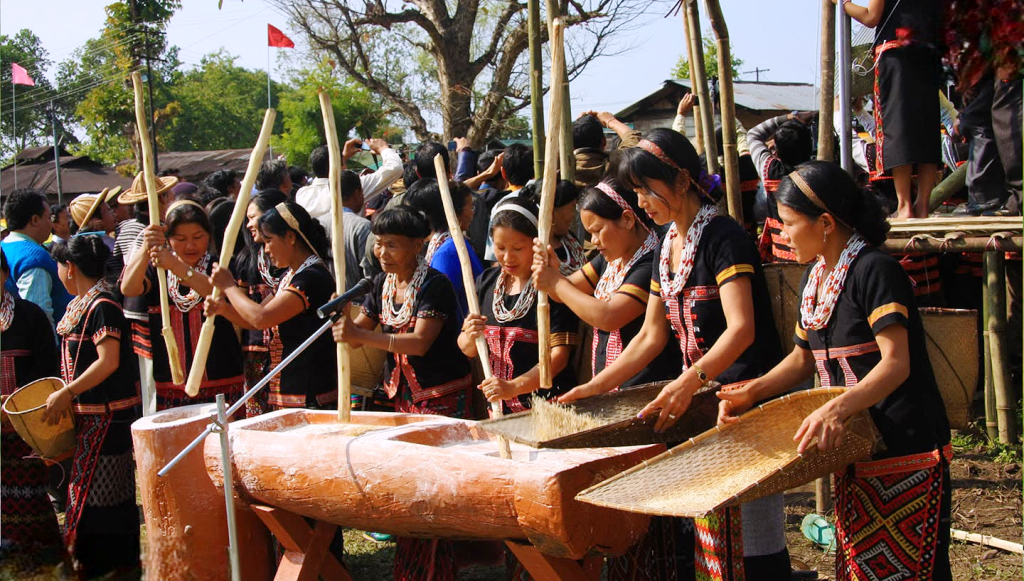
Live Music Under the Eastern Himalayas
The music programme across the two festival days has consistently brought indie, folk, fusion, and Northeast Indian acts to the Anini stage. Past lineups have featured Indian Idol finalist Obom Tangu, the fusion ensemble Asthitva, and Owl Jam. The 2026 lineup had not been fully announced at the time of writing — watch AWF’s Instagram for announcements as September approaches.
Adventure Activities
AWF is built equally around physical engagement with the valley. The adventure programme in previous editions has included trekking through Dibang Valley’s forest trails, cycling on mountain routes, white-water rafting on the Dri River, and guided village walks through Idu Mishmi settlements.
For serious trekkers, the Emuli Grasslands — reached via a full-day hike through Mathu Valley — are the standout experience. These high-altitude meadows with panoramic Himalayan views are only accessible with local Idu Mishmi porters who know the trail, and the commitment required makes them feel genuinely discovered rather than ticketed. Birdwatchers come here specifically for the Mishmi Hills’ extraordinary avifauna: the Mishmi Wren-Babbler, a species lost to science for nearly 60 years before its rediscovery in 2004, and Sclater’s Monal — an iridescent pheasant so rare that most Indian records come specifically from the Mayodia Pass area on the approach road — are the target species that draw ornithologists from across the world to this corner of Arunachal.
Idu Mishmi Cultural Experiences
Cultural Etiquette Notice: When attending an Igu-Tamro (shamanic) workshop or entering a traditional Idu household, always ask permission before photographing ritual items or the shaman’s vestments. The Idu Mishmi hold a sacred sibling lineage with the tiger — respect for the natural world is not a courtesy here, it is the backbone of the community’s ecosystem.
The most distinctive element of AWF is the integration of Idu Mishmi cultural programming into the festival schedule. Workshops on Igu-Tamro, the ancient shamanic tradition, offer visitors a guided encounter with a belief system that treats humans and tigers as siblings born of the same mother — a cosmological relationship that shapes how the Idu Mishmi interact with the forest. Cooking workshops introduce the distinctive cuisine of the valley: Dibang Valley red beans, bamboo shoots, dried fish, and foraged local herbs. Eco-art sessions by practitioners like House of Macnok cover paper-making and jewellery using sustainable local materials.
These are not tourist demonstrations. They are knowledge-sharing sessions run by community members for visitors willing to pay attention.
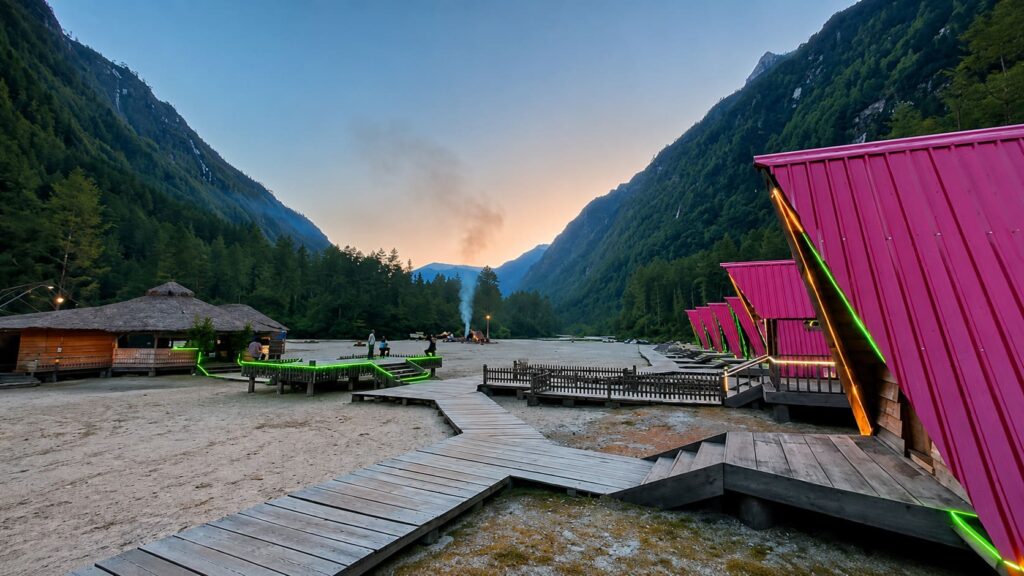
Where to Stay in Anini and the Dibang Valley
Accommodation in Anini is limited, and booking well ahead of the festival is essential.
The Circuit House and the District Tourism Guest House in Anini are the main government-run options, offering basic but reliable rooms. Both are particularly useful to book if you have government connections or are travelling with a registered tour operator, as they typically fill first during the festival period.
Karu Resort is the festival’s historic home and the most recognisable commercial option in town, with the advantage of proximity to the festival grounds. Chigu Eco Camp, deeper in the valley along the Mathun River, is an eco-camping option suited to travellers wanting a nature-immersive stay around the festival.
The most authentic and recommended choice is a homestay with an Idu Mishmi family. Staying in a traditional bamboo home, gathering around the central hearth (known locally as the Ahu), eating family-cooked meals, and hearing stories about the valley from your hosts is the experience that most AWF regulars describe as the most lasting part of the trip. Contact local tourism desks in Roing or inquire through your permit registration office for homestay referrals in Anini — options have been increasing with each festival edition.
The ILP: The Essential First Step Before Anything Else
Critical Preparation Checklist Before Departing:
- District ILP Verification: your Inner Line Permit must explicitly state “Upper Dibang Valley.” A permit listing only “Lower Dibang Valley” or simply “Arunachal Pradesh” will result in being turned back at checkposts between Roing and Anini. This is the single most common mistake AWF first-timers make.
- Digital Isolation Plan: BSNL and Airtel are the only networks with intermittent connectivity in Anini, and data speeds rarely support navigation or streaming. Download offline Google Maps for the entire NH-313 stretch while still in Dibrugarh — not Roing, while in Dibrugarh.
- Emergency Cash Reserve: carry ₹10,000–₹15,000 in physical cash beyond your expected budget. ATMs in Roing frequently run out of cash due to power outages, and there are no functional card or UPI payment systems at the festival grounds.
The most reliable way to understand and apply for your ILP is through the NorthEast India Connect Permit Guide and the interactive NorthEast India Permit Assistant. Foreign nationals require a Protected Area Permit (PAP) arranged through a registered tour operator — allow at least four weeks, and do not assume on-arrival arrangements are possible for Dibang Valley.
The NH-313 Road Itinerary: Dibrugarh to Anini, Milestone by Milestone
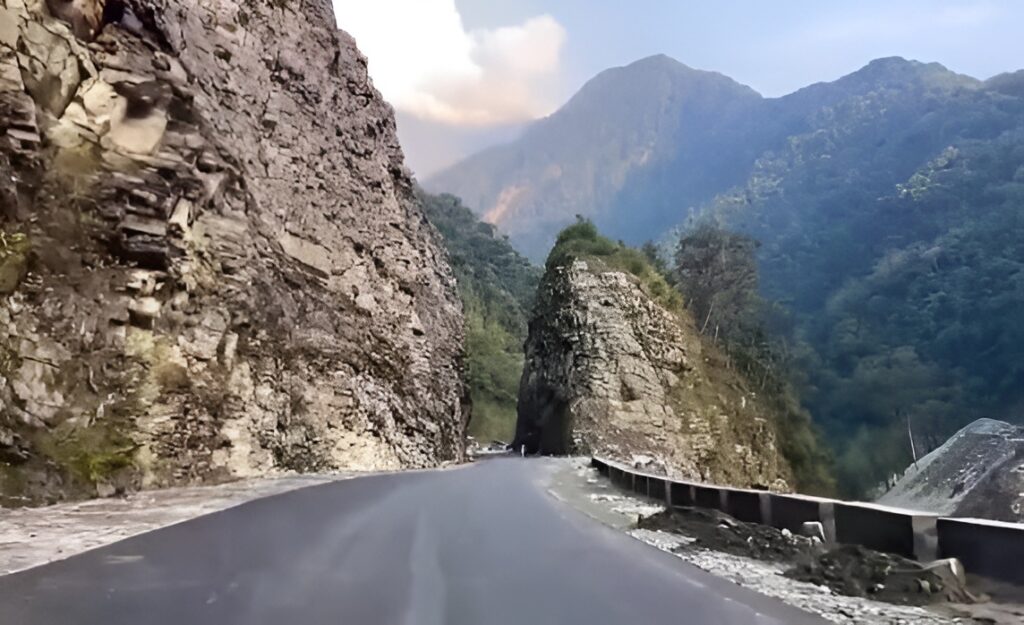
Getting to Anini is an expedition, not a commute. Here is the full route with realistic timings.
Day 1: Dibrugarh to Roing (~115 km / 4–5 hours)
Start from Dibrugarh — fill your fuel tank completely and withdraw all the cash you will need for the next several days. Within 47 km you reach Tinsukia, a useful stop for final supplies and the last reliable fuel station before the Arunachal border.
The route’s most memorable crossing comes within the first 2–3 hours: the Dr. Bhupen Hazarika Setu (Dhola-Sadiya Bridge), at 9.15 km India’s longest bridge over water, spanning the Lohit River from Assam into Arunachal Pradesh. Stop here — the view of the river below is extraordinary, and the transition from Assam’s plains into Arunachal Pradesh is one of the more tangible border crossings in the country.
Shortly after the bridge, your ILP will be checked at the entry checkpost into Arunachal. Shortly after this, at around 40 km from Roing, you pass through Dambuk — worth a brief stop for the Dibang River bridge and the riverside views that make this sub-tropical foothills stretch memorable. Arrive in Roing by afternoon. Check in, eat a proper meal, and rest. Roing is the last town before Anini with reliable accommodation, restaurants, and a functioning ATM.
Day 2: Roing to Anini (~221 km / 7–10 hours on NH-313)
Leave Roing before 8 AM. This is non-negotiable — road repair work on the stretch roughly 4 hours from Roing typically runs between 11 AM and 2 PM, and hitting that blockage in a loaded vehicle adds hours to your journey.
The road from Roing immediately begins climbing through sub-tropical broadleaved forest. At around 56 km from Roing (~1.5 hours), you reach Mayodia Pass at 2,655 metres — the high point of the entire route and the ecological transition between the foothills and the true Himalayan zone. The twelve hairpin bends known as Baro Golai on the approach to Mayodia are where your 4×4 earns its place. At the pass itself, in September after the monsoon, the air is cold, the forest dense, and if you are patient and lucky, this is where Sclater’s Monal has been recorded by birders waiting in the treeline at dawn.
Descend from Mayodia into the Hunli Valley — at approximately 90 km from Roing, Hunli is a useful mid-route stop for a brief rest and any fuel top-up from jerry cans carried by locals. Beyond Hunli, the road tracks the Dri and Mathu rivers through what becomes one of the most consistently beautiful drives in the entire Northeast: iron suspension bridges over turquoise tributaries, bamboo forest pressing against the road edge, and a horizon of Himalayan ridges that keeps shifting as the valley bends.
The final stretch from Hunli to Anini is roughly 130 km and takes 4–5 hours, longer after rain. Arrive in Anini by evening, check in before dark, and do not plan to do anything that first evening except eat and acclimatise.
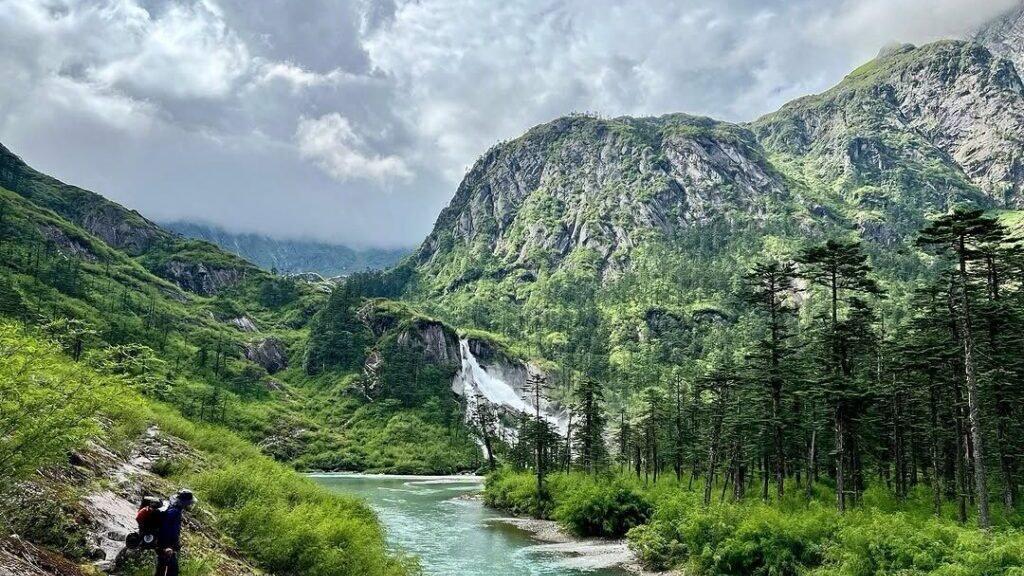
Practical Tips for AWF 5.0 2026
Pack for mountain conditions: September evenings at 1,968 metres are genuinely cold. Bring a proper warm layer, rain gear for post-monsoon weather, and footwear that can handle uneven festival-ground terrain. Photography is welcomed throughout the music and adventure programme, but follow the Igu-Tamro workshop guidelines and ask before photographing ritual items. Plan at least one buffer day on either end of the trip — the road between Roing and Anini is vulnerable to landslides in September’s residual monsoon.
Use the NE India Trip Planner to build a wider Arunachal itinerary around the festival, and check the Festivals & Events calendar for what else is happening across the Northeast around this time of year.
The Anini Winter Fest earns its difficulty. September 19–20, 2026. Dibang Valley is waiting
