




Somewhere in the deep forests of South Garo Hills, a river has spent centuries carving its way through limestone cliffs, and almost nobody outside a handful of Garo villages knew it existed. That changed on October 11, 2025, when Wari Chora walked away from the Northeast Tourism Awards in Guwahati with the Best Offbeat Travel Experience title under the Destination Excellence Award category.
Baghmara Campers, the local outfit that has spent years quietly showing travellers this canyon, picked up the trophy at the Radisson Blu, and suddenly, a place that didn’t even show up on Google Maps a few years ago had a national spotlight on it.
Here’s the tactical version of what that award means for you as a traveller — exact costs, road realities, physical demands, and the cultural protocols nobody mentions until you’re already there.
Quick Facts About Wari Chora
| State | Meghalaya |
| District | South Garo Hills |
| Nearest Town | Baghmara (district headquarters) |
| Nearest Villages | Emangre, Pharomgre, near Agalgre |
| Distance from Shillong | Approximately 285 km |
| Distance from Guwahati | Approximately 220–250 km |
| Distance from Tura | Approximately 130 km |
| Final Approach | 20–35 km unpaved off-road track from Baghmara; 4WD only |
| Entry/Community Fee | ₹100–₹200 per person |
| Local Guide Fee | ₹1,000–₹1,500 per day (mandatory) |
| Boating/Life Jacket Rental | ₹500–₹800 per person |
| Local 4WD Hire (Baghmara to village) | ₹3,000–₹4,500 round trip |
| Canyon Descent | 45 minutes to 1 hour steep jungle trek; uphill return |
| Best Time | October to February for clearest water and stable trails |
| Managed By | Indigenous Agro Tourism Cooperative Society, Emangre region |
| Cash Only | No functioning ATMs past Baghmara |
Inside the Northeast Tourism Awards: Why Baghmara Campers Won Gold
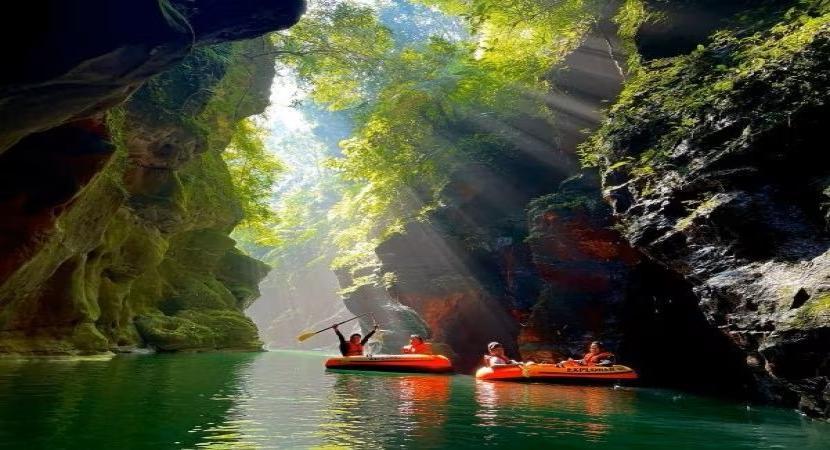
The Northeast Tourism Awards aren’t a small regional formality. Held annually to recognise destinations, operators, and entrepreneurs driving tourism growth across the eight Northeastern states, the 2025 edition specifically singled out Baghmara Campers for transforming an essentially unknown canyon into one of the most talked-about offbeat experiences in the region. Co-founder Mark Pantora Sangma was also nominated in the Top 5 Best Travel Entrepreneur category the same year.
What makes the award genuinely meaningful is the backstory. According to reporting by the Shillong Times, this part of Garo Hills was once associated with militant activity and effectively off-limits to casual travel. The shift to a destination winning national recognition is a real transformation, driven largely by local communities rather than outside operators.
Community-Led Tourism: How the Indigenous Agro Tourism Cooperative Functions
Sir Bhuto Marak is widely credited with first exploring and promoting the canyon, and tourism here today is managed by the Indigenous Agro Tourism Cooperative Society Limited, representing Pharomgre and Rekmangre villages in the Emangre region. This isn’t a government-built tourist trap — it’s a cooperative-run destination where entry fees, guiding charges, and boating rentals flow directly back into the villages, maintaining access to the canyon. Every fee in the table above goes to this cooperative or its affiliated guides, not a third-party booking platform.
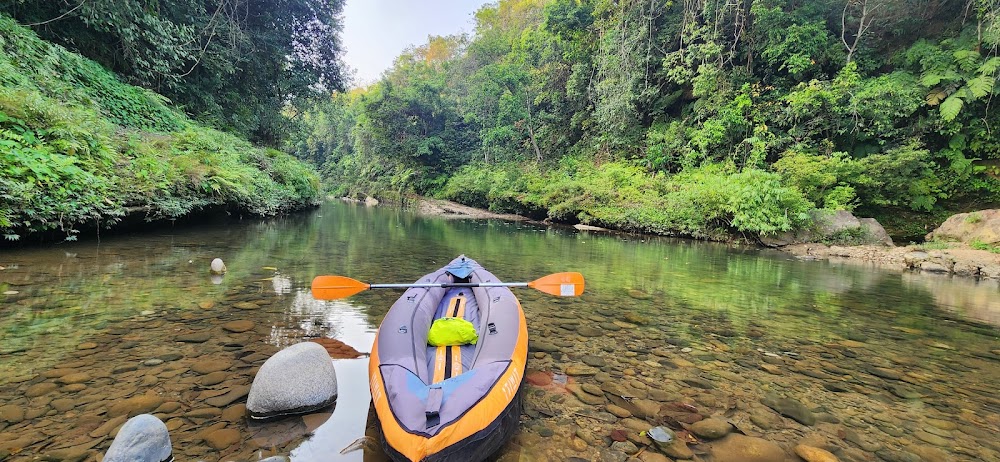
Exact Route Geometries: Getting to Wari Chora from Guwahati and Shillong
Most online guides flatten this into one vague route, but there are three genuinely different staging strategies depending on where you’re coming from, and picking the right one saves real time.
| Staging Base | Distance to Wari Chora | Road Conditions | Recommended Transit | Best For |
| Guwahati | ~220–250 km | Smooth highway to the state border; deteriorates rapidly past Siju | Private 4WD SUV or reliable tourist cab | Fly-in travellers from outside the Northeast |
| Tura | ~130 km | Winding, hilly terrain; moderate potholes and construction patches | Shared Sumo to Baghmara, then local Bolero | Backpackers exploring wider Garo Hills |
| Baghmara | ~35 km | Extreme off-road; unpaved dirt, loose gravel, steep inclines | Strictly 4WD (Scorpio/Gypsy/Bolero) | The final overnight refuelling and ATM stop |
Also Check Out: Map Distance Calculator
Travellers from western Meghalaya generally stage out of Tura, the commercial capital of the Garo Hills. Those wanting smoother highways for longer take the Williamnagar-to-Siju route before the final push to Baghmara. The direct route from Guwahati runs through Boko, Dhupdhara, Dudhnoi, Damra, Wageasi, Rongmil, Rongjen, Nengkhra, Nongalbibra, Jadi, and Siju — a long day, most people split across two stages rather than one push.
The Siju-to-Emangre Off-Road Challenge: Why Vehicle Choice Matters
Whichever route you take to Baghmara, the final 20 to 30 kilometres from Siju to the Emangre or Pharomgre base is the genuine bottleneck — a brutal, unpaved dirt track where standard hatchbacks or low-clearance sedans will bottom out. Local operators exclusively use Boleros, Scorpios, or Gypsy pickups for this leg, and that isn’t a luxury upsell, it’s the only vehicle class that reliably makes it through. Budget ₹3,000–4,500 for the round-trip 4WD hire from Baghmara, and don’t try negotiating your way into a personal sedan here — guides will simply tell you it won’t make it.
What to Expect at the Canyon: Kayaking, Trekking, and Sacred Legends
While some online videos mislabel this as high-adrenaline whitewater rafting, it is actually a peaceful, deep-canyon kayak or rubber dinghy cruise between narrow, roughly 100-foot vertical gorge walls. The emphasis is on the visual drama of the canyon rather than adrenaline, and the calm water suits a wide range of fitness levels once you’ve reached it.
Getting to that water is the part most reels conveniently leave out. The descent involves a genuinely steep jungle trek of 45 minutes to an hour, navigating bamboo ladders and slippery clay trails that worsen considerably after rain. The return leg is entirely uphill over the same terrain, and it demands a moderate level of physical fitness. This is not a casual stroll, and anyone with significant knee or mobility concerns should think carefully before committing.
Beyond the canyon, there’s enough to keep an active traveller occupied: forest trekking trails further afield, multiple river vantage points for photography, and nearby attractions including the Siju Caves, the Siju Bird Sanctuary, Balpakram National Park, and the Simsang River, all within a reasonable driving distance.
The Land of Seven Serpents: Sangkni Folklore
Local guides describe Wari Chora as the land of the seven giant serpents, known locally as Sangkni. Hearing these stories from someone who grew up nearby adds a layer to the visit a guidebook can’t replicate, and it also explains why the canyon carries real spiritual weight for the villages that look after it.
Garo Cultural Etiquette: A’chik Protocols at the Canyon
Wari Chora is highly sacred to the local Garo, or A’chik, people, and this shapes what is and isn’t acceptable at the canyon pool itself. Screaming, playing loud music, littering, or changing clothes in the open near the water is considered deeply disrespectful to the village elders who oversee the site. Consuming alcohol or wearing revealing swimwear at the main canyon entry is strictly forbidden by the cooperative, and guides can ask you to leave if these rules are ignored. Treat the descent and the canyon with the same restraint you’d bring to any active sacred site, not a party destination.
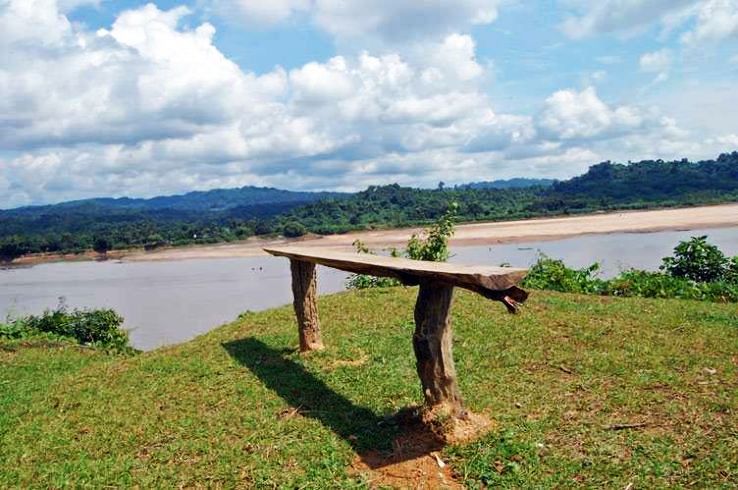
The Definitive 4-Day Garo Hills Expedition Loop
Because reaching South Garo Hills requires a major commitment of time and transit energy, treating Wari Chora as a standalone day trip is a genuine mistake. The canyon makes far more sense paired with the parks and landmarks within reach of the same base.
Day 1 — Guwahati to Baghmara: Depart by 6:00 AM, routing through Boko, Dhupdhara, and Dudhnoi before crossing the state border at Damra. The highway turns twisting and hilly past Williamnagar; stop for lunch at Nongalbibra, your last reliable warm meal before the deep hills. Arrive in Baghmara by evening, check into a basic guesthouse, and withdraw all the cash you’ll need for the next three days — there’s no digital payment infrastructure past this point.
Day 2 — The Descent and Canyon Cruise: Hire a 4WD in Baghmara by 7:00 AM for the two-hour unpaved track to Emangre or Pharomgre. Pay your community fee at the cooperative office and pair with your mandatory guide. The steep descent down bamboo ladders and clay trails takes around 90 minutes; spend the early afternoon kayaking or dinghy cruising through the gorge, cameras sealed in dry bags. The uphill return is demanding; overnight in an Emangre homestay for a home-cooked meal and Sangkni storytelling.
Day 3 — Siju Caves and Bird Sanctuary: Drive back toward the Simsang River to reach Siju, hiring a guide at the cave entrance — among the longest natural limestone systems in India. Expect calf-deep subterranean streams immediately on entry, so wear grippy water shoes, and look up for the bat colonies in the higher chambers. After lunch by the river, spend the afternoon birdwatching for migratory species and grey hornbills at the adjacent sanctuary. Overnight at a riverside eco-camp along the Siju-Baghmara highway.
Day 4 — Balpakram and the Return: An early detour to Balpakram National Park, the Land of Spirits, rewards you with deep gorges and views toward the Bangladesh plains in morning light. Begin the long return drive toward Guwahati or Tura by late morning, closing out the loop by evening.
Essential Canyon Expedition Gear
Pack these before leaving your staging hub, since you’ll lose cellular coverage well before reaching the canyon itself:
- Heavy-duty, submersible dry bags for phones, power banks, and cameras — the canyon has active water drips and waterfall spray that will soak anything not properly sealed.
- Water shoes or high-traction trekking sandals with aggressive grip. Flip-flops and smooth-soled sneakers fail instantly on the moss-covered, wet river stones.
- Hard cash reserves. There are zero functioning ATMs past Baghmara, and homestays, guides, boatmen, and village stalls deal exclusively in cash.
- Leech socks and insect repellent, particularly during the shoulder months of October and May, when the dense jungle descent is prime leech habitat. A small bottle of saltwater spray or tobacco water works as a local deterrent.
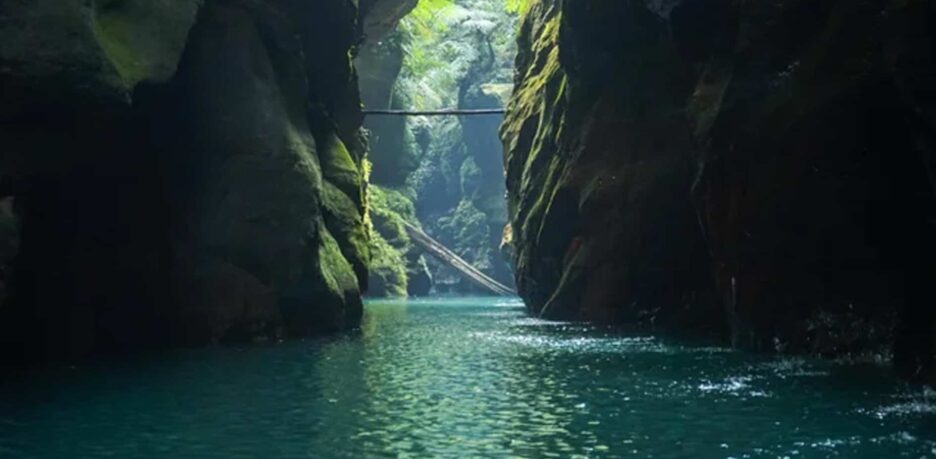
Critical Safety Measures: Cell Coverage, Extreme Trails, and Cash Pitfalls
Mobile network connectivity around Wari Chora is patchy at best, so let people back home know you might be unreachable for a day or two. Hiring a local guide isn’t a nice-to-have — the trails are easy to lose, with at least one documented case of a solo traveller needing rescue in 2024. Combine that with the steep, slick descent and zero cash infrastructure beyond Baghmara, and the picture is clear: this is a destination that rewards careful preparation and punishes improvisation.
Best Time to Visit Wari Chora
Nearly every source converges on the same window: October through May, with the sweet spot between October and February, when the water runs calm and clear and the trails are at their most manageable. The monsoon months, roughly June through September, are uniformly discouraged — heavy rainfall makes the access roads landslide-prone, the descent considerably more dangerous on slick clay, and the river too high for boating.
Why Wari Chora Deserves the Attention It’s Finally Getting
What makes Wari Chora interesting isn’t just the canyon itself, striking as it genuinely is. It’s that an area once defined by conflict and isolation has, through sustained community effort rather than large-scale government investment, become a place winning national tourism awards within a few years. That’s a rare trajectory, and exactly the kind of grassroots tourism story the broader Garo Hills region, long overshadowed by Meghalaya’s more famous Khasi Hills attractions, has needed for a while.
If you’re already planning a trip through Meghalaya and have typically stuck to the Shillong–Cherrapunji–Mawlynnong circuit, Wari Chora is a genuine argument for pushing further west into Garo Hills territory. Build the full four-day loop rather than a rushed day trip, budget realistically for the cooperative fees and 4WD hires, respect the A’chik protocols at the canyon, and go between October and February when the water and the trails are both at their best.
