




Try counting the standing stones at Willong Khullen and, according to everyone who has ever tried, you’ll get a different number every single time. That’s the kind of village this is. Tucked into the northern hills of Manipur‘s Senapati district, Willong Khullen holds one of Northeast India‘s strangest archaeological puzzles: a cluster of towering megaliths that locals call the Stonehenge of Manipur, erected by unknown hands for reasons nobody has fully explained. If England gets postcards and ticketed tours for its version, Willong Khullen gets goats grazing between its stones and almost no recognition at all — which, frankly, is part of why it’s worth the trip.
Quick Facts About Willong Khullen
| Location | Mao-Maram subdivision, Senapati district, Manipur |
|---|---|
| Tribe | Maram Naga |
| Known For | The “Stonehenge of Manipur” megalithic site at Katak Tukhum |
| Number of Stones | Estimated 130-150+ (locals say the count never stays the same) |
| Stone Height | Sources vary widely — from around 7 feet to over 20 feet (7 metres) for the tallest |
| Distance from Maram | Approximately 37-40 km on the Maram-Peren Road |
| Distance from Imphal | Roughly 115-130 km, about 3-3.5 hours by road |
| Entry Fee | None |
| Best Time to Visit | October to March |
What Are the Willong Khullen Monoliths?
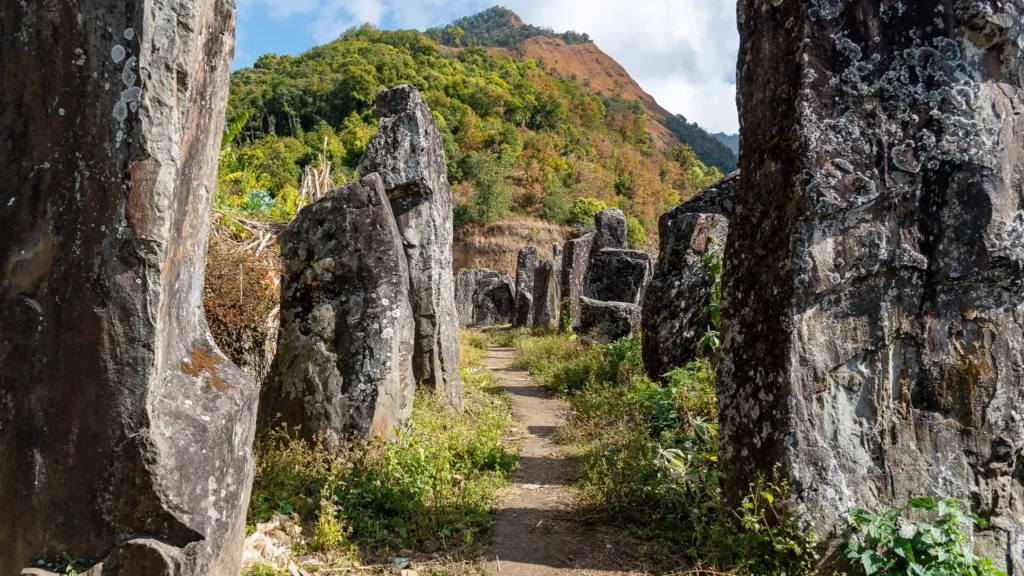
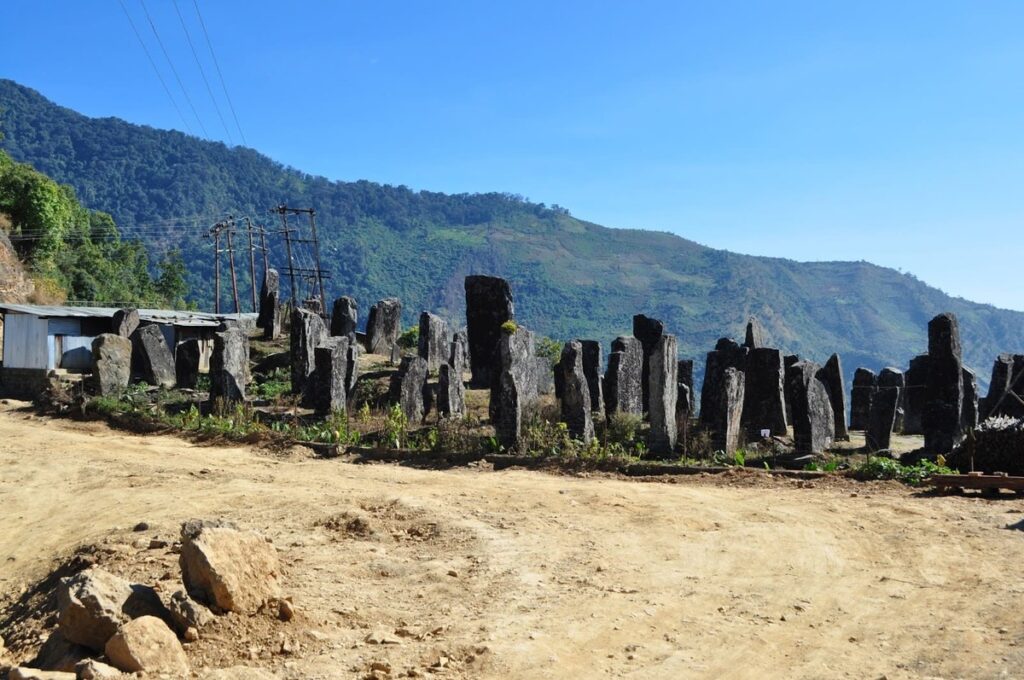
The monoliths stand at an area locals call Katak Tukhum, right at the edge of the village, arranged with no obvious symmetry or pattern — unlike England’s Stonehenge, which was laid out in a deliberate circular plan. According to a brief on the site, the randomness of the arrangement suggests the stones served ritual or symbolic purposes rather than any astronomical or architectural design. Walk through the cluster and the stones range from squat, half-buried slabs to towering pillars jutting out of the grass at odd angles, some leaning, some standing arrow-straight, with no path or marker telling you where the “site” begins or ends.
Here’s where the numbers get genuinely confusing. Manipur’s own Senapati district administration describes the tallest stones as seven metres high and a metre thick, and that figure has been repeated across several travel accounts of the site. But a more recent ANI report from August 2025 describes the stones as rising “over seven feet” instead — a sizeable discrepancy that nobody seems to have resolved. What’s consistent across every source is that these are seriously large, hand-erected stone slabs, whichever measurement turns out to be accurate.
Megalith-raising itself isn’t unique to Willong Khullen — colonial-era ethnographer J.H. Hutton documented similar stone-erecting traditions among various Naga tribes nearly a century ago, and Manipur has other lesser-known megalithic clusters scattered across its hill districts. What sets Willong Khullen apart is sheer concentration: nowhere else in the state, and arguably nowhere else in Northeast India, do this many large standing stones cluster in one place.
The Legends That Make Willong Khullen So Mysterious
The uncountable-stones legend is the headline act here, and it isn’t a tourism-brochure exaggeration — it’s something locals genuinely repeat with a straight face. Villagers told the Morung Express that an old folk tale describes a visiting Japanese man who tried to count every stone, only to be chased off by a white wild boar partway through.
There’s a second layer of folklore that’s even stranger: locals believe the stones have individual names — Kala, Kanga, Hila, among others — and that they “talk” to each other at night in male voices, calling out across the site. A separate giant stone sits at the village’s outer edge, regarded by residents as having been placed by divine intervention to mark Willong Khullen’s boundary.
How and Why Were the Monoliths Built?
This is where the story moves from folklore toward genuine ethnographic research. According to oral tradition documented by the Morung Express, erecting a monolith required exceptional physical strength and a strict code of conduct — a man preparing to find and drag a stone had to fast through the night before, perform a ritual offering of local wine to the chosen stone, and abstain from being with his wife beforehand, or risk misfortune. Once a suitable stone was located, the entire community helped drag it to the site, singing a designated folk song as they worked.
Why go to all that trouble? Beliefs vary by clan and storyteller: some say the stones commemorated victories in tribal warfare, others that they were built to display a family’s wealth and status, and others still that they honoured fallen war heroes. What’s notable is that this isn’t purely speculative anymore — a 2024 ethnoarchaeological study published in the academic journal Archaeologies documented an actual monolith being erected in Willong Khullen in 2020, tracing how networks of clans and sub-clans mobilised labour for the job. The tradition, in other words, isn’t entirely extinct — it has simply become rare.
Willong Khullen vs Other Megalithic Sites of Manipur
Willong Khullen isn’t the only place in Manipur where standing stones tell a story, even if it’s the most famous.
| Site | Tribe | Scale | Recognition |
|---|---|---|---|
| Willong Khullen | Maram Naga | 130-150+ stones, some of the tallest in the region | Best known, called the “Stonehenge of Manipur” |
| Liyai Khullen | Poumai Naga | 554 documented stone monuments across the village | Recently mapped by archaeologists, still largely unknown to tourists |
| England’s Stonehenge | — | Roughly 83 surviving stones, circular formation | UNESCO World Heritage Site, fully excavated and ticketed |
The comparison to England isn’t just a catchy nickname — it genuinely holds up in scale and mystery, even though Manipur’s version remains almost entirely unprotected and unstudied by comparison.
A Heritage Site at Risk: Why Willong Khullen Needs Protection
For all the intrigue, Willong Khullen’s monoliths sit in a precarious spot. Local reporting has repeatedly noted that construction sheds and encroaching homes have crept right up to the stones, with no formal protection from either the state or central government. Villagers, through groups like the Maram Students’ Union, have pushed for the site to be formally declared a protected historical monument and for a small interpretation centre to preserve the folk songs and oral histories tied to the stones — knowledge that, by most accounts, survives today with only a shrinking number of elders.
Best Time to Visit Willong Khullen
October through March offers the most reliable weather for the drive — dry roads, clear hill views, and comfortable daytime temperatures for walking around the site. The monsoon months make the unpaved stretches near Willong genuinely difficult and best avoided.
How to Reach Willong Khullen
There is no public transport directly to Willong Khullen, so this is strictly a self-drive or hired-vehicle destination.
- Reach Imphal first, either by air via Bir Tikendrajit International Airport or by road from neighbouring states.
- Take the Imphal-Kohima highway (NH-2) north through Senapati town to the small hill town of Maram, a journey of roughly 2.5-3 hours.
- Branch onto the Maram-Peren Road and continue for another 37-40 km to reach Willong Khullen — expect a winding, occasionally rough stretch through hill terrain.
- Hire your vehicle in Imphal or Kohima, since this works equally well as a long day trip from either city.
A non-resident Indian citizen will need a Manipur Inner Line Permit before entering the state — apply with some lead time, since it’s not something to sort out at the last minute.
Also Check Out: Northeast India Permit Assistant
Nearby: Yangkhullen, the Hanging Village
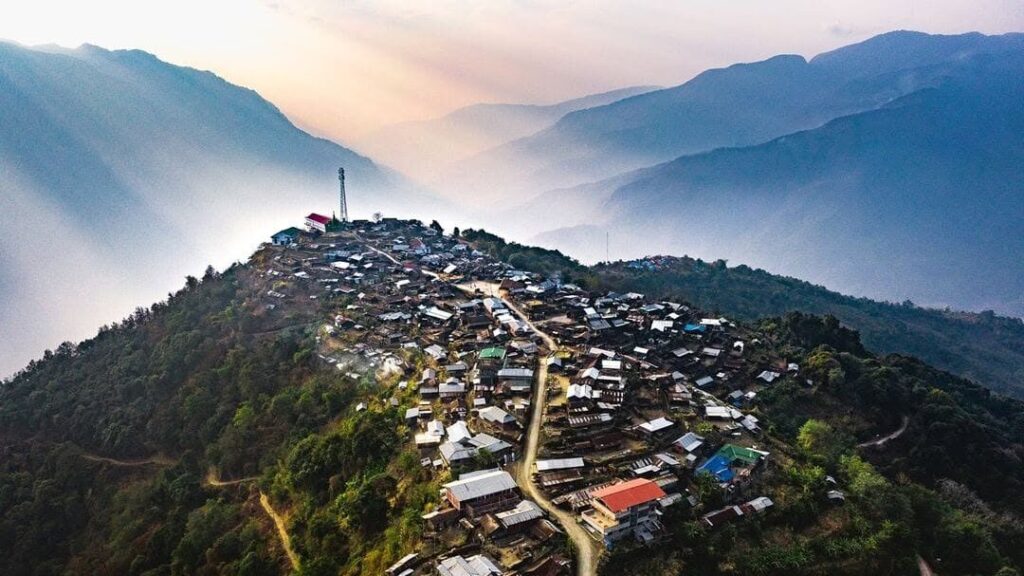
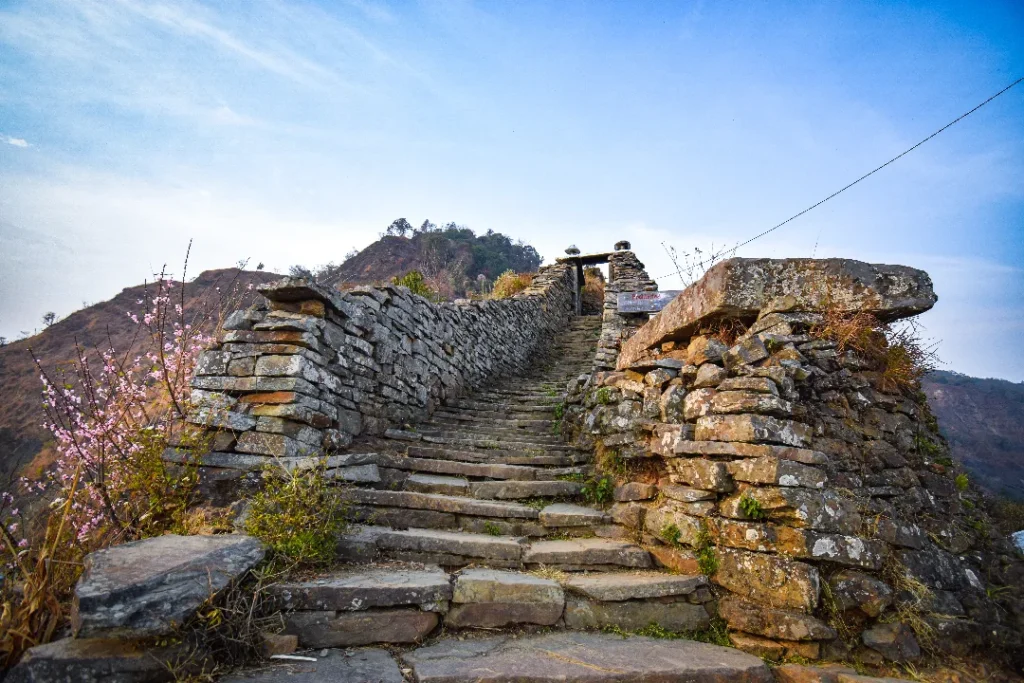
If you’ve made it this far, it’s worth pushing on roughly 19 km further to Yangkhullen, a Zeme Naga village built almost vertically into a cliff face, often called Manipur’s “hanging village.” The two villages have a real shared history — Yangkhullen’s chief still keeps a ceremonial spear gifted by Willong Khullen’s Maram community, exchanged in 1976 to seal a peace treaty between the two tribes after years of conflict. Pairing both villages into a single day trip gives you Manipur’s strangest megalithic site and one of its most dramatically built villages in the same outing.
Where to Stay Near Willong Khullen
There’s no accommodation at the site itself, and very little in Willong Khullen village beyond what locals might arrange informally if you know someone there, as one travel blogger discovered when invited to a village church jubilee celebration. Most visitors base themselves in Senapati town or Kohima and treat Willong Khullen as a long day trip, since the village has no hotels, guesthouses, or restaurants set up for passing tourists.
Travel Tips Before You Go
- Carry your own food and water. There are no restaurants or shops at the site, and very few in Willong Khullen itself.
- Don’t expect signage or a ticket counter. This is an unstaffed, unprotected site — treat it with the same respect you would any sacred or historical place.
- Start early. The round trip from Imphal or Kohima eats up most of a day, especially with stops at Maram along the way.
- Ask before photographing locals or sacred spots. Many of the stones and the surrounding area carry ritual significance for the Maram community.
Frequently Asked Questions About Willong Khullen
Is Willong Khullen really comparable to England’s Stonehenge? In scale and mystery, yes — dozens of massive standing stones with no agreed explanation for their origin. In layout, no; Willong Khullen’s stones are scattered without the circular symmetry of the English site.
How old are the monoliths? Nobody knows for certain. Some reports describe them as pre-dating the Common Era, while academic researchers note the practice of erecting new monoliths continued among the Maram community well into the 21st century.
Is there an entry fee? No, there’s no fee or formal management of the site at present.
Can I combine this with other Senapati district attractions? Yes — beyond Yangkhullen, the wider Mao-Maram subdivision near the Nagaland border also connects to the Dzükou Valley trek via Mao, making a longer multi-day Senapati itinerary very doable if you have the time.
Final Thoughts
Willong Khullen is the rare kind of place where the lack of polish is exactly what makes it compelling — no gift shop, no roped-off viewing platform, just dozens of unexplained stones standing where the Maram Naga community’s ancestors left them. Go before either the encroachment or the eventual tourist infrastructure changes what you’ll find there today.
For more on this part of Manipur, browse our Manipur travel coverage or read our Northeast India tourism guide for help planning a longer Senapati district itinerary.
